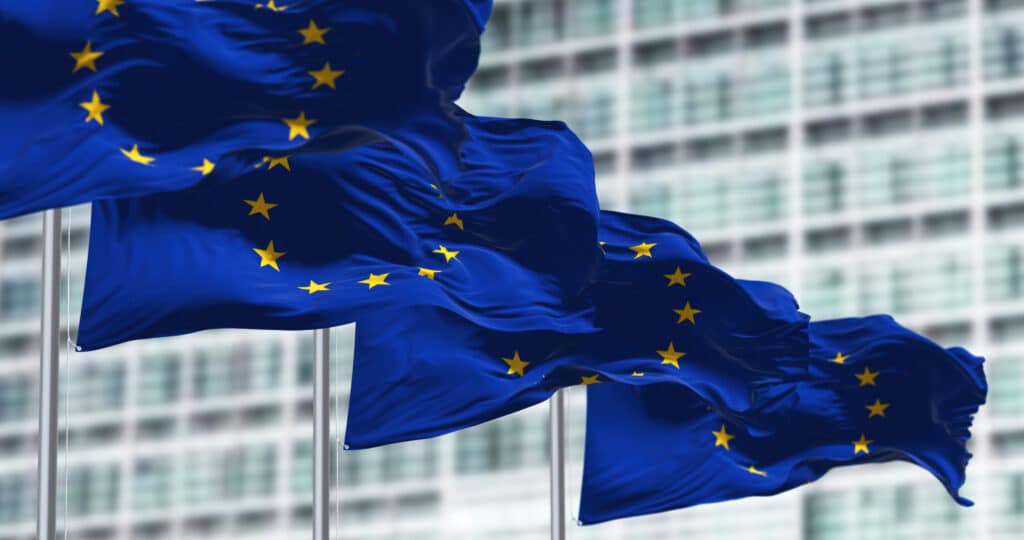
Nicotine sachets are dividing EU member states under the influence of pro-nicotine lobbies.
September 13, 2026
Par: National Committee Against Smoking
Dernière mise à jour: September 8, 2026
Temps de lecture: 7 minutes

Member states of the European Union are struggling to reach an agreement on the taxation of new nicotine products, particularly nicotine pouches, with the issue of taxation highlighting fundamental differences regarding these products.[1]. In the summer of 2026, Sweden blocked a proposal to establish, for the first time, a common minimum level of taxation across Europe. The Swedish nicotine industry wields considerable influence because Sweden has historically been a major producer of snus, a tobacco product, as well as nicotine pouches, or "white snus," which do not contain tobacco. Their global market is currently estimated at around $7 billion. The disagreement arose as the European Union was revising its Tobacco Products Taxation Directive (TPD), adopted in 2011. The aim was, in particular, to adapt European taxation to the emergence of products that were absent or much less widespread when the directive was adopted: e-cigarettes, heated tobacco, and nicotine pouches.
Tax levels were gradually reduced under pressure from states close to industry.
In July 2025, the European Commission proposed significantly increasing the minimum taxes applicable to cigarettes and introducing common levels for several smokeless products. The initial proposal included a minimum of €4.30 per pack of cigarettes, €2.16 per pack of heated tobacco sticks, and approximately €1.14 per box of nicotine sachets, depending on the amount of nicotine contained in the products.« It has been shown that increasing taxes and tobacco prices is the most effective measure »"to reduce tobacco consumption, improve health and increase revenue," the Commission stated in its report.
Negotiations between member states, however, led to a reduction of these amounts under lobbying pressure. Cyprus's proposal, presented in the first half of 2026, notably lowered the minimum tax on nicotine pouches to approximately €0.64 per box, nearly half the level proposed by the Commission. For heated tobacco, the minimum was reduced from €2.16 to €1.60 per pack. Even these reduced amounts could represent a significant increase in some countries. In Sweden, the current tax on pouches is approximately €0.15 per box of 20 pouches. The proposed European minimum would therefore more than quadruple Swedish taxation. In Italy, the tax is approximately €0.18, while Portugal recently introduced a tax of €0.52.
A public health issue and a European timetable issue
The revision of tobacco taxation is part of the European strategy to reduce smoking. According to the European Commission, policies combining regulation and price increases have contributed to the decline in smoking rates since 2012. The issue remains significant, as more than 700,000 people die each year in the European Union from the consequences of smoking. The Commission also estimates that reducing tobacco consumption through a more ambitious tax policy could generate up to €85 billion in savings per year.
In its initial proposal, the Commission also emphasized that certain new products could encourage young people and non-smokers to start using nicotine or, in some situations, lead to cigarette smoking. Health authorities specifically highlight nicotine addiction and concerns related to the increased use of certain products among young people.
Different approaches depending on the Member States
While the European Union has always banned the sale of snus (outside of Sweden), legislation regarding nicotine pouches varies among member states. These products are prohibited in various countries such as France, Belgium And the Netherlands This analysis supports the view that the new products launched by manufacturers aim to perpetuate the nicotine and even tobacco epidemic. Germany, for its part, considers these products to be "novel foods" not authorized for retail sale.
In terms of taxation, in countries where these products are permitted, approximately half of the EU member states already tax nicotine sachets, while others do not apply any specific excise duty. This diversity complicates the search for a European compromise, especially since tax decisions must be adopted unanimously by all 27 member states.
This impasse« reflects fundamentally different approaches to combating tobacco and nicotine across Europe »,« said Erin Roman, director of Smoke Free Partnership (SFP), a coalition of 57 European anti-tobacco NGOs. She also warned that the proposed tax had been« so weakened that it no longer met the initial public health objective »"of the European Commission, the EU's executive body."« New nicotine-containing products have received increasingly favorable treatment, despite growing concerns about their rapid adoption by young people. »" she added.
Highly publicized misinformation regarding the "harm reduction" argument«
The debate also focuses on the level of taxation to be applied to different products according to their risks, based on the argument of "risk reduction", which is misused by manufacturers to obtain advantageous taxation for their new products.
Tobacco manufacturers thus advocate for lower taxes on the products they combine and present without combustion, even though these products are fundamentally different. They share the common characteristics of being highly addictive and posing significant risks. Heated tobacco, in particular, is a particularly toxic tobacco product. Some advocates for harm reduction argue for even greater tax differentials. For example, the Tax Foundation, whose annual gala counts tobacco companies Altria and Reynolds American among its sponsors, has proposed a tax rate for pouches at approximately 10% of that for cigarettes and a tax rate for heated tobacco at 25%.
These proportions, however, are not based on an established scientific consensus. The question of how to translate potential differences in risk into tax levels is therefore one of the main points of disagreement.
Since July 2026, the presidency of the Council of the EU has been held by Ireland, which has affirmed its commitment to fighting against new nicotine products at national and European levels and whose ambitious anti-smoking policy earned it first place in the European Tobacco Control Scale 2025. Dublin must try to bring the positions of the 27 member states closer together before the end of the year, and Ireland has indicated its willingness to play a mediating role in the negotiations. Erin Roman thus recalled that the Irish presidency was an opportunity to "« revive the political dynamic »"in the negotiations."« It's not simply a matter of taxation ". «"It is about ensuring that tobacco and nicotine products do not remain cheap, accessible and attractive to the next generation. ".
If no agreement is reached by December, discussions will continue under the Lithuanian presidency in 2027, which is also known for its ambitious anti-tobacco policy.
AD
[1]Kathryn Kranhold, EU countries clash over nicotine pouch taxes, stalling broader tobacco talks, The Examination, published on September 3, 2026, accessed on September 4, 2026