France: Nicotine sachets are banned
April 3, 2026
Par: National Committee Against Smoking
Dernière mise à jour: April 2, 2026
Temps de lecture: 6 minutes
On September 5, 2025, the government published a decree on nicotine sachets providing for a ban going well beyond mere marketing, thus including manufacturing, production and export, with entry into force scheduled for 1er April 2026. The decree had been notified to the European Union. In an appeal, the Council of State also formally reiterated that the offering, transfer, acquisition, and use of these sachets were already prohibited. It is now crucial for health organizations that the measure be fully respected and that all advertising associated with the sale of these products also cease.[1].
Harmful and addictive products, targeting young people, are banned on national territory.
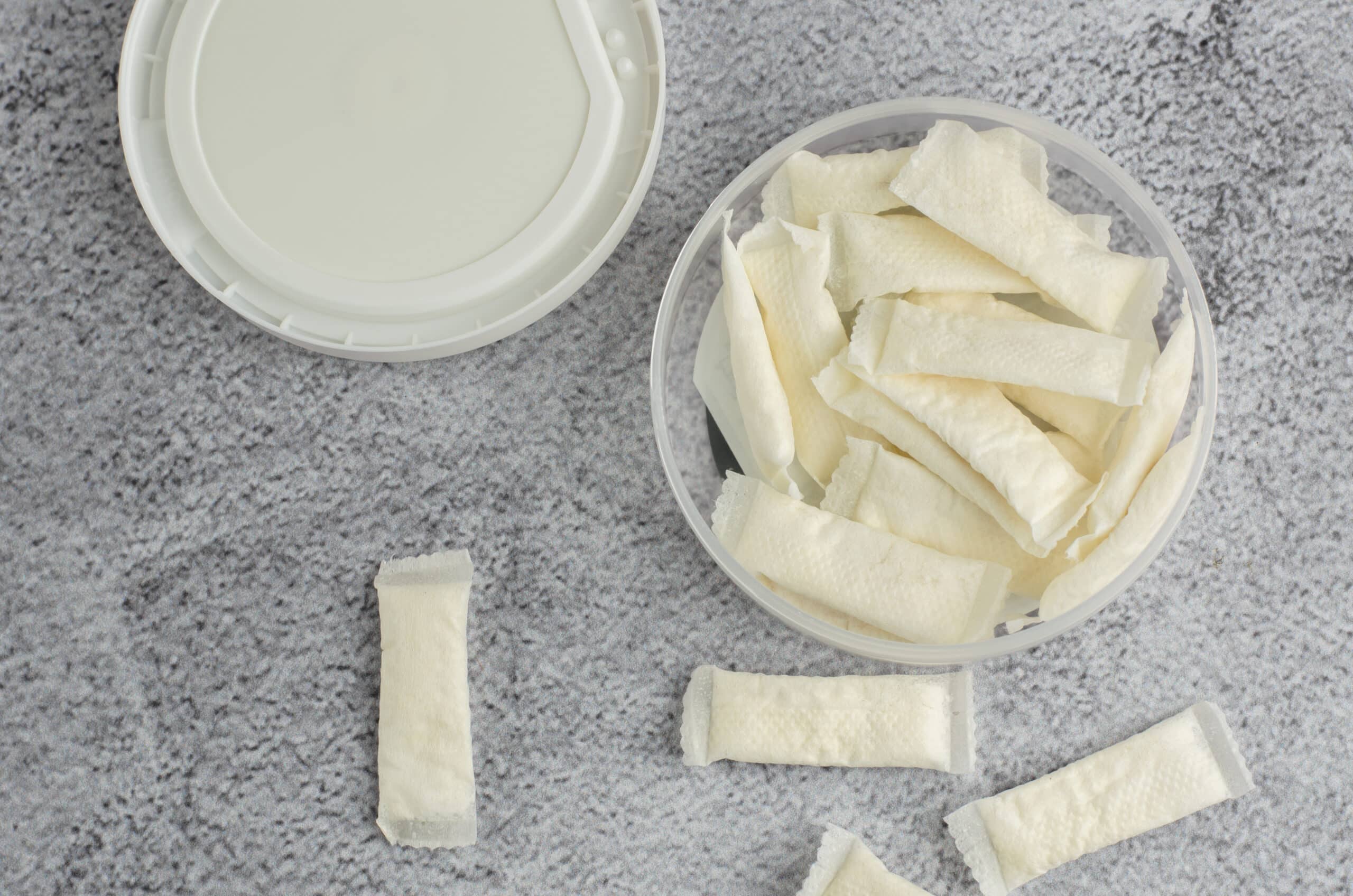
These white sachets or "pouches", which do not contain tobacco, are made of a permeable fabric, polymer fibers impregnated with flavors and 3 to 20 mg of nicotine, and are slipped between the upper lip and the gum to diffuse nicotine through the oral mucosa.
These new products are primarily aimed at young people, despite industry claims that they are smoking cessation aids.
The authorities believe «"that advertising for nicotine sachets is significant on social media, thus targeting young consumers"» And «"that regular consumption of the nicotine contained in these products exposes one to the development of addiction in the medium and long term,", A government website specifies that ingested nicotine is extremely addictive, equivalent to at least a pack of cigarettes.
Furthermore, laboratory analyses have revealed the presence of heavy metals in some samples, as well as high doses of nicotine and massive amounts of sucralose, refuting the supposed harmlessness of these products. A study conducted by the National Consumer Institute (INC) – 60 Million Consumers – in partnership with the CNCT (National Committee Against Tobacco) revealed that some pouches contain arsenic levels up to 6.5 times higher than those of a traditional cigarette. Lead, antimony, and formaldehyde, as well as carcinogenic or toxic substances, were also detected in several brands.
Since their illegal introduction to the market, various health professionals had alerted public authorities. In 2023, ANSES (the French Agency for Food, Environmental and Occupational Health & Safety) reported accidents linked to these products, and civil society organizations such as the National Committee Against Smoking (CNCT) and the Contre-Feu alliance, which brings together anti-smoking associations, regularly highlighted the promotional practices favoring these products.[2]. As early as 2023, the CNCT had filed a complaint with the Public Prosecutor for trafficking in poisonous substances classified in list I, and called on the public authorities to guarantee the prohibition of the sale of these products.
A ban that must be strictly enforced and lobbying that must be fought
The government's position in favor of a complete and strong ban, notified at the European level and welcomed by health professionals, was fiercely opposed by the tobacco and nicotine industry. The latter attempted to block the process through objections raised by other member states. Even today, the Confederation of Tobacconists announced that it is filing an appeal.[3]. Despite a major lobbying effort by tobacco manufacturers and their representatives, France has maintained its firm position, arguing the need to protect public health, particularly the health of minors.
The fact remains today that the provision must be fully applied in all its dimensions and that promotional practices must also disappear.
As part of its mission to monitor the marketing strategies of the tobacco industry, the CNCT conducted observations at points of sale: In 2025, the national survey conducted by the Audirep institute, among a representative sample of 600 establishments in metropolitan France (400 tobacconists and 200 specialized retailers) allowed for the observation of nicotine sachet promotion in 22 of these establishments, even though these products are not authorized for sale in France. In parallel, the CNCT's analysis of marketing strategies for tobacco and nicotine products in 2024 revealed a significant increase in the promotion of nicotine sachets on social media. These products accounted for 41 of the advertisements recorded on the channels studied, compared to 25 in 2023.[4].
This effectiveness will depend above all on the rigor of controls and the severity of sanctions. The Committee considers it crucial that regular inspections be carried out, both in physical points of sale and online, and that truly dissuasive sanctions be imposed on offenders.
France is not alone in wanting to counter the development of new nicotine products that constitute so many gateways into addiction. Belgium And the Netherlands have also opted for a ban.
AD
[1]Ban on nicotine sachets: "The tobacco industry will no longer be able to flood the market with new products," welcomes the Contre-Feu collective., franceinfo, published on April 1, 2026, accessed the same day
[2]The CNCT welcomes the ban on nicotine pouches, a crucial step to protect young people, CNCT, published on September 7, 2025, accessed on April 1, 2026
[3]Nicotine sachets: the Confederation has filed an appeal against their ban, Le Monde du Tabac, published on April 1, 2026, accessed the same day
[4]Nicotine pouches: British American Tobacco's illegal marketing offensive in France, Tobacco-Free Generation, published on March 18, 2025, accessed on April 2, 2026