EU: Following the cardiovascular report, the cancer plan is under the same pressure from the tobacco industry lobby.
September 30, 2026
Par: National Committee Against Smoking
Dernière mise à jour: September 21, 2026
Temps de lecture: 10 minutes
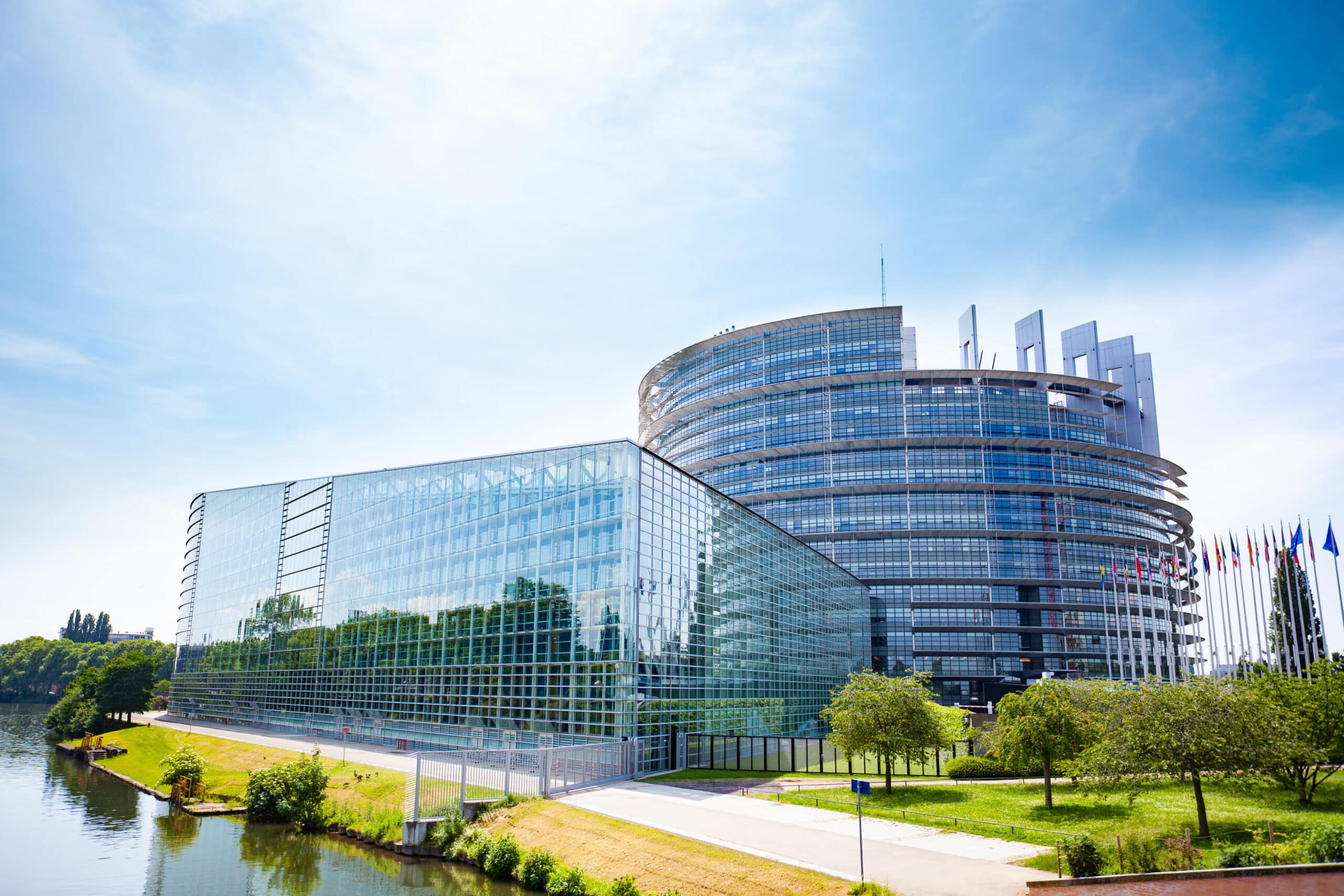
The European Parliament's Committee on Public Health (SANT) is due to vote on September 28, 2026, on its report on the European Plan to Beat Cancer, presented by Vlad Vasile Voiculescu (Renew, Romania). The text, negotiated between political groups, significantly strengthens the section on tobacco and other nicotine products: it acknowledges the worrying increase in the use of new tobacco and nicotine products among non-smokers, young people, and women; requires that cessation strategies be based on independently validated methods; and mandates a health impact assessment before any product is placed on the market. However, this vote comes ten days after the plenary adoption of another report, this one on cardiovascular diseases, the final version of which removed passages equating different nicotine products and replaced them with the recognition of distinct "risk profiles." According to the media outlet Eunews, this discrepancy led the European People's Party to convene an emergency meeting of its members on the Health Committee to bring the cancer report back to this second approach. However, differentiating products according to their risk profile has been the tobacco industry's central argument to European institutions for a decade. Aligning the cancer plan with the previous cardiovascular plan would amount to enshrining this framework in Parliament's official position, just months before the revision of the directives on tobacco products and advertising.
An own-initiative report has no legislative force: it does not amend any existing legislation and does not bind the Commission. Its value is political, as it establishes Parliament's official position and serves as a reference point in subsequent negotiations on binding legislation. Compromise amendments are texts negotiated between political groups before the vote, intended to replace several competing amendments on the same provision. Their content therefore indicates, more clearly than individual amendments, what the Commission is likely to adopt.
What the report submitted to the vote asks for
According to available estimates, more than 40% of cancer cases are attributable to avoidable risk factors. Tobacco is associated with 27% of all cancers and the majority of lung cancers. Paragraph 7 of the draft report reaffirms the objective of a tobacco-free generation by 2040 and calls on the Commission to present its revision of European legislation without further delay.
The negotiated compromises strengthen this foundation on three points. The first is the observation: the increase in new tobacco and nicotine products among non-smokers, young people, and women is described as a worrying trend that must be addressed in the revision. An amendment co-signed by the rapporteur documented this in April, noting that 22% of 15-16 year olds reported using e-cigarettes in 34 European countries, compared to 14% in 2019, with a higher prevalence among girls (25%) than among boys (19%).
The second compromise concerns smoking cessation. Strategies to help people quit should be based on proven methods, independently validated and, where appropriate, clinically supervised. This wording precludes classifying commercial nicotine products as smoking cessation tools. It extends an amendment by Alessandra Moretti (S&D, Italy) noting the lack of sufficient evidence for the effectiveness of e-cigarettes and heated tobacco products as cessation aids, a position consistent with that of the World Health Organization.
The third point concerns market access. The compromise maintains the principle of a health impact assessment before the marketing of any new tobacco or nicotine product, with the burden of proof falling on the manufacturers. In substance, it aligns with the demands put forward by Tilly Metz (Greens/EFA, Luxembourg) and Alessandra Moretti: extension of the TPD and TAD to all emerging products, a ban on advertising and sponsorship on digital platforms, plain packaging for all tobacco products, including heated tobacco, as well as e-cigarettes and nicotine pouches, and sufficiently broad definitions to prevent new products from escaping regulation.
Three amendments also concerned Article 5.3 of the WHO Framework Convention on Tobacco Control, which requires public authorities to protect health policies from the influence of the tobacco industry. Nicolás González Casares (S&D, Spain) asked the Commission to systematically assess, in all its Directorates-General, the necessity of each meeting with representatives of the sector, based on the European Ombudsman's decision in Case OI/6/2021/KR. Tilly Metz called for the full implementation of the Convention and its Protocol against Illicit Trade. Alessandra Moretti proposed including Article 5.3 in the Rules of Procedure of the European Parliament.
On the budgetary front, the rapporteur proposed allocating €2 billion to the cancer plan in the 2028-2034 EU budget; compromises have increased this request to €2.5 billion. The European Court of Auditors noted cuts in the health budget, the effects of which on the cancer plan remain difficult to assess, and recommended improved monitoring of its implementation.
Influence of the tobacco lobby: the precedent of the cardiovascular report
On September 16, Parliament adopted in plenary session its report on the prevention of cardiovascular diseases, presented by Romana Jerković (S&D, Croatia), by 545 votes to 47, with 75 abstentions. The text calls for strengthening action on the major risk factors for chronic diseases, including tobacco and new nicotine products, and requests a revision of regulations, including those concerning advertising on social media.
Its final version was amended on two crucial points. The passages that treated different nicotine products as equivalent were removed, in favor of recognizing distinct risk profiles. And the call to accelerate the revision of the Tobacco Products Directive was rejected. The result is a text whose overall preventative aim remains intact, but whose tobacco section has been stripped of its two most stringent provisions.
These two changes are not technical. The ranking of nicotine products according to a supposed gradient of harmfulness has been the central argument of the tobacco industry's communication strategy since the launch of heated tobacco products and nicotine pouches. For a decade, Philip Morris International, British American Tobacco, and Japan Tobacco International have been advocating to European and national institutions that proportionate regulations should treat new tobacco and nicotine products (heated tobacco, vaping, oral products) more favorably. Postponing the revision of the TPD (Tobacco Products Directive), which is already several years behind schedule, is the industry's other constant demand, as each year gained represents an additional unregulated market.
According to Eunews[1], According to sources within the process, it was precisely this discrepancy that led the European People's Party to convene an emergency meeting of its Health Committee members, several of whom felt that the cancer report did not reflect the approach approved by the plenary session. The reported request was to bring the cancer text closer to the line of the cardiovascular text, which these sources presented as being in defense of the "European way of life.".
The definition of products is central to the amendments.
The collection of 720 amendments tabled in April sheds light on the methodology. Of the fourteen amendments targeting the recital on risk factors and the eleven targeting the one quantifying tobacco's contribution to cancers, six propose replacing the word "tobacco" with "smoking," "smoked tobacco," or "combustible tobacco products." These amendments were submitted by Ondřej Knotek (Patriots for Europe, Czech Republic), Kateřina Konečná (The Left, Czech Republic), Ondřej Krutílek (ECR, Czech Republic), Jessica Polfjärd (EPP, Sweden), and Pietro Fiocchi. Presented as a terminological clarification, this substitution restricts the scope of the findings to combustible products strictly speaking. Electronic cigarettes, heated tobacco products, and nicotine pouches are thus excluded from the recitals, even though their use is increasing among minors. The same reasoning applies to the section on the tobacco-free generation, which attracted 52 amendments, more than any other provision in the report. One amendment would have removed the section entirely, including the 2040 target. Two invoked the principle of proportionality enshrined in the Treaty on European Union to argue that applying rules designed for cigarettes to new products would be excessive. Six made the revision contingent on a full impact assessment, independent scientific data, and an examination of the risks of illicit trade. Two removed the provision for allocating a guaranteed portion of tobacco tax revenue to cancer research.
The argument of proportionality rests on a comparison with cigarettes, a product whose lethality serves as a particularly high benchmark. This comparison focuses on relative risk and leaves out several parameters: the absolute risk of the products in question, their long-term effects, which are still poorly documented due to a lack of long-term data, and passive exposure, for which the WHO considers no threshold to be safe. It also fails to take into account the use of these products by adolescents who have never smoked. A regulatory framework based on this criterion would apply less stringent rules to the newest categories, whose spread is also the most rapid.
The impact of the vote on September 28th thus extends beyond the drafting of a non-binding report. If the Health Committee aligns itself with the cardiovascular text, Parliament will have, in ten days and twice, enshrined a principle of differentiation for nicotine products in its official positions, and will approach the revision of the Tobacco Products Directive (TPD) and the Tobacco Products Directive (TAD) with this framework already established. Article 5.3 of the WHO Framework Convention on Tobacco Control requires Parties to protect the development of health policies from the influence of the tobacco industry, a protection that extends to the concepts and vocabulary structuring the debate. Public health organizations advocate, on this basis, maintaining all tobacco and nicotine products within a single regulatory framework, extending the TPD and TAD to emerging products without exception, maintaining the requirement for pre-market assessment, and adhering to the announced revision timetable. The Committee's vote will constitute an initial indicator of Parliament's position on these points.
AE
[1] Annachiara Magenta, EPP flags concern over cancer action plan, not aligned with Parliament's position, EU News, published on September 17, 2026, accessed the same day