STOP warns of the aggressive global expansion of nicotine sachets, orchestrated by the tobacco industry
June 28, 2026
Par: National Committee Against Smoking
Dernière mise à jour: June 25, 2026
Temps de lecture: 7 minutes
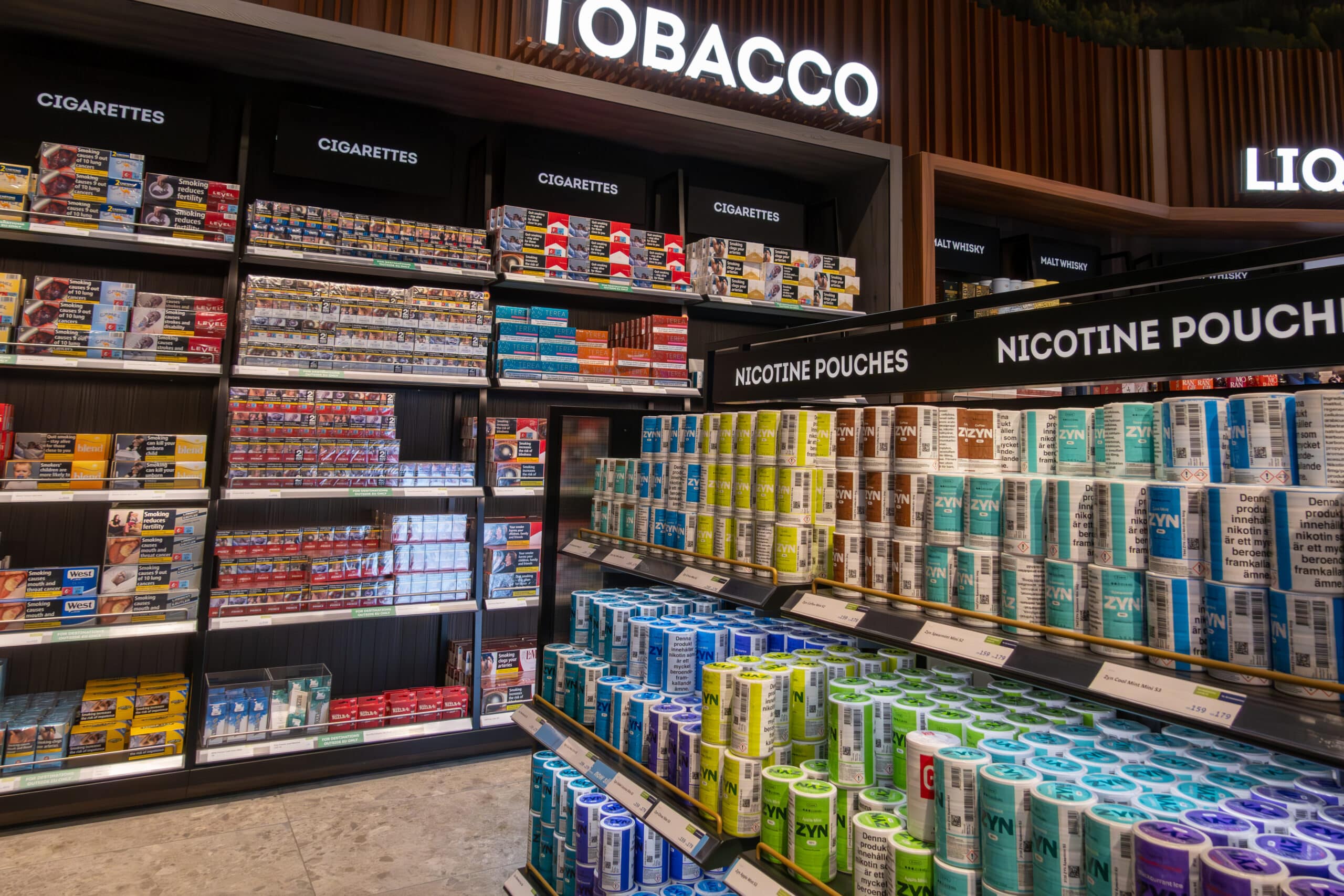
Presented as a modern alternative to tobacco products, nicotine sachets are experiencing spectacular growth worldwide. Driven by major multinational tobacco companies, this booming market nevertheless raises numerous questions. Between marketing strategies targeting young people, highly addictive products, uncertainties about long-term health effects, and regulatory frameworks that remain uneven across countries, experts such as STOP, a global tobacco industry watchdog, are calling for increased vigilance regarding these products, whose rapid spread could contribute to the normalization of nicotine use and generate a new epidemic.[1].
A nicotine product experiencing rapid global expansion
Nicotine pouches are small oral products, usually placed between the lip and gum. They contain nicotine, flavorings, plant fibers, and various texturizing agents, but no tobacco in the strict sense. This absence of tobacco distinguishes them from snus, with which they are sometimes confused, even though they are different products. Their "discreet" and "convenient" presentation is part of their commercial appeal. The packaging, slogans, and visuals are adapted to very different times of day, with the aim of integrating nicotine into everyday routines.
In practice, these products are designed for easy use, without combustion or vapor. Tobacco manufacturers present them as "alternatives" to nicotine consumption, compatible with many everyday situations where tobacco use and vaping are prohibited. However, their rapid spread should not be interpreted as proof of health benefits.
This market is growing rapidly, driven by an international expansion strategy pursued by major tobacco companies. By 2025, approximately 34 billion pouches are projected to have been sold worldwide, an increase of 660 million compared to 2020, and the global market value could reach US$25 billion (€22 billion) by 2028. In the United States, currently the largest market for nicotine pouches, sales are expected to increase by more than 1,300 million between 2019 and 2025.
This growth is accompanied by the rise of brands owned by transnational groups already heavily involved in combustible tobacco. The largest players are Philip Morris International (PMI) and British American Tobacco (BAT), which each controlled approximately one-third of the global nicotine pouch market in 2025. This diversification allows them to offset the decline in traditional smoking and retain dependent consumers within the nicotine market. The development of pouches is thus part of a broader industrial strategy to maintain sales and expand the product range.
Highly targeted marketing strategies, especially aimed at young people
Manufacturers are relying on particularly aggressive marketing strategies. Nicotine pouches are promoted through social media, influencers, sports sponsorships, and messages that present them as "trendy" products, associated with socially valued lifestyles, evoking performance and highlighting them as readily available, anytime, anywhere substitutes. This communication aims to normalize their use while making them appealing to diverse audiences. In the UK, for example, nicotine pouch brands – Velo, Nordic Spirit, and Zyn – offered free samples to consumers through their online stores, at events, and via representatives distributing them in city centers.
STOP also emphasizes the role of flavorings in the rise of e-cigarette sachets. The products are offered in a wide variety of flavors, ranging from mint and fruit to coffee, spices, and more evocative tastes like "pan rush," "blast," "frost," "exotic black," and "urban vibe." There are also nicotine sachets containing "pearls" which, according to the company, can accelerate nicotine absorption and enhance flavors. They believe this aromatic diversity strengthens the product's appeal, particularly among young consumers.
The industry also uses visual codes and distribution channels that are particularly effective with teenagers and young adults. Leveraging social media, content creators, and certain sports partnerships allows it to reach a younger audience than traditional campaigns. STOP also cites studies and observations suggesting that the discreet presentation of the product encourages its use in school or social settings.
Health risks that are still poorly understood, but a strong addiction
From a health perspective, there is insufficient independent evidence to support the use of nicotine pouches as an effective tool for quitting smoking or vaping. Some pouches can contain 50 mg of nicotine or more, compared to the average 10 to 12 mg in a cigarette, and can also be used simultaneously. Without strict regulation, the proliferation of these products could encourage a new wave of nicotine addiction rather than genuine harm reduction.
Furthermore, even though the long-term effects are not yet known, the safety of nicotine has been refuted by independent scientific research. In 2023, ANSES (the French Agency for Food, Environmental and Occupational Health & Safety) reported accidents linked to these products; nicotine can have negative effects on the developing adolescent brain; local risks also exist, such as oral or gum damage, as well as the possible presence of undesirable substances in some products. At the request of the National Committee Against Smoking (CNCT), laboratory analyses were carried out by the National Consumer Institute (INC) on several brands of nicotine sachets, including ZYN, marketed by Philip Morris: these analyses revealed the presence of toxic substances, notably lead and arsenic, two heavy metals whose harmful effects on health are widely documented.[2].
STOP urgently recommends that nicotine sachets be framed.
The rapid development of these highly addictive products, resulting from intensive marketing and promotion and high nicotine content, still largely unknown health risks, as well as incomplete regulation, create a risk of trivialization and the emergence of new generations of highly dependent consumers.
The organization calls on public authorities to uphold the precautionary principle and not authorize these products. Several countries, like France, Belgium And the Netherlands, have decided to completely ban the marketing of these products.
Failing that, the measures concerning tobacco products under the WHO treaty, the Framework Convention on Tobacco Control (FCTC), should be strictly enforced: product taxation, labeling including plain packaging and large graphic health warnings, limits on nicotine concentration, a ban on flavorings, a ban on all advertising, promotion, and sponsorship, and rigorous regulation of retail distribution, all accompanied by controls. Some countries have chosen this regulatory path, such as Ireland, which wants to ban its sale to minors.
Finally, STOP also insists on the need to protect and raise awareness among young people and to limit the influence of industry on regulations., who, through their lobbying in Europe, are not only trying to impose their products, which are banned from sale in various member states, but are also blocking ambitious tax increases.
AD
[1]New Report: Nicotine Pouch Market Has Exploded with Big Marketing Push from Big Tobacco, STOP, published on June 23, 2026, accessed on June 24, 2026
[2]The CNCT and the INC/60 Million Consumers reveal the results of their study: lead and arsenic found in nicotine pouches, CNCT, published on December 10, 2024, accessed on June 25, 2026