Tobacco taxes: the National Rally adopts the industry's arguments
September 15, 2026
Par: National Committee Against Smoking
Dernière mise à jour: September 9, 2026
Temps de lecture: 8 minutes
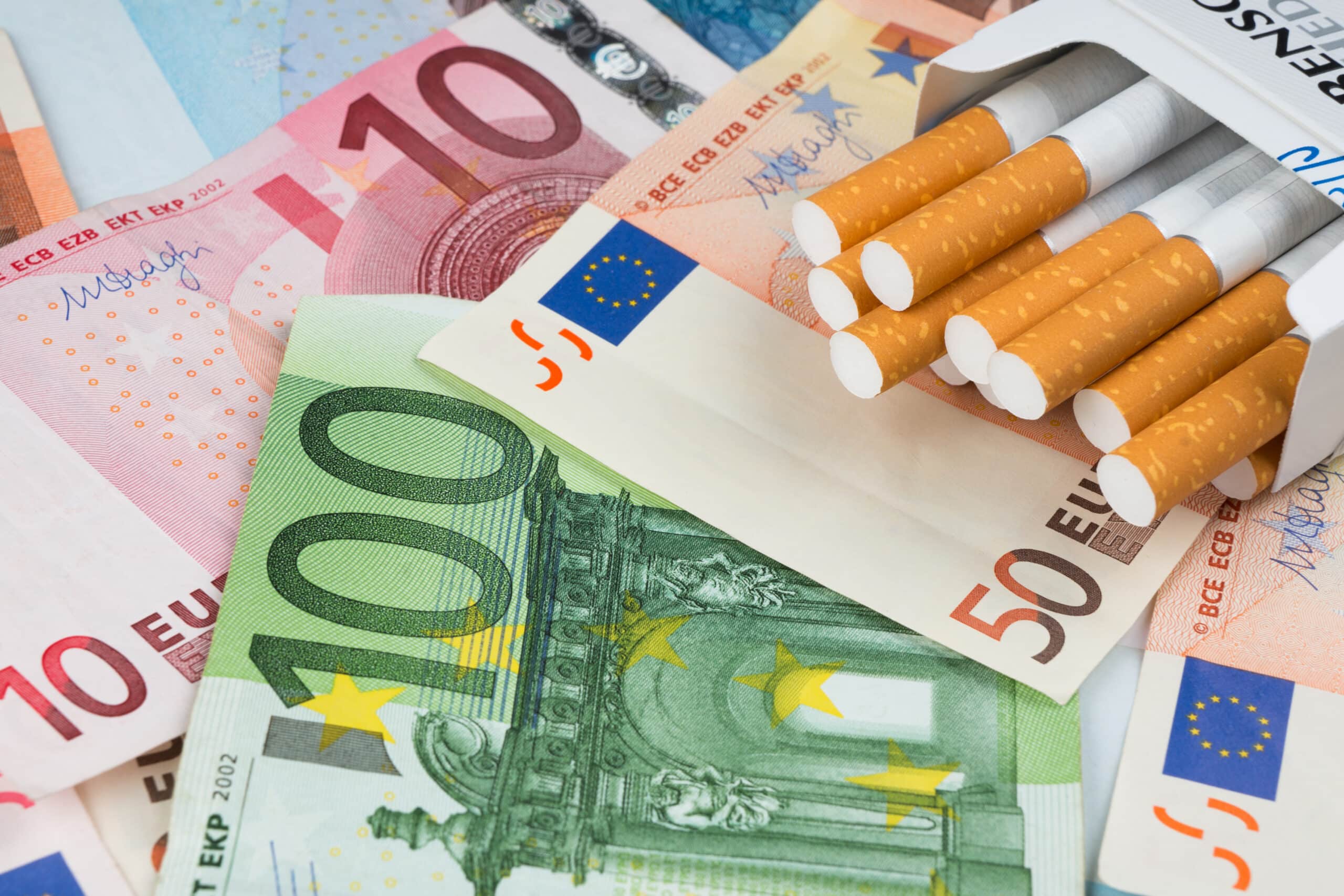
During the week of mobilization by tobacconists against tobacco taxes, from September 7 to 11, 2026, Marine Le Pen addressed an open letter to the profession in which she promised a freeze on tobacco taxes and an end to the automatic indexation of prices to inflation. This support comes as France prepares to debate the budget and the European Union examines a revision of the Tobacco Products Taxation Directive (TPD), which includes a substantial increase in minimum excise duties in many member states. The letter from the president of the National Rally group in the National Assembly asserts that "nearly one in two cigarettes consumed in France now escapes the legal network," an estimate that corresponds to that of the KPMG report funded by Philip Morris International, but which is contradicted by independent data.
A professional mobilization echoed at the political level
The Confederation of Tobacconists organized a week of rallies from September 7th to 11th, 2026, in six cities (Muret, Redon, Givors, Saverne, Salon-de-Provence, and Vernon), to demand a freeze on tobacco prices and the elimination of price indexation to inflation. Its president, Serdar Kaya, justified this demand "both to preserve our business model and for the sake of public finances."«[1]. The trade association, which represents approximately 22,500 retail outlets, highlights a 30% drop in its turnover and estimates annual losses for the government related to off-network purchases at €5 billion.[2].
As early as September 7, Marine Le Pen described this mobilization as "totally legitimate" in an open letter published on the National Rally website.[3]. In it, she announces her intention to "stop the tax escalation," freeze tobacco taxes, eliminate automatic indexation to inflation, increase penalties for traffickers, and expand the powers of municipal police regarding seizures. The letter describes tobacconists as a profession "vital to the social and economic life of our towns and villages.".
This stance comes amid a busy European agenda. The European Commission is proposing to raise the minimum excise duty rate from €90 to €215 per 1,000 cigarettes and to extend the tax to new nicotine products, including e-cigarettes, heated tobacco, and nicotine pouches in countries where these products are legal. On June 17, 2026, the European Parliament rejected the report of the Committee on Economic and Monetary Affairs (ECON), as well as the Commission's initial proposal, without adopting a formal position, while Member States' positions remain divided in the Council.[4].
Figures taken from the industry, contradicted by independent data
The claim that "nearly one in two cigarettes" bypasses the legal network is not supported by any source cited in the open letter. It echoes the 2025 edition of KPMG's report on parallel markets, commissioned and funded by Philip Morris International. In this report, 53.6% of French consumption is attributed to the parallel market, including 41% to counterfeiting and smuggling, and France alone accounts for 49.1% of the European parallel market.
These estimates rely on methodologies that are often opaque and criticized in the scientific literature for their biases, yet they are systematically promoted through a massive communication campaign by the tobacco company. Methodological weaknesses include, for example, the choice of collection zones for cigarette packs, which are either unrepresentative or deliberately selected due to high tourist traffic; unexplained statistical adjustments; confusion between legal cross-border purchases and illicit trade; and the assessment of counterfeit goods being entrusted to the manufacturers themselves. Furthermore, the results are difficult to reconcile with epidemiological data. The report estimates that total cigarette consumption in France, both legal and illegal, would have decreased from 51.53 billion units in 2021 to 49.54 billion in 2025, a decline limited to approximately 3.9 million units per 100,000 cigarettes, while the prevalence of daily smoking has decreased by nearly 38.8 million units per 100,000 cigarettes over the same period, according to available estimates. The sharp decline in sales volumes through legal channels is thus largely attributed to the parallel market, rather than to a decrease in the number of smokers.[5].
Independent public sources give a significantly different order of magnitude. The study funded by the DGDDI and MILDECA, published on October 22, 2025, places the parallel markets between 11 and 20 percent of consumption, with an average of 17.7 percent, and concludes that they are relatively stable.[6]. Surveys by Public Health France and the French Monitoring Centre for Drugs and Drug Addiction (OFDT) indicate that nearly 80% of smokers buy their tobacco from a tobacconist and fewer than 1% buy it on the black market, with the vast majority of the remainder being legal cross-border purchases within established limits. These latter purchases reflect tax differentials between Member States and manufacturers' over-supply strategies in neighboring countries: 88% of cigarettes sold in Luxembourg are not consumed there.
A lasting convergence between political positions and the interests of the industry
The support expressed in early September 2026 was not an isolated position. In November 2025, during the examination of the draft social security financing bill for 2026, members of parliament removed the tax on vaping liquids included in the text, by a vote of 91 to 53, with the votes of the National Rally and La France Insoumise, Marine Le Pen accusing the government of "taxing everything in sight."«[7].
In the European Parliament, a survey published by the Corporate Europe Observatory on declared meetings between MEPs and lobbyists places Philip Morris International at the top of the list of companies received by far-right MEPs, with 29 declared meetings across the three groups concerned. National Rally MEP Marie-Luce Brasier-Clain, a member of the Committee on Public Health, is among those who met with the company while simultaneously opposing the increase in tobacco taxes.[8]. During the vote on June 17, 2026, on the revision of the TTD, the most ambitious amendments, put forward by the left-wing groups, Renew and the Greens/EFA, were rejected, in a configuration that included the European People's Party and the far-right groups.
This convergence underscores the importance of one of the provisions of the WHO Framework Convention on Tobacco Control. Article 5.3 of this convention establishes a general obligation for countries that have ratified the treaty to protect their public health policies from the commercial interests of the tobacco industry. The inclusion, in parliamentary debate, of estimates produced or funded by manufacturers, without mention of their origin or methodological limitations, is one of the identified vectors of this influence. Furthermore, available data indicate that freezing tobacco taxes would not have a proven effect on parallel markets, whose essential determinants depend on effective control of the supply chain. However, European public health organizations emphasize that the European Union's tobacco product tracking and tracing system needs to be modified to be fully independent of manufacturers. This would help combat the oversupply of border markets. The effectiveness of tax increase policies would be enhanced, with a gain for health but also for the tax revenues of member states like France.
AE
[1] The Confederation of Tobacconists is calling for a "freeze on tobacco prices," both to preserve our business model and for the sake of public finances, France Info, published September 7, 2026, accessed the same day.
[2] Tobacconists are mobilizing all week against the "tax spiral""AFP, published September 7, 2026, accessed the same day
[3] «"Open letter from Marine Le Pen to tobacconists in France", September 2026
[4] Tobacco-free generation, «"Tobacco taxation: the European Parliament does not vote on the proposed directive on taxes", Published on June 18, 2026, accessed on September 8, 2026
[5] Tobacco-free generation, Parallel tobacco markets: the KPMG report serving the industry narrative, Published on June 26, 2026, accessed on September 8, 2026
[6] Press release, Black market for tobacco: official figures published, CNCT, published on October 22, 2025, accessed on September 8, 2026
[7] Vaping: MPs vote against the tax planned in the 2026 budget proposal, LCP, published on November 20, 2025, accessed on September 8, 2026
[8] What lobbies do far-right MEPs (and others) meet with in Brussels?, Multinational Observatory, published on November 27, 2025, accessed on September 8, 2026
National Committee Against Smoking |