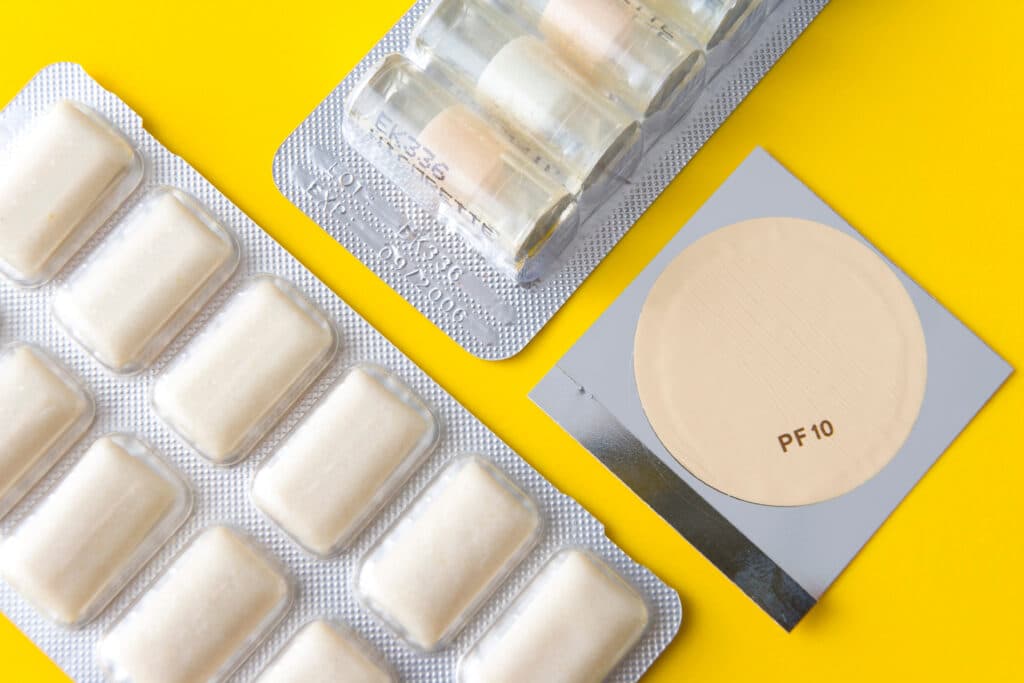
Nicotine sachets: the microplastic risk has not been assessed by the FDA
July 20, 2026
Par: National Committee Against Smoking
Dernière mise à jour: July 20, 2026
Temps de lecture: 9 minutes

According to an investigation by the media outlet The Examination[1], The U.S. Food and Drug Administration (FDA) authorized the sale of Zyn nicotine pouches, manufactured by Philip Morris International, in January 2025, without having precisely determined the material these pouches are made of or assessed their potential for releasing microplastics. These claims come from a former toxicologist at the agency, Christy Leppanen, who alleges she was sidelined when she sought additional information from the manufacturer.
A whistleblower questions the rigor of the assessment
Christy Leppanen, a toxicologist for nearly thirty years, worked for four years at the FDA's Center for Tobacco Products, which she joined in 2021. In 2024, she and her colleague Dilip Venugopal were tasked with updating the environmental assessment of Zyn, which had been under review for four years. Dilip Venugopal repeatedly assured her that the sachets dissolved in the mouth. In late 2024, at a public health conference, a conversation with a university researcher led her to doubt this information. She then bought a package of Zyn and tested the product herself: immersing it in saliva, heating it in a microwave, and crushing it. The sachets did not dissolve.
She informed Venugopal, who admitted his mistake and agreed that it would be legitimate to question Philip Morris International about the exact composition of the material. A week later, he told her that the agency's management wanted to close the case rather than request further information from the manufacturer. Neither he, nor their superior Sharon Edelson-Mammel, nor the head of the environmental division Susan Addo Ntim knew precisely what the sachets were made of at that time, according to the exchanges cited by The Examination. Emails exchanged in the following weeks show pressure from management for Ms. Leppanen to finalize her assessment within a tight timeframe, despite her objections regarding the lack of data on the material.
An authorization tainted by irregularities
On January 16, 2025, the FDA authorized the sale of Zyn. The authorization document indicated that a statement of no significant environmental impact had been signed by Christy Leppanen on January 2. She claims she did not sign this document and was on leave at the time, without access to her work tools. Upon her return, she sent a detailed email to Brian King, director of the Center for Tobacco Products, challenging the way the evaluation had been conducted; she received no response. She left the agency the following week under a federal voluntary departure program.
In an email shortly before her departure, she learned that a correction was planned regarding the lack of environmental impact that she had supposedly endorsed by signing, but it was not published in the following months. On March 1st, she used the FDA's public comment portal to report the situation. It wasn't until the end of March that the authorization was updated to clarify that she had not signed the document, which was retroactively dated January 27, 2025.
Several former FDA officials interviewed by The Examination, including former Center for Tobacco Products director Mitch Zeller and former director of science at the same center David Ashley, as well as former chief legal officer Eric Lindblom, believe that the law mandates the evaluation of each component of a product before authorization, and that a lack of information about the material should have led to a request for additional information or a denial of authorization. Esther Agbaje, a federal regulatory attorney at the Public Health Law Center, indicates that these elements could form the basis of a lawsuit against the FDA for failing to meet its obligations under the Tobacco Control Act.
An unresolved scientific question: the risk of microplastics
In 2025, researchers from the Danish Environmental Protection Agency (Miljøstyrelsen) analyzed eleven brands of nicotine pouches, including those of the Zyn brand. They concluded that their material is a semi-synthetic cellulose similar to cellulose acetate, the substance used in cigarette filters.[2]. This same study, conducted by researchers at DTU Sustain, specifies that this material combines regenerated cellulose fibers with a thermoplastic polymer that ensures the bag's airtightness and closure. Infrared spectroscopy (FTIR) analyses indicate that its degradation in the natural environment could take several years, or even more than a decade, a finding similar to that already established for cigarette filters. Philip Morris states on its website that its bags are made of "cellulose," without further details, and did not respond to The Examination's requests for information on the exact nature of the material; the FDA also did not respond.
Several researchers consulted by The Examination indicate that if the material is indeed cellulose acetate, the release of microplastics during oral use is plausible. Research on microplastics from cigarette filters has shown toxicity to human immune cells. However, no publicly available studies have directly measured microplastic release from nicotine pouches or assessed their specific health effects. The FDA told The Examination that during its review, no "new or additional concerns" regarding the ingredients or materials of these products were identified. Furthermore, a report by the agency published on March 10, 2025, on the environmental impact of oral nicotine products acknowledges that it does not address the potential effects of plastics and microplastics from the pouch material.
Beyond the issue of microplastics alone, the study by the Danish Environmental Protection Agency (Miljøstyrelsen) documents another dimension of the problem: used cigarette packs retain a significant portion of their original nicotine, averaging 63 µTP3T for the tested products of a common brand, making them toxic if accidentally ingested by animals. Several cases of dog poisoning have been reported in Denmark. Researchers also estimate that approximately 5.3 million cigarette packs are discarded in nature each year in Denmark alone.
An expanding market, which the FDA continues to facilitate
The US market for nicotine pouches is projected to grow by 37% in one year, reaching $6.8 billion, according to the research firm TobaccoIntelligence. Two weeks before the publication of the study, the FDA authorized Philip Morris International to state in its communications that the use of Zyn reduces certain risks associated with smoking cigarettes, a decision welcomed by the company, which highlighted the rigor of the agency's scientific review, in contrast to countries that have chosen to restrict or ban the product. This authorization could facilitate Zyn's access to other national markets.
Smokeless nicotine products such as pouches and e-cigarettes are marketed by the industry as delivering nicotine without the substances associated with tobacco combustion. In the United States, their FDA approval is based on a balancing of the potential benefit for adult smokers seeking to replace cigarettes and the risk of use by non-smokers, particularly young people.
Structural obstacles that remain
This case illustrates the many difficulties that go beyond the single case of Zyn: a regulatory assessment that relies largely on data transmitted by the manufacturers themselves, a still limited independent scientific literature on the composition and behavior in use of these new products, a tension, documented internally at the FDA, between the deadlines for review and the requirement for a complete assessment of health and environmental risks and finally, the weight of lobbying and the interference of manufacturers active at all levels to influence public decision in a way that is favorable to their interests.
The way Philip Morris leveraged the FDA authorization and the rigor of its scientific review in its communications echoes a precedent already documented with IQOS, another of the company's products. The FDA had granted this heated tobacco device the status of "modified risk tobacco product," strictly limited to claims of reduced exposure to certain substances, without acknowledging any reduction in health risks. However, this decision was massively used and distorted by the company in its marketing strategies, helping to create an image of less harmfulness beyond the scope initially defined by the agency. The same mechanism is emerging with the authorization, two weeks before the publication of the Zyn investigation, of messages about reducing certain risks associated with smoking: an American regulatory framework designed to strictly control product communication tends, in its commercial use, to become a legitimizing argument that can be mobilized beyond American borders, including in ongoing regulatory discussions in Europe.
AE
[1] Matthew Chapman, Kathryn Kranhold, FDA approved Zyn nicotine pouches for sale without knowing what they were made of, says former agency scientist, The Examination, published on July 14, 2026, accessed on July 16, 2026
[2] Nicotine pouches: a new source of plastic pollution, Tobacco-Free Generation, published on October 25, 2025, accessed on July 16, 2026