Nicotine without tobacco, a new challenge for public health
July 8, 2021
Par: National Committee Against Smoking
Dernière mise à jour: July 8, 2021
Temps de lecture: 5 minutes

New nicotine product offerings Offering “tobacco-free nicotine” are multiplying in the United States and circumventing the regulations put in place in 2020 by the Food and Drug Administration (FDA). Two researchers analyzed the types of products sold online.
By banning the use of fruity and sweet flavors in refills for certain vaping products on January 2, 2020, the American Food and Drug Administration (FDA) had dealt a first blow to Juul and Puff Bar e-cigarettes. Manufacturers have been fighting back since the beginning of 2021 by now offering devices and e-liquids based on "tobacco-free nicotine." This is the case, for example, of Puff Bar, whose sales were suspended by Puff Labs for a few months. Since the FDA's authority is limited to products directly derived from tobacco, these manufacturers are thus taking advantage of a relative legal uncertainty.
Two types of “tobacco-free nicotine”
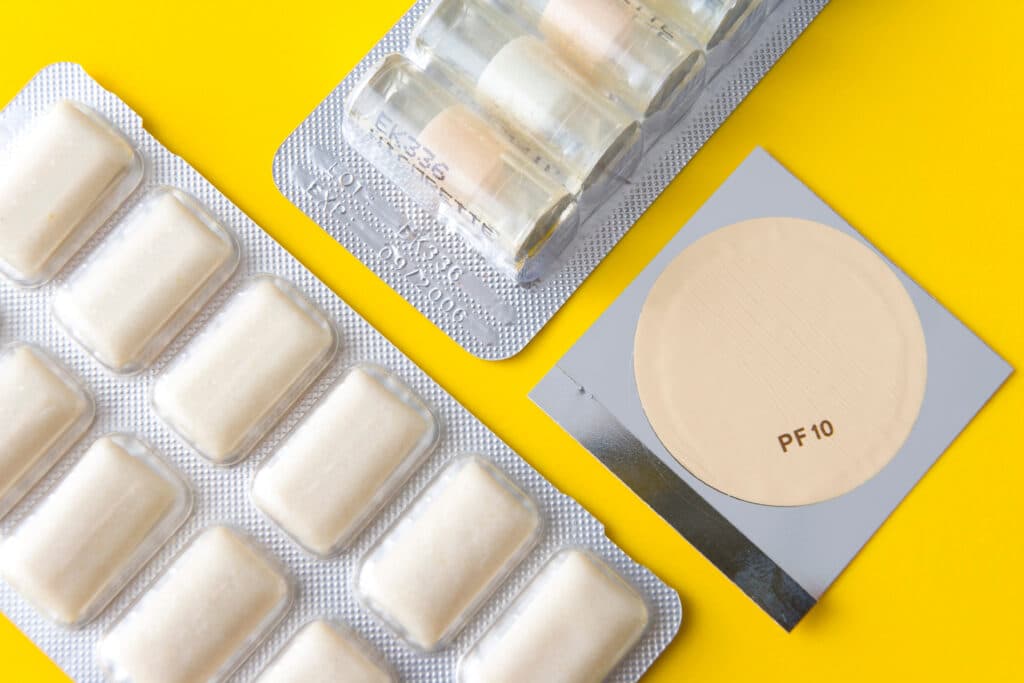
The term "tobacco-free nicotine" refers to two different types of substances. In some cases, it is a synthetic nicotine that does not come from tobacco and which corresponds to this legal vagueness; we find this type of nicotine in particular in the lozenges ("pouches") of the NIIN and 2ONE brands. In other cases, it is a nicotine extracted from tobacco before being "purified" to then be presented as "tobacco-free nicotine"; the nicotine lozenges of the Zyn or Velo brands use this type of substance and arguments.
In exploring twelve online retail sites offering vaping products, two researchers from the Yale School of Medicine discovered that ten of these sites offered various tobacco-free nicotine products[1]. These products were generally either e-liquids or disposable e-cigarettes with capsules; a few sites offered several types of products (e-liquid, disposable e-cigarettes, pre-filled capsules). Tobacco-free nicotine is also offered in the form of salts or “freebase” nicotine, with varying concentrations (from 0 to 50 mg/ml) and a wide range of flavors (fruit, candy, dessert, coffee, vanilla, mint, “ice” or tobacco).
The challenge of fruity and sweet aromas
In their advertising pitches, manufacturers present smokeless nicotine as cleaner, purer, of better quality, better tasting, odorless, and as offering a "sophisticated vaping experience." For nicotine extracted from tobacco, the technique used for purification consists of removing residual tobacco derivatives using diammonium phosphate, an ammonia solution, in order to obtain a "purer" nicotine[2]; it is nevertheless reminiscent of the "basing" used to produce crack from cocaine, where the substance obtained is indeed purer, but also more addictive.
One of the challenges of these new nicotine-based products is above all to retain the right to use a wide variety of fruity and sweet flavors, which is one of the major selling points for attracting young people. Flavored tobacco or nicotine products are not only considered more attractive by young people, but are also perceived as less harmful[3]. They are more particularly designed by the tobacco industry as products for initiating smoking and nicotine addiction. In a context of legal restrictions on flavors, the tobacco-free nicotine option appears to be an opportunity to circumvent restrictions on both sale and use, as these products are also sold to absorb nicotine in places where smoking and vaping are no longer permitted[4].
The two Yale researchers are calling on the FDA to move quickly on nicotine products and to expand its authority beyond tobacco products to prevent a surge in nicotine use among adolescents and young people, as has happened in recent years with Juul e-cigarettes.
Keywords: synthetic nicotine, tobacco-free nicotine, FDA, youth, flavors, pouches, nicotine pouches Photo credit: Truth Initiative ©Generation Without TobaccoMF
[1] Kong G, Krishnan-Sarin S, Tobacco Free Nicotine (TFN): A New Public Health Challenge. Tobacco Control, Blog. Published July 3, 2021, accessed July 7, 2021. [1] Huang LL, Baker HM, Meernik C, Ranney LM, Richardson A, Goldstein AO. Impact of non-menthol flavors in tobacco products on perceptions and use among youth, young adults and adults: a systematic review. Tobacco control. 2016. [2] Sourcewatch, Freebase nicotine. Published on December 25, 2019, consulted on July 7, 2021. [3] Génération Sans Tabac, The success of flavored nicotine products among young people. Published on 1er July 2021, consulted on July 7, 2021. [4] Generation Without Tobacco, United States: new circumvention of the ban on the sale of flavored vaping products. Published March 5, 2021, accessed July 7, 2021. National Committee Against Smoking |