Vaping could lead to early signs of cardiorespiratory disease in young adults
June 14, 2026
Par: National Committee Against Smoking
Dernière mise à jour: June 10, 2026
Temps de lecture: 6 minutes
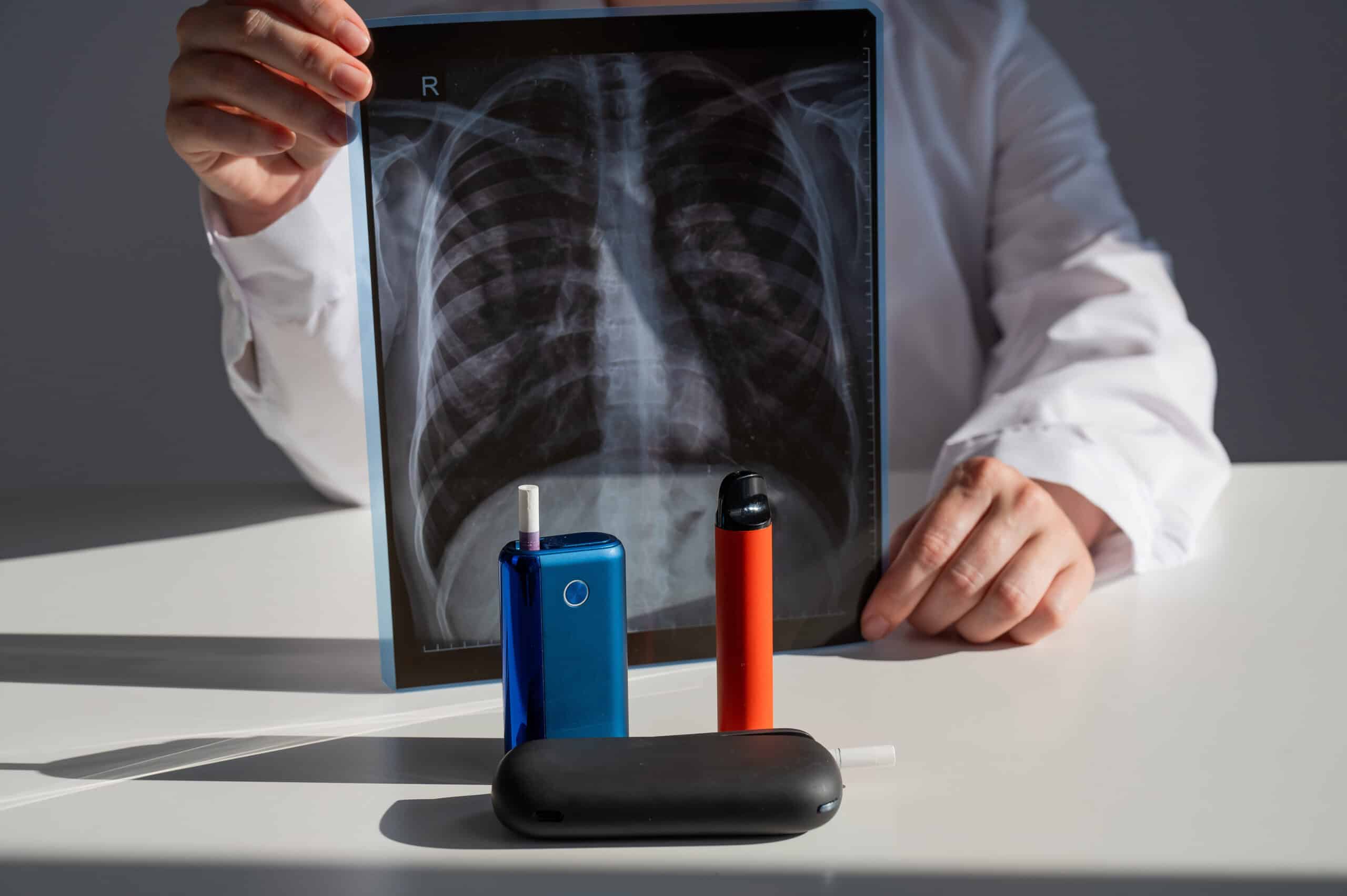
A Canadian study from the University of Alberta examined the effects of chronic exposure to e-cigarettes in young adults with no history of combustible tobacco smoking.[1]. The authors begin with the observation that vaping is often presented as less harmful than traditional cigarettes, but that data on its long-term effects remain limited and contradict the hypothesis of its harmlessness. They also point out that regular e-cigarette use has increased by 25% among young adults in the United States, Canada, and the United Kingdom since 2017, a worrying rise given the growing epidemic of nicotine addiction.
Objective, hypothesis and method of the study
The central question is whether young adults who appear healthy and whose lungs are still developing, but are regularly exposed to e-cigarettes, exhibit cardiorespiratory abnormalities during exercise and an altered pulmonary diffusing capacity for carbon monoxide (DLCO) response. Researchers hypothesized that this group would show reduced exercise capacity, decreased ventilatory efficiency, more pronounced shortness of breath, and a reduced DLCO response to postural changes. The aim was also to explore potential early pulmonary vascular dysfunction.
The study included 40 participants in total: 20 chronic e-cigarette users and 20 controls matched for age, height, and sex. Participants exposed to vaping reported daily use for an average of 3.4 years and had no significant history of smoking (cigarettes or other forms of tobacco) or known cardiorespiratory disease. All participants underwent pulmonary function tests and a cardiopulmonary exercise test. A second visit allowed for the measurement of DLCO, pulmonary capillary blood volume, and membrane diffusion capacity in both sitting and supine positions.
Respiratory abnormalities detected in the vaping group
Both groups had normal resting lung function, with no significant differences in spirometry, lung volumes, or baseline DLCO. However, e-cigarette users exhibited lower exercise capacity, with a peak oxygen consumption lower than that of the control group. They also displayed poorer ventilatory efficiency, greater shortness of breath during exercise, and a respiratory response deemed disproportionate to the workload.
" Young people of 23 shouldn't be out of breath. In this particular case, their physical exertion was of an intensity equivalent to a moderate walk. »,« said lead researcher Michael K. Stickland, professor of pulmonary medicine and director of the GF MacDonald Center for Lung Health.« Despite a moderate pace, an increase in dyspnea was observed in these individuals. »
Lung volumes during exercise did not differ between the two groups, suggesting that the observed shortness of breath was not related to dynamic pulmonary overdistension. In other words, the problem appeared to stem less from abnormal ventilatory mechanics than from excessive ventilatory demand or inefficient gas exchange. The shortness of breath score at peak exertion was not significantly different between groups, but its progression throughout exertion was more pronounced in e-cigarette users.
Pulmonary diffusion and vascularization
One of the most important findings concerns the DLCO response to postural changes. In the control group, moving from a sitting to a lying position was accompanied by an expected increase in pulmonary diffusion, linked to improved perfusion and capillary recruitment. In chronic e-cigarette users, this increase was attenuated, suggesting a less efficient pulmonary vascular response.
In contrast, pulmonary capillary blood volume and membrane diffusion capacity were not significantly different between the groups in response to posture. The authors interpret this dissociation as a possible early sign of pulmonary circulation impairment, before the appearance of more visible abnormalities on examination at rest. They compare this profile to certain alterations described in more advanced pulmonary or vascular diseases, such as mild chronic obstructive pulmonary disease (COPD).
This finding calls for further research, particularly on young people and non-smokers.
The authors conclude that regular e-cigarette use in apparently healthy young adults is associated with measurable cardiorespiratory abnormalities during exercise, despite normal resting examinations. According to them, these results challenge the notion that vaping constitutes a risk-free "alternative" to combustible tobacco. They suggest that the observed symptoms could, in the long term, foreshadow more pronounced cardiorespiratory damage if exposure continues.
The study does have limitations, however. The sample size is small, exposure is self-reported by participants and not directly measured, and physical activity levels are also based on a questionnaire. The authors also point out that they were unable to thoroughly investigate the effect of flavors or clearly compare vaping alone with other forms of tobacco exposure. Despite this, they believe their findings warrant broader research on the physiological effects of vaping in young people. The University of Alberta, in collaboration with the University of British Columbia, will conduct a large-scale study to track e-cigarette use and respiratory function over a three-year period.
" It is essential to better understand that these substances are not inert and that we still do not know their long-term consequences. »" explained Michael K. Stickland.« Imagine the number of people who will use electronic cigarettes while waiting for the results of new research. »[2]
AD
[1]Thomas G. Williams et al., Do Young Individuals With Chronic E-Cigarette Exposure Display Cardiopulmonary Abnormalities During Exercise and Blunted Recruitment of Pulmonary Diffusing Capacity?,CHEST, published in 2026, accessed on June 10, 2026
[2]Gillian Rutherford, Lisa Lock, Andrew Zinin, Vaping e-cigarettes leads to early signs of lung disease in young adults, Medical Xpress, published June 9, 2026, accessed June 10, 2026