North Macedonia plans to strengthen its anti-smoking legislation in response to widespread smoking.
January 26, 2026
Par: National Committee Against Smoking
Dernière mise à jour: January 22, 2026
Temps de lecture: 8 minutes
North Macedonia's Health Minister, Azir Aliu, indicated that approximately half of the country's population is addicted to tobacco, with an estimated average daily consumption of between 18 and 22 cigarettes.[1]. According to his statements to TV channel 24, 7.7% of smokers are between 13 and 14 years old, while approximately 37% are between 15 and 16 years old. The minister also described the use of e-cigarettes as a widespread phenomenon among young people. Faced with this alarming situation, the Balkan country intends to strengthen its existing anti-smoking legislation soon, given its status as a candidate for the European Union and its international commitments as a Party to the WHO Framework Convention on Tobacco Control.
Tobacco and nicotine products targeted by strengthened measures and controls
Azir Aliu announced that a draft law on protection against smoking would soon be submitted to a 30-day public consultation before being sent to Parliament.
The text provides for strict measures aimed at limiting smoking but also the overall consumption of new non-therapeutic nicotine products, with the same prohibitions applying to conventional cigarettes, heated tobacco, electronic cigarettes and other nicotine products.[2].
It restricts the import and sale of these products and completely prohibits their advertising, promotion and sponsorship, including on digital platforms[3].
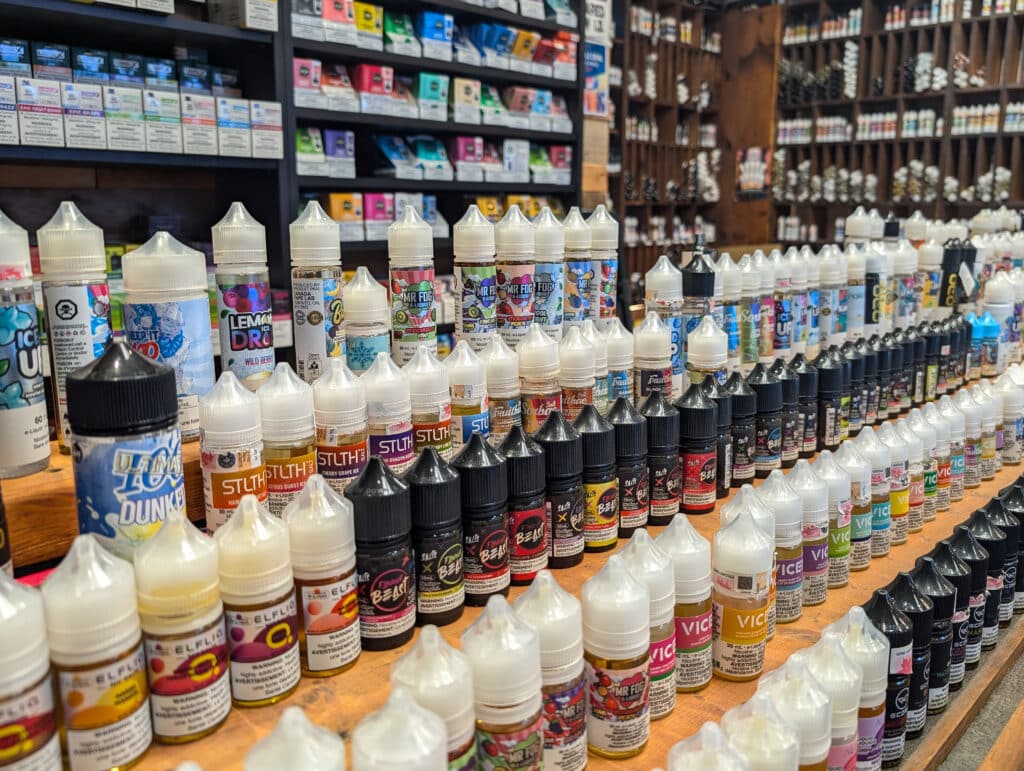
The text also prohibits the sale of tobacco products individually, by vending machines, self-service or online, and their display in stores will be strictly regulated: the visible display of cigarettes and other tobacco products in stores will be prohibited; the products must be stored in closed cabinets, opaque display cases or drawers, invisible to customers until the moment of purchase.
Although current legislation in North Macedonia already prohibits smoking and vaping in most indoor public places, including restaurants, cafes, bars, nightclubs, spaces where educational activities, cultural or sporting events are held, public transport and certain outdoor spaces enclosed on at least two sides (considered semi-enclosed and therefore treated as indoor spaces), the text plans to extend this ban on smoking and vaping to other indoor places, such as private vehicles in the presence of a minor, public and municipal institutions, workplaces, catering and commercial establishments and the common areas of residential buildings, as well as to certain outdoor public places, such as urban and international bus and railway stations, markets, the surroundings of health, educational or social establishments and public and municipal institutions.
The sale and use of flavored products in all forms will also be prohibited, the bill states, because of their appeal to young people and the resulting early nicotine addiction.
Failure to comply with the ban on smoking and vaping will result in dissuasive fines ranging from 150 to 300 euros for individuals and up to 5,000 euros for legal entities, in a country where the average monthly salary is around 600 euros.
The Minister of Health also emphasized the need to link these measures to monitoring mechanisms and indicators to ensure their effective implementation. Several oversight bodies have been designated, including the Market Inspectorate, the Health Inspectorate, the Labor Inspectorate, and the Ministry of the Interior.
The law, if adopted by Parliament, is expected to come into force at the beginning of March 2026.
This initiative has sparked strong reactions, particularly on social media, as well as significant opposition from the hospitality industry, which fears a drop in revenue. During the previous smoking regulations in 2010, these businesses circumvented the ban on smoking in cafes and restaurants, except on terraces, by covering their outdoor areas with removable glass or nylon partitions.
This time, the regulations are stricter and expressly stipulate that terraces must remain open at all times: the text provides for the possibility of a temporary closure of catering establishments not complying with the regulations.
The Institute of Occupational Medicine, a WHO Collaborating Centre and a leading public health institution in the fight against tobacco, has given its full support to the bill. It called on employers and workers, particularly in the hospitality sector, to support the implementation of the law as a workplace safety measure and not as a punishment. The public health agency reiterated that secondhand smoke is a proven cause of serious respiratory and cardiovascular diseases, as well as cancers, including lung cancer in exposed non-smokers. A call for vigilance was issued to inspection services and relevant authorities to ensure consistent implementation, a prerequisite for the law to be effectively enforced and achieve its objective.[4]. The Institute also emphasized that such a law benefits the economy by reducing sick leave and extending workers' life expectancy. Finally, all the experiences of countries that have adopted smoking bans in hotels and restaurants demonstrate that these bans do not lead to a decrease in revenue for the establishments concerned and are, on the contrary, widely supported, even by smokers.
" With this law, we send a clear message: health has a higher value than any commercial interest, children's health cannot be an object of profit, and public space must be a safe space. »"summarized the Minister of Health[5].
Public health as a priority, in accordance with European and international commitments
Smoking remains a major public health problem in North Macedonia. Data from the country's National Institute of Public Health shows that over 45% of the adult population smokes, with half of smokers consuming more than a pack of 20 cigarettes per day. This rate is well above the European average. According to Eurobarometer and EU health data, the average smoking prevalence rate is 24% in the adult population.
According to the ESPAD 2024 survey conducted by the Institute, some children smoke their first cigarette as early as nine years old, and nearly 38% of Macedonian adolescents have already smoked.
Moreover, although only 4.5% of those surveyed were active users of heated tobacco at the time of the survey, experts warn of a possible increase, particularly among young people, in the use of these products if strict regulations and controls are not put in place that fully include them.
The institute estimates that non-communicable diseases linked to smoking cause 4,000 premature and preventable deaths each year in the country.
With this law, Macedonia would join the group of countries in the region with strong anti-smoking legislation. Such legislation, which refers to the provisions of the FCTC (Common Front for Tobacco Control), exists in many countries, particularly in the EU. Similarly, a restrictive bill is currently being adopted in Serbia and Bosnia and Herzegovina.[6].
The Ministry of Health also stressed that, given that North Macedonia is itself a candidate for the European Union, this bill aims to align the country with current European regulations.
Furthermore, the project is also in line with the country's international commitments, as the country is a Party to the WHO Framework Convention on Tobacco Control (FCTC).
According to health experts, the real challenge, beyond simply adopting the legislation, lies in the political will to implement it in a country where smoking is still extremely normalized. They particularly point to the blatant disregard for the 2010 law and the ambivalent role of the Macedonian state, which owns more than 40% of the Prilep tobacco complex and opposes protective measures in this area in international forums.
AD
[1]Marinela Velichkova, Half of Population in North Macedonia Are Smokers, Including 37% of 15-16-Year-Olds, BTA, published on January 15, 2026, accessed on January 16, 2026
[2]Sinisa Jakov Marusic, North Macedonia Plans Tough New Law to Curb Smoking, BalkanInsight, published on January 12, 2026, accessed on January 16, 2026
[3]Cigarette pred училиште: Новиот закон се бори со старата неказнивост, vocentar.com, published on January 15, 2026, accessed on January 16, 2026
[4]Работниците во угостителскиот сектор се изложени на чад од тутун You can find out about your daily life, the Institute of medicine in your life. поддршка за новиот закон заштита од пушење, republika.mk, published on January 15, 2026, accessed on January 16, 2026
[5]Aliu: The draft law on tobacco protection has been published in the REKRR, public debate before approval, Telegraph, published on January 12, 2026, accessed on January 16, 2026
[6]Кафеанџиите се уште се договараат како да реагираат најавениот Anti-pushachki закон., slobodenpecat.mk, accessed on January 16, 2026