France publishes decree banning pouches and other non-pharmaceutical oral nicotine products
September 10, 2025
Par: National Committee Against Smoking
Dernière mise à jour: October 7, 2025
Temps de lecture: 6 minutes

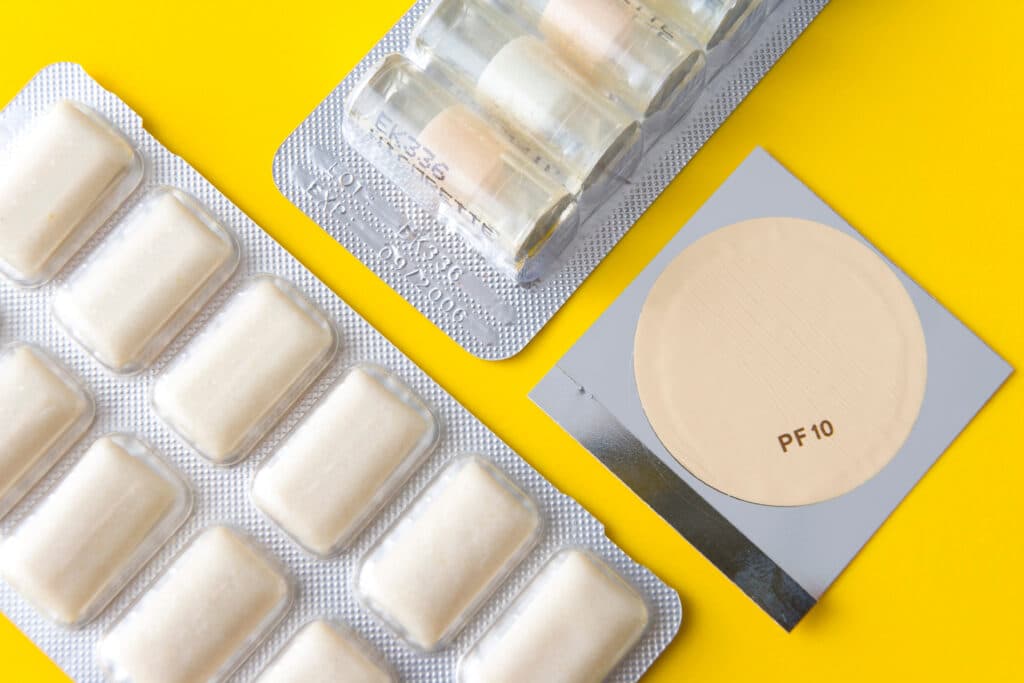
The Official Journal published Decree No. 2025-898 of September 5, 2025 concerning the prohibition of the “production, manufacture, transport, import, export, possession, offer, transfer, acquisition and use” of “products for oral use containing nicotine, particularly in the form of portion pouches or porous pouches, paste, balls, liquids, chewing gum, lozenges, strips or any combination of these forms”, with the exception of medicines and medical devices [1]This decree, announced in the fall of 2024 by the Barnier government, comes after a European validation process started in February 2025, which required several months of discussion with the European Commission and other Member States. The sale of these nicotine pouches was already prohibited under nicotine regulations. The new text strengthens this ban, which must now be applied to health organizations.[2].
Products that are dangerous to health and pushed by the nicotine industry
These products, called "nicotine pouches," "pouches," or "nicopouches," come in the form of small, flavored, and easily portable pouches placed between the lip and gum. Their discreet format and sweet flavors make them particularly attractive to adolescents and young adults. Several poisonings have been reported in France by poison control centers. Between 2017 and 2022, 295 calls concerning the deliberate or accidental consumption of heated tobacco, chewing tobacco, snus, nicotine pouches, and flavored beads were received by poison control centers.
A study by the French National Agency for Food, Environmental and Occupational Health and Safety (ANSES) has identified that the majority of exposed people are aged 12 to 17.[3], and that acute nicotine syndromes have been observed in adolescents who have consumed nicotine pouches, sometimes in a school environment, with symptoms such as palpitations, a feeling of malaise, tachycardia, nausea, vomiting, dizziness or even tremors.
In addition, there is extensive promotion of these products, both in points of sale and on social networks.
Faced with the decline in cigarette consumption in developed countries, nicotine pouches and new nicotine products, such as heated tobacco and electronic cigarettes, have been pushed by cigarette manufacturers, to the point of representing nearly 40% of the turnover of groups such as Philip Morris International.[4]Through the publication of forums, petitions, the creation of websites and the deployment of a large advertising banner in Paris, cigarette manufacturers have attempted to promote these new products as healthy "alternatives" to traditional tobacco.
According to the National Committee Against Tobacco (CNCT), their high nicotine concentration and rapid absorption promote early addiction, posing a public health risk. Contrary to some industry communications, these products are not intended as a cessation aid but rather as a tool for recruiting new users.
Laboratory analyses also revealed the presence of heavy metals in some samples, as well as high doses of nicotine and the massive presence of sucralose, highlighting that these products are far from harmless. A study conducted by the National Institute for Consumer Affairs (INC) with the CNCT revealed that some pouches contain arsenic levels up to 6.5 times higher than those of a traditional cigarette. Lead, antimony, and formaldehyde, carcinogenic or toxic substances, were also detected in several brands.
Health Minister Catherine Vautrin says the ban on nicotine pouches underlines her commitment to combating " risks related to addiction ".
Application and monitoring of the ban in the face of a powerful lobby
The CNCT stresses the importance of rigorous enforcement of the ban.
For Professor Yves Martinet, President of the CNCT, "Nicotine pouches are a blatant example of how the tobacco industry is constantly trying to circumvent the law and seduce a new generation with toxic and highly addictive products, to the detriment of young people's health. The CNCT will remain vigilant to ensure that this ban is rigorously enforced and that no space is left for these unworthy practices." ".
For Professor Loïc Josseran, President of the Alliance Against Tobacco (ACT), "Despite the government's clear intentions, the tobacco industry has stopped at nothing to defend its economic interests and expand its nicotine addiction market. ACT salutes the courage and determination of the executive, which has not given in to lobby pressure and has put public health first. […] But this victory should not make us lower our guard: we must remain vigilant in the face of new strategies from an industry that thrives on addiction and has no intention of reducing its turnover..
The ban on these products does not only concern France. Belgium also adopted it in October 2023. although traders do not always respect the sales ban.
AD
[1]Legifrance.gouv.fr, Decree No. 2025-898 of September 5, 2025 relating to the prohibition of products for oral use containing nicotine, published September 6, 2025, accessed September 8, 2025
[2]Amélie Eschenbrenner, The CNCT welcomes the ban on nicotine pouches, a crucial step to protect young people, National Committee Against Smoking, published September 7, 2025, accessed September 8, 2025
[3]Melanie Hennebique, Addiction, poisoning... Why nicotine pouches will soon be banned by the State, BFMTV, published September 7, 2025, consulted September 8, 2025
[4]Alliance against tobacco, Ban on nicotine pouches in France: a victory that puts a stop to the tobacco industry, published September 6, 2025, accessed September 8, 2025