California has adopted the first law taking into account the risks associated with third-party secondhand smoke.
January 9, 2026
Par: National Committee Against Smoking
Dernière mise à jour: January 7, 2026
Temps de lecture: 6 minutes
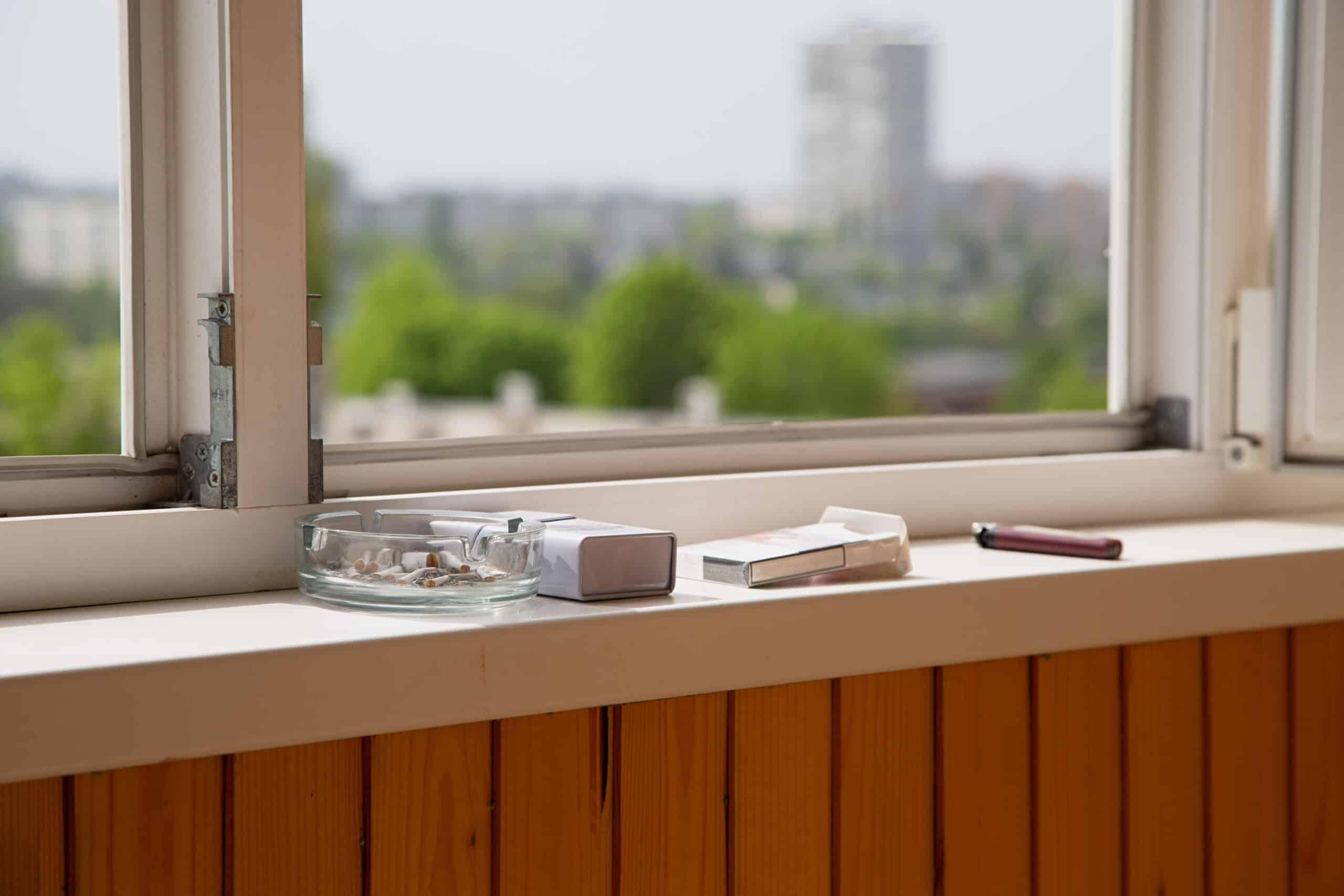
This phenomenon, less well-known than traditional passive smoking, is now the subject of the world's first law specifically designed to limit its effects.[1]. California Assembly Bill 455, sponsored by Representative Liz Ortega (San Francisco), passed unanimously and was signed into law on October 3, 2025, requires sellers of real estate to disclose any known history of thirdhand smoke or vaping residue when selling a home.
Third-party secondhand smoke is harmful to health in the long term and affects at-risk populations.
Thirdhand smoke refers to the chemical residues from tobacco or vaping smoke that persist in indoor environments after the smoker or vaper has stopped actively using the product. These substances can permeate carpets, clothing, curtains, furniture, walls, and even skin or hair, remaining present for months or even years. This contrasts with secondhand smoke, which is the tobacco smoke exhaled by the smoker or released from a tobacco product or cigarette butt, and which dissipates relatively quickly once the enclosed space has had its air volume renewed. A study conducted in San Diego measured the presence of thirdhand smoke in 220 apartments: researchers found it in every apartment, even though 88 of the residents did not use any tobacco products.[2].
Dr. Neal Benowitz, professor emeritus of medicine at the University of California, San Francisco (UCSF), explains that to get rid of these particles, simple cleaning is not always enough: deep cleaning surfaces, throwing away carpets and furniture, or even renovating walls and ventilation systems may prove necessary, even if "aOver time, the risk gradually decreases ".
According to scientific studies cited by expert researchers, exposure to thirdhand smoke can occur through inhalation, ingestion of contaminated dust, or skin contact. It is associated with health risks comparable to those of passive smoking, including an increased risk of cancer, cardiovascular and pulmonary diseases, as well as developmental disorders.
More specifically, twenty-six products contained in this thirdhand smoke are identified by the State of California as carcinogenic, responsible for birth defects or reproductive disorders.
Certain populations are considered more vulnerable, particularly babies and young children who crawl on floors, put objects in their mouths and absorb toxic substances through skin contact, or people "« allergic, asthmatic, immunocompromised or elderly »Pregnant women and residents of collective social housing, where contamination from third-party smoke is omnipresent, are particularly at risk.[3].
Furthermore, a recent study by researchers from the Institute of Atmospheric Physics of the Chinese Academy of Sciences indicates that thirdhand smoke can persist in indoor air for extended periods and change chemically over time, constituting a continuous source of exposure to low doses of toxic substances.[4]. Indeed, changes have appeared in the chemical composition of certain particles: over time, these have become enriched in nitrogen compounds, often associated with increased toxicity.
This study provides crucial scientific evidence to support public health policies and proposes new chemical markers to detect this persistent contamination, highlighting the need to integrate thirdhand smoking into tobacco control policies and indoor air quality standards, said Sun Yele, a professor at the Institute.
A new regulatory framework for third-party secondhand smoke
California has thus decided to adopt bill AB455, which characterizes thirdhand smoke as a danger comparable to asbestos, radon, or lead. Effective 1er From January 2026, sellers of detached houses who are aware of previous cases of smoking or vaping in the property are required to inform buyers in writing.
In addition, the Department of Toxic Substances Control will update the Environmental Hazards Owner's Guide, an informational brochure designed to educate consumers about common environmental hazards present on and potentially affecting real estate. The new version of the document will include a new section on thirdhand smoke, developed in partnership with the Center for Tobacco and the Environment at San Diego State University.
This law sets a precedent that could influence housing, consumer protection, and tobacco control policies both nationally and internationally. Dr. Benowitz stated:« We hope that future legislation will also target collective housing, where contamination is often widespread. »
In Spain, the anti-smoking association Nofumadores has already demanded that the same regulations apply to the draft revision of the national anti-smoking law by the Ministry of Health, which aims to prohibit smoking and vaping in many outdoor public spaces.
AD
[1]Carly Stern, What is 'thirdhand smoke'? The less-known cigarette threat — as world-first law goes into effect in California, New York Post, published January 1, 2026, accessed January 5, 2026
[2]Thirdhand Smoke Resource Center, How long does thirdhand smoke last?, Published on September 12, 2025, accessed on January 6, 2026
[3]Victoria Colliver, Thirdhand Smoke: This Hidden Danger Puts Kids and Adults at Risk, University of California San Francisco, published December 8, 2025, accessed January 6, 2025
[4]Liu Yang, Wei Zhou, Weiqi Xu, Siqi Zeng, Zijun Zhang, Bo You, Yan Li, Long Jia, Yi Zhang, Xi Chen, Yele Sun, Dynamic evolution of organic aerosols and gaseous compounds from thirdhand smoke, Building and Environment, Volume 289, 2026, 114101, ISSN 0360-1323
[5]Stanislas Deve, Thirdhand smoke: when the toxicity of tobacco penetrates deeper than you think, Why Doctor, published December 11, 2025, accessed January 6, 2026