In 2023, 2.7 billion people worldwide were still exposed to secondhand smoke.
September 16, 2026
Par: National Committee Against Smoking
Dernière mise à jour: September 9, 2026
Temps de lecture: 6 minutes
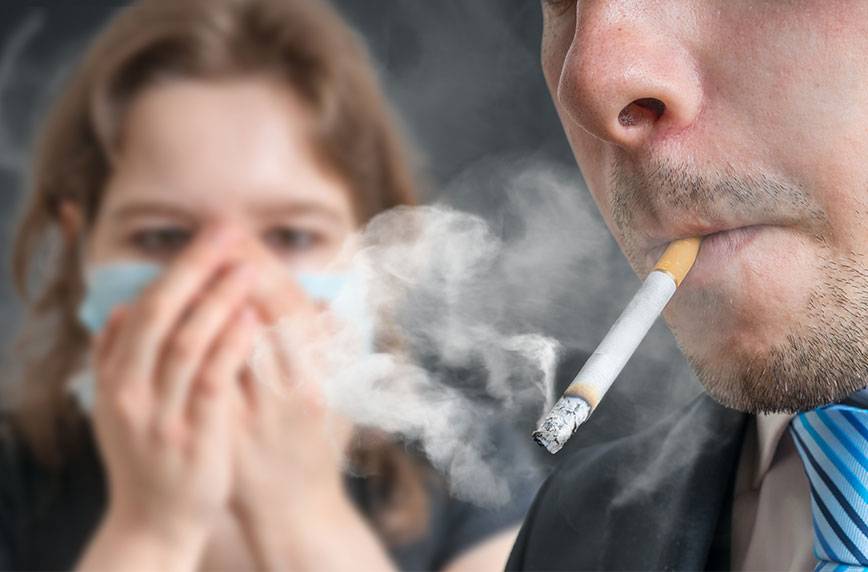
In 2023, approximately 2.71 billion people worldwide were exposed to secondhand smoke, meaning the smoke from the products themselves, as well as the exhalations of smokers and the toxic particles released, which can be inhaled and absorbed for weeks. This data comes from the Global Burden of Disease (GBD) 2023 study, published in the scientific journal The Lancet Public Health. The study, conducted in 204 countries and territories between 1990 and 2023, analyzes exposure by age and sex.[1].The authors also reviewed the scientific literature on this subject from 2010 to 2025. Despite a decrease in age-standardized prevalence since 1990, the absolute number of people affected remains high, particularly among children aged 0 to 14, with 767 million exposed. The health burden is estimated at 1.66 million deaths annually and 44.8 million years of healthy life lost or lived with disability. Active and passive smoking still killed 8 million people each year in 2023.
Passive exposure remains widespread and is increasing in Africa and the Middle East.
The age-standardized prevalence of exposure to secondhand smoke reached 33.9 per 100,000 inhabitants worldwide. It was higher among women, at 37.3 per 100,000 inhabitants, compared to 30.6 per 100,000 inhabitants among men. The highest levels were observed in Southeast Asia, East Asia, and Oceania, where nearly one in two people were affected.
Between 1990 and 2023, the age-standardized global prevalence decreased by 22.2%. However, this improvement did not lead to a decrease in the total number of people exposed, which remained broadly stable due to population growth.
In some regions, this number has even increased significantly. It rose by 98.5 per 100,000 live births in sub-Saharan Africa and by 72.1 per 100,000 live births in North Africa and the Middle East. Conversely, the most marked decreases in prevalence were observed in Latin America and the Caribbean, as well as in high-income countries such as Denmark and Norway.
A heavy health toll, particularly among women and children
Exposure to secondhand smoke is associated with 1.66 million deaths in 2023, representing 2.76 million deaths worldwide. This is compounded by the loss of 44.8 million disability-adjusted life years, an indicator that combines years of life lost with years lived with disability.
This exposure increases the risk of cardiovascular, respiratory, and metabolic diseases (stroke, lower respiratory tract infections, chronic obstructive pulmonary disease, asthma, type 2 diabetes, lung, tracheal, or breast cancer, etc.), the study authors point out. Ischemic heart disease is the leading cause of this health burden, accounting for approximately 12 million disability-adjusted life years. In children, lower respiratory tract infections are the most common, followed by asthma and middle ear infections, with 5.16 million respiratory tract infections in 2023.
Children remain particularly vulnerable, notably due to the immaturity of their respiratory systems and immune systems. In 2023, they accounted for more than 12% of the total disease burden attributable to passive smoking.
Women were also more likely than men to be exposed (1.49 billion women). In some countries, such as Timor-Leste, the prevalence of exposure among women was almost 1.8 times higher than that observed among men.
Anti-smoking policies are still unevenly implemented and should be strengthened everywhere.
The analysis has several limitations. It focuses primarily on exposure in the home and workplace, without systematically covering other environments. It also relies in part on self-reported data. Furthermore, it is conservative because it does not take into account exposure to aerosols from e-cigarettes or heated tobacco products.
The authors call for accelerating the implementation and enforcement of legislation banning smoking in public places, in accordance with Article 8 of the World Health Organization Framework Convention on Tobacco Control (FCTC), given that approximately 70% of the world's population is not protected by comprehensive smoking ban laws. The proportion of the world's population protected by comprehensive smoking ban legislation has increased from 3% in 2007 to 33% in 2024. This is significant progress, but it still only covers 2.6 billion people. In 2024, only 79 countries, including approximately 70 % located on the American continent, have achieved the highest standards of protection defined in the FCTC guidelines concerning protection against passive smoking, with entirely smoke-free public places or, at the very least, 90 % of the population covered by comprehensive regional legislation, despite persistent gaps in compliance with these provisions.
According to the study, protection against secondhand smoke remains incomplete, particularly in private settings such as homes and vehicles, where children are frequently exposed. The researchers emphasize that tobacco-free policies must be combined with other tobacco control measures, such as increased taxation, plain packaging, advertising bans, and smoking cessation programs—all provisions included in the UNFCCC treaty, which needs to be fully implemented.
AD
[1]Flor L., Anderson J., Morgan B. et al., Global, regional, and national prevalence of second-hand smoke and attributable disease burden in 204 countries and territories, 1990–2023: a systematic analysis for the Global Burden of Disease Study 2023, The Lancet Public Health, published September 7, 2026, accessed September 8, 2026