Australia: High consumption of nicotine pouches despite ban
October 17, 2024
Par: National Committee Against Smoking
Dernière mise à jour: October 15, 2024
Temps de lecture: 7 minutes

A study of nearly 1,600 Australians aged 16 to 39 found that 20% of respondents regularly use nicotine pouches, which are illegal in Australia. The study found that consumers used the pouches because they liked the flavour of the product or because they wanted to quit or cut down on their tobacco use.
An online survey of 1,598 Australians aged 16–39 years was conducted to assess awareness and use (lifetime and past 30 days) of nicotine pouches, characteristics of use (e.g. flavoured products, nicotine content of product), where purchase was made and reasons for use. The study[1], published in Drug and Alcohol Dependence, was conducted anonymously online between April and June 2024 and found that 19 % of the participants had used a sachet in the past 30 days.
The authors warn, however, that the sample surveyed is not representative. Indeed, although it was an intentional sampling strategy (recruitment via email by the web panel provider PureProfile), it included higher proportions of smokers and e-cigarette users than expected. Indeed, 30% of the respondents reported currently consuming tobacco products and 22% were e-cigarette users at the time of the study, a prevalence higher than the national average for these two product categories, which is 10.6% for smoking and 7% for vaping.
Nicotine pouches banned in Australia
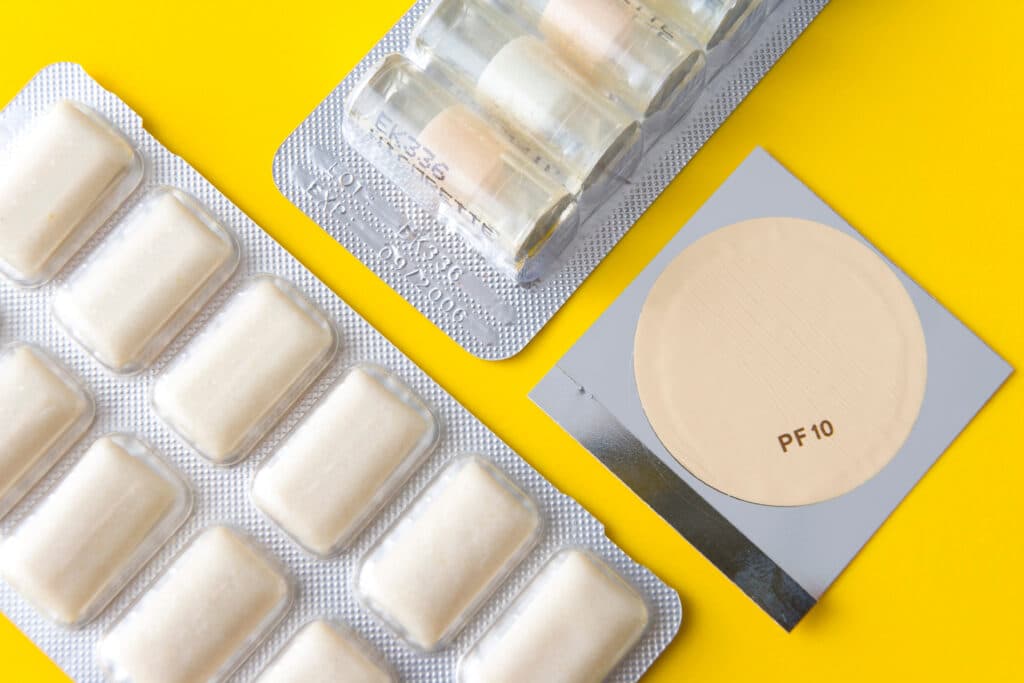
Nicotine pouches are small, pre-filled, permeable bags that contain nicotine and other ingredients, such as sweeteners and flavorings. They are placed between the lip and gum, where their contents dissolve in the mouth and are absorbed into the bloodstream.
In Australia, nicotine pouches are regulated by the Therapeutic Goods Administration (TGA), a government regulatory agency that oversees the marketing and advertising of therapeutic products. It therefore controls nicotine products, other than tobacco products. Recently, the TGA reiterated its position on nicotine pouches in a note[2] online, stating that none of the pouches had been assessed for “quality, safety or efficacy” and were therefore not included in the Australian Register of Therapeutic Goods (ARTG). This statement from the Agency means that nicotine pouches cannot be advertised and cannot be legally sold to consumers by Australian retailers.
A product consumed regularly by survey respondents
Just over three-quarters (77 %) of the sample surveyed reported being aware of nicotine pouches. 26 % of respondents had used them in their lifetime and 19 % had used them in the 30 days preceding the survey. Among those who reported using the product in the past 30 days, fruit flavoured products (35 %) and menthol/mint flavoured products (34 %) were the most commonly used. Regarding the source of the pouches, one-third (33 %) of consumers reported obtaining the product from a tobacco retailer, 211 % from a friend, 141 % on the Internet and 121 % from a pharmacy.
The most commonly cited reasons associated with the use of nicotine pouches are “ they have flavors that i like " And " to help me quit smoking " About a third of respondents mentioned these reasons. Just over a quarter of respondents said they used nicotine pouches because they "taste good" And " to help me reduce my tobacco consumption " Just under a quarter of respondents said they used nicotine pouches. to help me reduce my vaping consumption ", Or " because they look fun/cool ".
Better enforcement of the marketing ban
The fact that retailers are the most common source of sales of these pouches is also consistent with previous research on e-cigarettes, the authors say. Given that the retail sale of these products is prohibited in Australia, the findings suggest that these retailers are engaging in illegal activity. Efforts are needed to enforce regulations surrounding the sale of these products.
The authors also point out that there is no evidence that nicotine pouches are effective as a smoking cessation aid or vaping and that the TGA has not approved the product for cessation purposes. They say more investment is needed in efforts to help smokers and e-cigarette users quit using scientifically validated treatments. They point to the use of unapproved methods with unknown harms.
An investigation by Guardian Australia revealed last February that several Australian influencers are presenting nicotine pouches as tools for quitting e-cigarettes. While these products are banned from sale in this country, influencers and tobacco manufacturers deny any collaboration. However, these influencers are relaying the manufacturers' discourse, with arguments emphasizing the discretion of using these products and suggesting their consumption in places where it is not possible to smoke or vape. These products can also be presented as "alternatives" to smoked tobacco, or even - according to the manufacturers - as a method for quitting smoking.[3].
Health effects still unknown
Independent research into the health effects of nicotine pouches is in its infancy, with most studies conducted by tobacco companies or researchers funded by tobacco companies or their subsidiaries, according to the authors of the Australian study. Available data from independent testing of product components suggest that the products contain hazardous substances, including those classified as "probably carcinogenic" by the International Agency for Research on Cancer.
An independent German study of 46 nicotine pouch references conducted in 2022 noted high levels of nicotine, pH values promoting its passage into the bloodstream and traces of nitrosamines specific to tobacco.[4].
AE
[1] Michelle I. Jongenelis, Mary-Ellen E. Brierley, Runze Li, Patterns of nicotine pouch use among young Australians, Drug and Alcohol Dependence, Volume 264, 2024, 112428, ISSN 0376-8716, https://doi.org/10.1016/j.drugalcdep.2024.112428.
[2] Therapeutic Goods Administration, Nicotine pouches, Australian government website, accessed 15 October 2024
[3] Tobacco-free generation, Australian influencers promote nicotine pouches to quit vaping, published on February 16, 2024, consulted on October 15, 2024
[4] Tobacco-free generation, Traces of nitrosamines and high levels of nicotine in the pouches, published on August 16, 2022, consulted on October 15, 2024
National Committee Against Smoking |