Vaping: increased usage and a greater need for support
December 11, 2025
Par: National Committee Against Smoking
Dernière mise à jour: December 11, 2025
Temps de lecture: 9 minutes

In 2024, 7.9% of adults aged 18 to 79 reported vaping, and 6.1% used it daily, confirming an upward trend since 2016. Use was more frequent in the most disadvantaged socioeconomic categories, where the daily prevalence reached 8.2%. Regionally, Brittany and Corsica were among the most affected areas, with 9.1% and 10% of daily vapers, respectively. Finally, nearly half of daily vapers continued to smoke tobacco (47.7%), which largely negates the benefits of vaping. part of the expected benefits in terms of risk reduction.
The results presented come from the Public Health France 2024 Barometer[1], This is a large-scale national survey designed to measure the health behaviors of the adult population. The 2024 edition is based on a representative sample of people aged 18 to 79 residing in France, both in metropolitan France and its overseas territories. The representativeness of the sample is ensured through a random sampling procedure and statistical weighting of the data, taking into account sex, age, region, and method of data collection.
Experimentation with vaping is widespread, especially among young adults.
The 2024 edition of the Public Health France Barometer confirms the entrenchment of vaping in adult behavior, with a particularly high level of experimentation. In 2024, 37.5% of people aged 18 to 79 reported having already tried an e-cigarette, even if only for a single puff. This widespread adoption demonstrates the lasting presence of these products in the French nicotine landscape, more than ten years after their arrival on the market. Experimentation remains more frequent among men (40.3% of men) than among women (34.8% of women), which partly mirrors the disparities traditionally observed in tobacco consumption.
Experimentation with puffs—disposable electronic cigarettes—designed for ease of use and often marketed with appealing flavors, is a particularly revealing indicator of usage patterns. In 2024, 13.6% of adults reported having tried a puff, but this average masks significant variations across generations. Among 18- to 29-year-olds, more than a third (35.5% of adults) reported having experimented with this type of product, a prevalence considerably higher than that observed in other age groups. The proportion drops to 19.6% of 30- to 39-year-olds, then continues to decline rapidly with increasing age, becoming negligible among those over 60. This distribution clearly demonstrates the attractiveness of disposable vaping to young adults, a population particularly sensitive to market innovations, devices perceived as simpler to use and marketing strategies focused on flavors with sweet, fruity or exotic tastes.
These results take on particular significance in the context of the ban on vaping products in France, which came into effect in February 2025. The high level of experimentation observed among 18-29 year olds in 2024 corresponds to the period preceding this measure. Future editions of the Barometer will allow us to assess whether the ban leads to an actual decrease in access to and use of these products in particular, or even e-cigarettes, or whether other supply channels – notably online or via the illicit market – replace legal sales. Similarly, the alternative to the use of new "semi-disposable" products launched by manufacturers, which have characteristics similar to those of disposable cigarettes, will need to be evaluated. This monitoring will be crucial in measuring the capacity of public policies to respond to the adaptation strategies of industry and to limit young people's exposure to nicotine products.
Vaping prevalence is on the rise, marked by significant social and territorial disparities.
In 2024, vaping continued its upward trend in France, with 7.9% of adults reporting vaping and 6.1% reporting daily use. This increase is consistent with the trend observed for several years and affects men more than women, as well as adults aged 18 to 49, among whom the daily prevalence remains close to 8%. Beyond this general trend, the results highlight particularly marked inequalities based on socioeconomic status. Daily vaping reaches 8.2% among those reporting financial hardship, compared to 4.2% among those who consider themselves well-off. Similarly, manual workers and employees exhibit higher levels of vaping than managers, reflecting increased exposure to nicotine consumption in the most vulnerable groups. These findings reflect the well-documented inequalities in smoking rates and underscore the importance of intensifying prevention and support efforts for vulnerable populations. This also implies strengthening the promotion, among these particularly affected groups who are often economically penalized by nicotine use, of validated, safe, and health insurance-covered smoking cessation aids. Highlighting these tools is a crucial lever for reducing health inequalities and supporting a real and lasting decrease in addiction.
The observed disparities also extend geographically. The prevalence of daily vaping varies considerably from one region to another, ranging from 4.6 to 10 per 100,000 vaping ...
A close link between vaping and smoking limits the expected benefits.
The consumer profile also shows that 47.7% of daily vapers are former smokers who continue to use these nicotine products. This cumulative consumption significantly limits the expected harm reduction benefits: as long as combustible tobacco remains present, even occasionally, the health effects associated with tobacco use persist, and the harm reduction aspect cannot be applied. The proportion of people who have never smoked is relatively small but nevertheless represents 2.8% of daily vapers.
This overlap of uses reflects complex trajectories, where vaping can either support a cessation effort or prolong, or even reinforce, nicotine addiction. Several studies show that the simultaneous use of tobacco and e-cigarettes exposes individuals to an increased risk of continued use and a higher probability of relapse for those who have attempted to quit. In this context, vaping can only play a positive role if it is part of a clear strategy and accompanied by complete tobacco cessation, relying on validated and reimbursed support programs and incorporating the cessation of vaping itself, in the short or long term, into the overall treatment strategy.
The early adoption of vaping by young adults is also a major concern. Data shows that the youngest age group is where experimentation with vaping is most prevalent, and several studies have documented the potential role of e-cigarettes as a gateway to smoking. Young people appear particularly vulnerable to flavored products, user-friendly devices, and promotional strategies that enhance the social or aesthetic appeal of these products. The scale of experimentation observed in 2024 underscores the importance of strengthening prevention efforts, particularly regarding information on the risks associated with vaping, the regulation of marketing practices targeting minors and young adults, and support for smoking cessation programs to prevent the development of a lasting nicotine addiction. This is all the more critical because early initiation of nicotine use, in any form, increases the likelihood of long-term addiction.
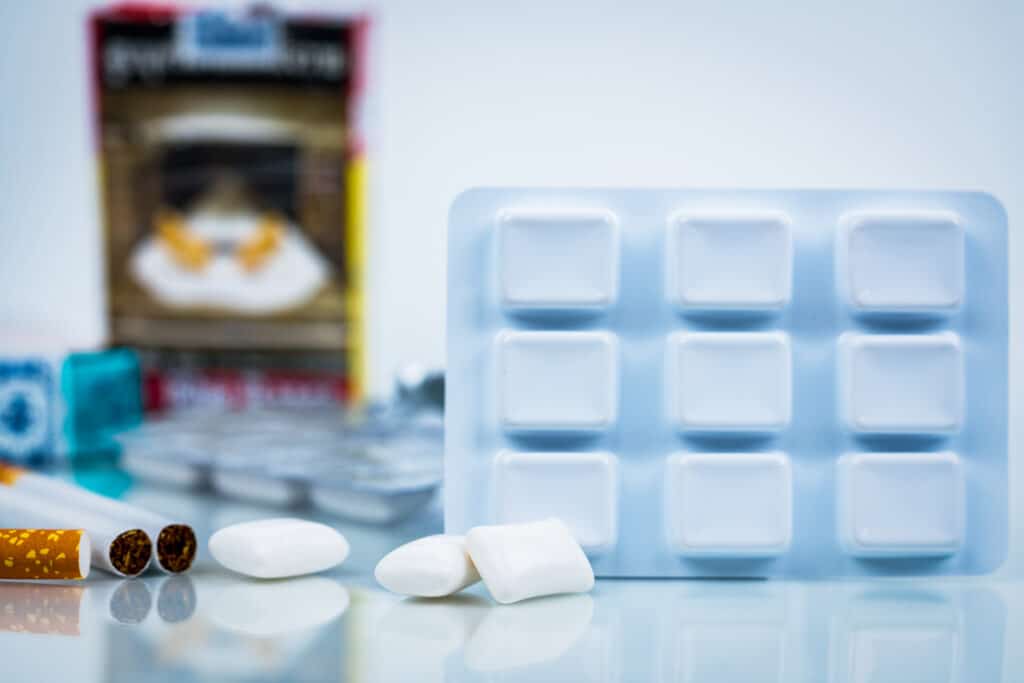
These findings all point to the importance of guiding consumers, and especially the most vulnerable groups, towards proven cessation methods, such as nicotine replacement therapies like patches, gum, and sprays, combined with cognitive behavioral therapy. New, validated treatments are also available, expanding the capabilities of healthcare professionals in their care of smokers.[2]. Enhancing access to these devices, and providing better information on their effectiveness, is an essential lever for reducing both combined use and associated health risks, while preventing electronic cigarettes from becoming a factor in maintaining or re-normalizing nicotine consumption.
AE
[1] A. Pasquereau, R. Guignard, R. Andler, V. Nguyen-Thanh. Vaping: Use and recent developments. In Public Health France Barometer: 2024 edition results. Saint-Maurice: Public Health France; 2025: 8 p. Available from: http://www.santepubliquefrance.fr
[2] Tobacco-free generation, Smoking cessation: WHO recommends combining behavioural interventions with pharmacological treatments, Published on August 15, 2024, accessed on December 11, 2025
National Committee Against Smoking |