A proposal for a "polluter-pays" tax in the United Kingdom
June 3, 2026
Par: National Committee Against Smoking
Dernière mise à jour: June 2, 2026
Temps de lecture: 6 minutes
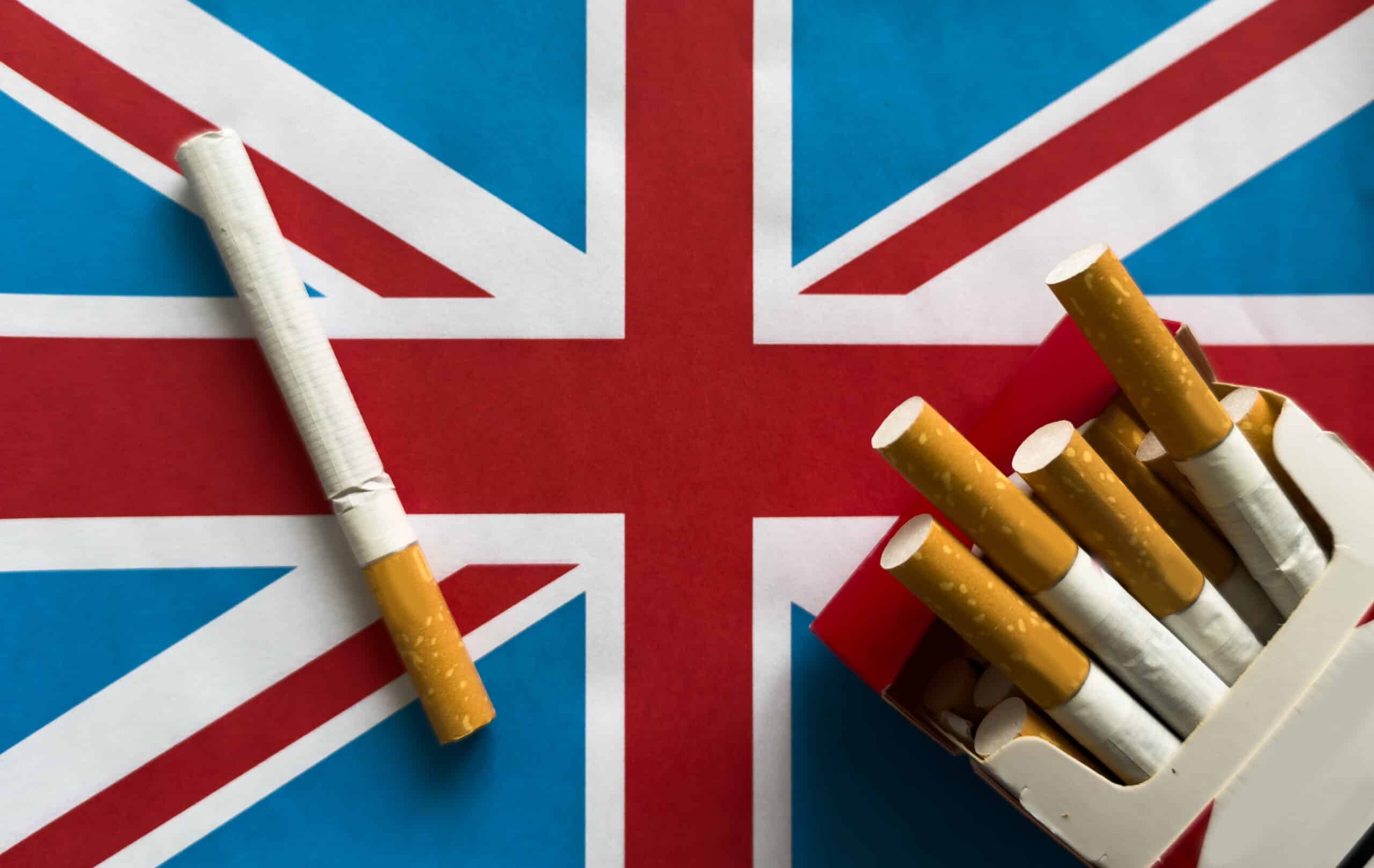
A study conducted by the Tobacco Control Research Group at the University of Bath and the Addiction Research Group at the University of Sheffield, published in the journal Social Science & Medicine, examined the effect of capping wholesale tobacco prices, combined with a tax increase, in England.[1]. The authors conclude that such a measure could simultaneously reduce consumption, generate additional tax revenue, and decrease health inequalities. The study begins with the observation that tobacco manufacturers still have considerable leeway to adjust their prices and preserve their profits, even after tax increases. The researchers believe that this ability to manipulate prices limits the effectiveness of traditional fiscal policies.
A twenty-year model
The authors used the Sheffield Tobacco and Alcohol Policy Model to simulate changes in consumption, spending, tax revenues and health effects among 250,000 adults in England aged 18 to 89, over the period 2025-2044. Six scenarios were tested, ranging from a soft wholesale price cap to a strict cap, with tax increases adjusted accordingly.
The principle adopted is to lower the highest wholesale prices while offsetting this decrease with an increase in excise duties, in order to maintain the average price of tobacco at a stable level. According to the authors, this approach aims primarily to reduce the industry's power to set prices, rather than placing the financial burden on consumers and retailers.
Health gains and rising public revenues
In the most ambitious scenario, a cap of £0.035 (€0.40) per wholesale cigarette, applied immediately, would be accompanied by a 23.6% increase in specific duties. By 2030, this scenario would reduce smoking prevalence by 0.08 percentage points, or 35,437 fewer smokers compared to the baseline scenario. Over twenty years, the same scenario would be associated with 1,636 fewer deaths, 43,987 years of life lost avoided, and 10,073 fewer hospitalizations. The gains would be particularly pronounced in the most disadvantaged groups, which the authors interpret as a positive effect on social inequalities in health.
The study also shows that the measure would reduce tobacco industry revenues while increasing government revenues. In the most extreme scenario, tobacco tax revenues would increase by £4.9 billion (€5.6 billion) over five years, while industry revenues would decrease by £7.8 billion (€9 billion) over the same period. The authors emphasize that, even in intermediate scenarios, the measure remains compatible with an increase in public revenue. In their model, average spending by smokers remains broadly stable, suggesting that the bulk of the financial transfer would come from the private sector to the government.
Differences based on income
One of the most striking findings concerns the social dimension. In the most disadvantaged quintile, the prevalence of smoking reaches 24.6 per 100,000,000,000, compared to 7.44 per 100,000,000 in the least disadvantaged quintile. The authors also note that tobacco-related mortality rates and hospitalizations are significantly higher in the poorest areas.
According to them, a cap on wholesale prices, combined with higher taxes, would more directly affect the cheapest products, which are often consumed more by low-income households. This mechanism could therefore strengthen the incentive to quit smoking among the groups most exposed to tobacco.
A public policy approach to complement strong anti-smoking measures
The authors present their work as a decision-making tool for countries where tobacco taxation has already reached high levels, but where the industry retains the ability to maintain the attractiveness of its products. They believe that regulating wholesale prices could complement traditional taxes by limiting manufacturers' circumvention strategies.
The study, however, remains a model, based on assumptions about consumer and business behavior. The authors acknowledge, in particular, uncertainties regarding reactions to higher price increases, substitutions with other nicotine products, and the illicit market.
The study nevertheless argues for a clear conclusion: a policy combining a cap on wholesale prices and higher taxes could make tobacco less profitable for the industry, while improving public health and reducing inequality. Dr. Rob Branston, co-director of the University of Bath's Tobacco Control Research Group and co-author of the study, said that’ by adopting With the Tobacco and Vaping Act, the British government protected an entire generation from the harmful effects of smoking.. Our research shows that it is possible to strengthen this leadership by tackling the colossal profits of an industry that kills more than half of its regular consumers. »
Hazel Cheeseman, chief executive of Action on Smoking and Health UK, added:« The public overwhelmingly supports making tobacco manufacturers pay for the harm caused by their products. A polluter-pays tax reflects a clear public desire to shift the financial burden from taxpayers to an industry that profits from addiction and disease. […] With the decline in smoking rates, smokers are increasingly disadvantaged and bear the brunt of tobacco's harmful effects. It is therefore crucial that funding be targeted where it is most needed, to help people quit smoking and reduce health inequalities. »[2]
AD
[1]Duncan Gillespie, Damon Morris, Ryan Kai Le Chen, Alan Brennan, J. Robert Branston, Reducing tobacco supplier profits and pricing power: Modeling the impact of a tobacco price cap and tax increase on socioeconomic inequalities in England, Social Science & Medicine, Volume 402, published May 28, 2026, accessed June 1, 2026
[2]Tobacco company levy could raise up to £4.9bn and prevent 10,000 hospital admissions, study suggests, University of Bath, published on 28 May 2026, accessed on 1 June 2026