A study confirms that European market law is compatible with "endgame" tobacco policies
August 14, 2026
Par: National Committee Against Smoking
Dernière mise à jour: August 7, 2026
Temps de lecture: 6 minutes
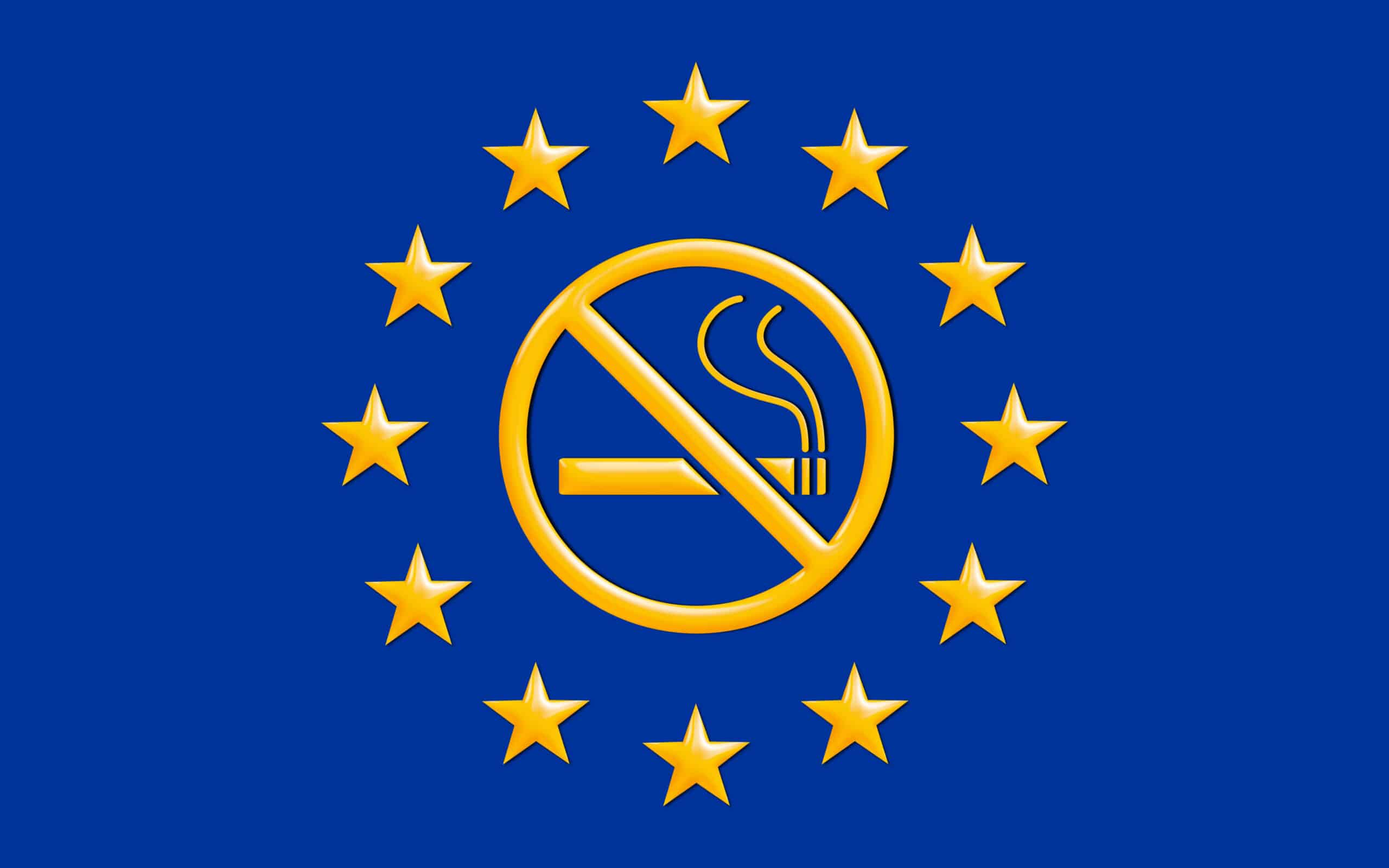
A university study published in the journal Health Economics, Policy and Law examined the link between European Union internal market law and so-called "endgame" tobacco policies, using the British case of the "tobacco-free generation" and its application to Northern Ireland within the Windsor Framework.[1]. The authors begin with objections raised by several Member States via the Technical Regulations Information System (TRIS) to argue that the rules on the free movement of goods must be interpreted in light of the EU's constitutional commitment to protecting health. The study's authors challenge the notion that sales bans targeting certain generations are inherently incompatible with EU law. According to them, internal market law allows national authorities considerable leeway when they adopt proportionate and evidence-based measures to combat tobacco use.
Context and methodology of the study
In the UK, The Tobacco and Vapes Bill of 2026 introduces a mechanism for gradually raising the legal selling age, intended to prevent legal access to tobacco for people born after 1er January 2009. This approach aims to sustainably reduce youth initiation into smoking. Even after Brexit, the issue remains relevant for Northern Ireland, where certain EU rules on the free movement of goods continue to apply under the Windsor Framework. The UK scheme was therefore notified through TRIS (an EU platform on which Member States are required to share their draft national regulations on digital products and services before adopting them, in order to eliminate hidden trade barriers and preserve the openness of the single market), opening the door to comments from Member States and, potentially, the tobacco industry.
The authors followed a three-step method. First, they constructed an analytical framework based on the history and doctrine of European law. Then, they examined the arguments submitted in the context of the TRIS (Tobacco-Free Initiative) by several Member States and the response of the British government. Finally, they analyzed the relevant case law of the Court of Justice of the EU, in particular the judgments relating to the free movement of goods, proportionality, and the protection of health. This doctrinal analysis aims to situate the debate on the tobacco-free generation within the broader evolution of EU law.
Public health and freedom of movement are not inherently opposed.
The study argues that EU law cannot be interpreted as a mere mechanism for trade deregulation. On the contrary, health protection is integrated into primary law, harmonization directives, and the Court's case law, particularly in the area of tobacco.
The authors point out that the Tobacco Products Directive (TPD) has always pursued a dual objective: to harmonize the market and guarantee a high level of health protection. According to them, this legal framework allows Member States to take ambitious measures, provided they are justified, proportionate, and consistent.
Several Member states considered close to the tobacco industry argued, through the TRIS, that the British measure amounted to a de facto ban on tobacco sales in Northern Ireland.. They invoked the Tobacco Products Directive, Article 34 of the Treaty of Rome on the free movement of goods and the principle of proportionality.
The authors argue that the British system can be understood as a rule governing the conditions of sale, not as a ban on placing the product on the market. Even though the measure falls within the scope of EU law, they maintain that it can be justified by the protection of public health, provided that the requirements of necessity and proportionality are met. They believe that the available data, models, and the logic of prevention among young people make this policy defensible under European law.
A broader scope for public health policies, including tobacco control
Beyond the British case, the study asserts that member states have real legal space to experiment with "endgame" strategies against tobacco. This could include restrictions on retail availability, targeted bans on certain product categories, or stricter regulations on nicotine products.
The conclusion is cautious but clear: the authors consider it excessive to view EU law as a fundamental obstacle to ambitious public health policies. They argue for an interpretation of the internal market that fully integrates health as a structural component, and not as a mere marginal exception.
In response to this study, the European Public Health Association (EUPHA), comprising 72 affiliated health organizations in 38 European countries, urged EU member states to take measures to end smoking.[2]. EUPHA has noted that’A growing number of European countries are interested in generational sales ban measures, and that they should accept neither economic compromise nor industrial interference in the context of a still widespread tobacco and nicotine epidemic (according to Eurostat, in 2025, 16.5% of people aged 16 or over in the EU were expected to consume tobacco and related products daily).[3]According to EUPHA, this study demonstrates "« that the allegations of illegality are based on selective and overly restrictive interpretations of European Union law, which do not reflect its full evolution or underlying principles ".
AD
[1]Delhomme V., De Ruijter A., Hervey T., McKee M., Veraldi J., Tobacco end-game policies and the intrinsic connection of health and EU market law, Health Economics, Policy and Law, published on June 4, 2026, accessed on August 6, 2026
[2]‘'EU-states can use certain tabaks'’, TabakNee, published on August 5, 2026, accessed on August 6, 2026
[3]1 in 6 people use tobacco or related products daily, Eurostat, published on 5 August 2026, accessed on 6 August 2026