A class action lawsuit against British American Tobacco's deceptive marketing has been revived in the United States.
August 23, 2026
Par: National Committee Against Smoking
Dernière mise à jour: August 14, 2026
Temps de lecture: 6 minutes
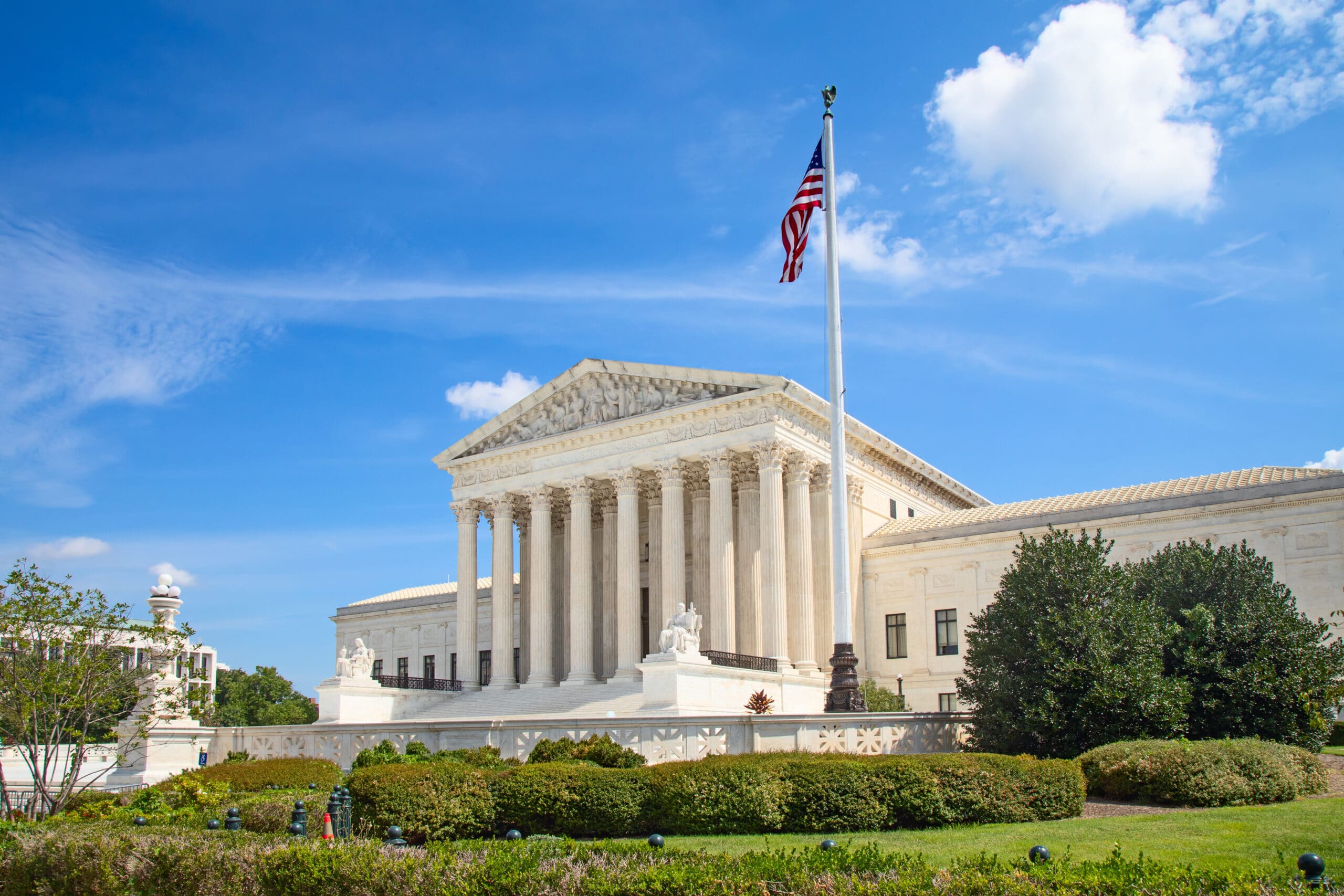
A U.S. federal appeals court has allowed a class-action lawsuit against British American Tobacco (BAT) to proceed regarding Natural American Spirit cigarettes, which were accused of being marketed as more "natural" and potentially less harmful than other brands. This decision revives a long-standing legal dispute over tobacco marketing claims and comes amid heightened vigilance against practices that could mislead consumers. It also resonates with ongoing debates in France and more broadly within the European Union on regulating the marketing of tobacco and nicotine products.
Consumers from twelve affected states
A U.S. federal appeals court ruled, by a two-to-one vote, that BAT must face a class-action lawsuit accusing it of misleading consumers about Natural American Spirit cigarettes. The plaintiffs argue that the claims "100% additive-free," "natural," and "organic" led them to believe the cigarettes were safer or healthier than other brands, despite a warning stating that the absence of additives did not make a cigarette safer.[1].
Scientific research conducted by Stanford University has shown that cigarettes are indeed perceived as less harmful when presented as "ecological" and "natural".«[2].
The lawsuit was filed by consumers from twelve U.S. states: California, Colorado, Florida, Illinois, Massachusetts, Michigan, New Jersey, New Mexico, New York, North Carolina, Ohio, and Washington. They are seeking damages, arguing that they paid more for the products because of this presentation. A separate lawsuit concerns menthol cigarettes, with the plaintiffs arguing that menthol is an additive.
This decision revives previous proceedings against BAT.
This legal action is part of a longer-standing dispute concerning the marketing of the Natural American Spirit brand. In 2010, the attorneys general of 33 U.S. states and the District of Columbia reached a settlement with Santa Fe Natural Tobacco Company, a subsidiary of Reynolds American. The lawsuit was filed after the manufacturer's use of the terms "organic" and "100 % organic," which could lead consumers to believe that these cigarettes were safer or healthier than other tobacco products. The settlement notably required the addition of a warning stating that organic tobacco "does not mean a safer cigarette.".
In 2023, a federal judge in New Mexico ruled that a class action lawsuit based on a "safer cigarette" claim was inadmissible, finding that individual circumstances predominated in the case. However, he did authorize a class action limited to eight states for menthol cigarettes.
The appeals court upheld the admissibility of the class action lawsuit concerning menthol cigarettes and overturned the lower court's decision that had dismissed the action based on claims of a "safer cigarette." According to a majority of the judges, the lower court had prematurely ruled on the effectiveness of the warning on the packaging, as this issue falls within the scope of the substantive examination of the case.
The case has now been remanded to the federal court in New Mexico for further proceedings, though a hearing date has not yet been set. This decision by the Court of Appeals does not establish that BAT actually misled consumers; the appeals judge only ruled on the admissibility of the lawsuit.
This case underscores the need for strict measures against the industry's deceptive practices.
Unlike the United States, where health warnings are minimal and outdated, a large number of countries worldwide have adopted extensive health warnings on their packaging. Some countries, including France, have also introduced plain packaging in accordance with WHO recommendations related to Article 11 of the Framework Convention on Tobacco Control (FCTC), in order to strengthen the effectiveness of warnings and prevent the misuse of packaging to mislead consumers into believing that a product is less harmful than another.
This American case serves as a reminder that the industry employs deceptive marketing strategies that can extend to all its products, including new ones, in order to spread the nicotine epidemic and maximize profits. Providing information to current and potential consumers is crucial. This is one of the key issues in the ongoing review of Directive 2014/40/EU on Tobacco Products (TPD) and the Tobacco Tax Directive (TED). This work focuses in particular on the regulation of new products (electronic cigarettes, heated tobacco, nicotine pouches for countries where these products are authorized) as well as on marketing practices that could mislead consumers. In this context, public health organizations such as the National Committee Against Smoking (CNCT) They are specifically calling for the extension of plain packaging to all tobacco and vaping products., They also advocate for stricter restrictions on advertising, promotion and sponsorship, in line with Article 13 of the FCTC. They further argue for increased protection of public policies against the influence of the tobacco industry and its allies, in accordance with Article 5.3 of the FCTC.
AD
[1]Jonathan Stempel, BAT must face class-action litigation over cigarette labels, US appeals court rules, Reuters, published on July 29, 2026, accessed on August 13, 2026
[2]Massaclaim VS tegen biologische sigaret toegelaten, TabakNee, published on August 12, 2026, accessed on August 13, 2026