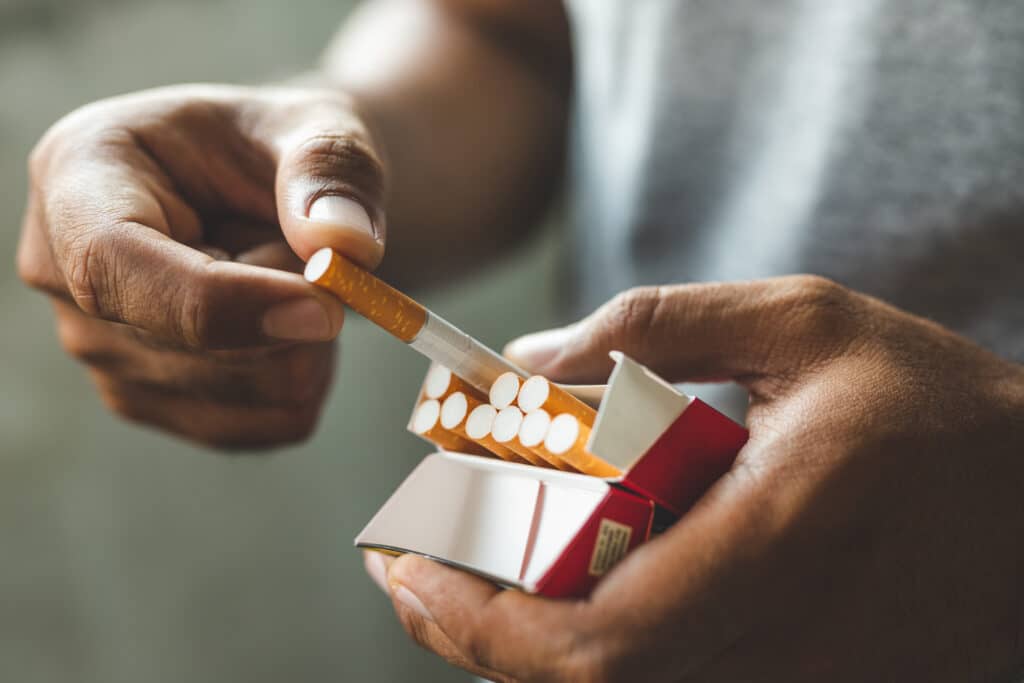
Smoking in Vietnam: a public health problem and a factor in poverty
June 17, 2024
Par: National Committee Against Smoking
Dernière mise à jour: June 17, 2024
Temps de lecture: 6 minutes

Tobacco causes major health damage and is an obstacle to development. To reduce this tobacco epidemic, Vietnam is launching a national program for the prevention and control of the risks of smoking which raises public awareness of the health, social, financial and environmental consequences of cigarettes.
Smoking is an obstacle to the development of Vietnam, a lower middle-income developing country. The process of normalization of the product in the country has led to the association of this product with social success and respectable status. Tobacco is now widely consumed in Vietnam among men (about 45% of the population v/ 1% among women), resulting in more than 40,000 premature deaths each year.[1] This consumption is particularly widespread among the poorest sections of the population who devote significant budgets to it, thus contributing to keeping these people and their families in a cycle of persistent poverty.
Smoking as a marker and cause of poverty
A correlation has been demonstrated between socioeconomic status and tobacco use. In low- and middle-income countries, men from lower socioeconomic groups are up to 2.5 times more likely to smoke than wealthier men.[2]. In Vietnam, 29.1% of people in the richest quintiles smoke daily, compared to 47.9% in the poorest sectors. Dependence on the product is further reinforced by the fact that people in precarious situations perceive the product as a means of reducing their social and economic stress, regardless of the short- and longer-term effects on them.[3]
Tobacco-related expenditures also reduce household disposable income to a much greater extent among low-income people. Added to this are health care costs due to smoking-related illnesses and the loss of at least some family income if a smoker dies prematurely. These cumulative effects intensify household economic hardship and contribute to maintaining poverty in the most vulnerable communities.
A 2018 study found that tobacco-related spending pushed more than 305,090 Vietnamese (0.31 billion of the country's population) into poverty.
Furthermore, developing countries, such as Vietnam, lack the health care infrastructure to cope with the influx of tobacco-related diseases.
Influence of national and international tobacco companies
The tobacco industry, with its sophisticated marketing tactics, plays a crucial role in promoting and normalizing tobacco use in Vietnam. Local companies such as the Vietnam National Tobacco Corporation (Vinataba) hold a significant share of the domestic market, while multinationals such as Philip Morris International (PMI) and Japan Tobacco International (JTI) import products that specifically target untapped market segments, such as women. Despite regulatory efforts, Vietnam’s low level of tobacco taxation helps keep prices low, making tobacco products accessible even to low-income households.
Towards a possible tobacco-free future in Vietnam?
Recognizing the challenges posed by tobacco use, Vietnam has launched the National Tobacco Prevention and Control Program, aimed at raising public awareness of the health, economic, social and environmental consequences of tobacco use. The program includes media campaigns and educational initiatives, particularly targeting young people (aged 15-24), with the aim of reducing exposure to second-hand smoke and promoting a cultural shift towards a tobacco-free lifestyle. The program aims to reduce exposure to second-hand smoke by 30% in workplaces, 75% in restaurants and 80% in cafes and bars between 2026 and 2030.
To achieve this, the Programme includes a smoking ban component that aims to reduce exposure to tobacco smoke in public places and protect non-smokers from the effects of second-hand smoke. It prohibits smoking in enclosed public spaces, educational and health facilities, workplaces, and designates non-smoking areas in certain outdoor spaces. Signage, monitoring and sanctioning measures are put in place to ensure compliance with these bans. The programme also includes educational campaigns to raise public awareness of the reasons for these bans and encourage compliance. The overall objective is to reduce second-hand smoke, improve public health and change social norms related to smoking.
In 2012, Vietnam adopted a series of policies aimed at reducing the prevalence of smoking and its negative consequences in line with the WHO Framework Convention on Tobacco Control (FCTC) which Vietnam ratified in 2005,[4] These measures include increasing tobacco taxes to discourage consumption, bans on smoking in enclosed public places and smoke-free zones in specific locations such as hospitals and schools. National education and awareness campaigns have been launched to inform the public, particularly young people, of the dangers of smoking.
DT
[1] Vietnam+, Some 40,000 smoking-related deaths each year, Vietnam+, published on December 13, 2023, accessed on June 13, 2024
[2] Hosseinpoor AR, Parker LA, Tursan d'Espaignet E, Chatterji S. Socioeconomic inequality in smoking in low-income and middle-income countries: results from the World Health Survey. PLoS One, published in 2012, accessed June 13, 2024
[3] Thea Carter, Tobacco in Vietnam: a cause and a symptom of poverty, borgen project, published June 12, 2024, accessed June 14, 2024
[4] Lematin.ch, Vietnam adopts anti-smoking law, lematin.ch, published on June 19, 2012, consulted on June 13, 2024