Parliamentary report: stability of parallel tobacco markets in France
October 1, 2021
Par: National Committee Against Smoking
Dernière mise à jour: October 1, 2021
Temps de lecture: 5 minutes

Announced in June 2020, L'" Evolution of tobacco consumption and the performance of tobacco tax during confinement and the lessons that can be learned from them " has just published its report which includes 11 proposals for " limit circumvention practices » that fuel off-trade purchases. Tax policies of repeated and significant increases represent the most effective way to reduce tobacco consumption. Stable cross-border purchases partially mitigate the effects of these increases. The report's proposals do not address the responsibility of the tobacco industry in these markets and some of the modalities provided for by the WHO protocol to combat illicit trade in tobacco products to address this.
The fact-finding mission, chaired by MP Éric Woerth, Chairman of the Finance Committee, aimed to assess tobacco consumption and the performance of the tax applicable to tobacco products during the lockdown and to draw any lessons from it. This fact-finding mission took place at a time when the process of revising the European directive on the taxation of tobacco products for which a proposal is expected from the European Commission at the end of the year.
A parallel tobacco market that remains stable
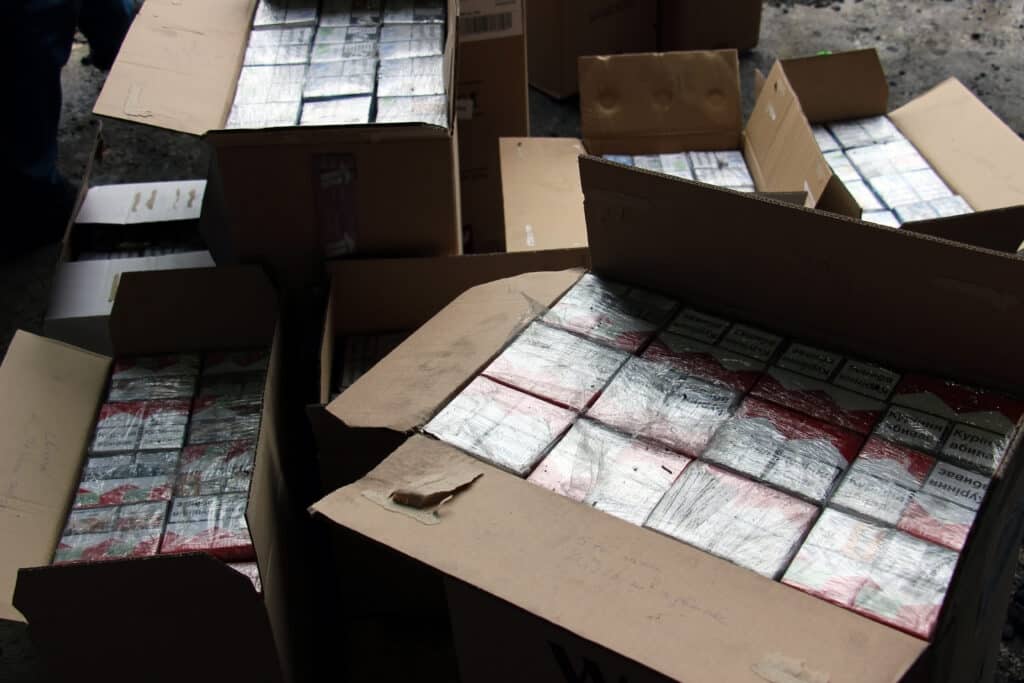
The mission attempted to assess the importance of parallel markets in France. The illicit trade in tobacco products in fact partially undermines the public health objectives of reducing consumption through a strong tax policy and it generates a loss of tax revenue, estimated in France, of the order of 2.5 to 3 billion euros. The fact-finding mission estimates the scale of the parallel tobacco market at between 14% and 17% of French consumption and between 16% and 20% of sales volumes. In 2012, a study published by the OFDT and the INHESJ estimated this same parallel market at around 20% of global sales, thus highlighting a relative stability of the situation even though taxes have increased significantly.
The conclusions of this report therefore differ significantly from the data in the KPMG report, relating to parallel markets in France and the European Union. KPMG's 2020 data place illicit trade at more than 30% of consumption in France. In reality, the KPMG reports, commissioned by tobacco manufacturers, notably Philip Morris, have been heavily criticized by independent researchers due to their opaque and non-rigorous methodology. They are considered to be communication and pressure tools on public authorities, in order to dissuade them from implementing tax increases.[1].
The tobacco industry's responsibility in illicit trade
Tobacco manufacturers deliberately exaggerate the scale and nature of illicit trade in order to dissuade decision-makers from adopting tax increases or other measures that could harm their interests, such as the introduction of plain packaging. However, the tobacco industry's responsibility in the direct and indirect organisation of trafficking is well documented. As far as France is concerned, it appears that manufacturers are oversupplying border markets. In the conclusions of the report, Meuse MP Emilie Cariou (EDS) and member of the fact-finding mission, cites the example of Luxembourg, which was supplied with more than 5 billion cigarettes in 2019. "If this supply were intended solely for the domestic market, every Luxembourger, child and adult, smoker and non-smoker, would have had to consume 23 cigarettes per day, or more than one packet," says the MP.
Recommendation for increased tax harmonization at European level
The rapporteurs consider that " the parallel tobacco market is between 27 to 29% for border departments ". According to MEP Emilie Cariou, the next revision of the European directive on the taxation of tobacco products must put an end to "current practices of fiscal and health dumping". To achieve this, the mission is addressing measures to harmonize taxes upwards between countries with the same income levels, as well as strengthened controls and increased sanctions. However, the mission does not mention certain provisions recommended in particular by the WHO protocol to combat illicit trade in tobacco products, which provides in particular for the possibility of limiting product deliveries in light of market realities. The European Union, which has set up a tracking and tracing system, could use this system for this purpose.
Call for vigilance by public health associations
Health associations point out the effectiveness of tax policies of repeated increases to significant levels to reduce consumption and achieve the objective of a tobacco-free generation by 2030. They also point out that these tax increases, even if they are partially mitigated by the effect of cross-border purchases, nevertheless make it possible overall to significantly increase tax revenues.
They call for the implementation of all the provisions of the protocol to combat illicit trade in tobacco products, which could also be deployed to prevent cross-border purchases and better control the activity of manufacturers in the organisation of parallel markets.
Keywords: Parliamentary mission, France, illicit trade, tobacco, parallel markets, taxation, taxes
©Generation Without TobaccoAE
[1] CNCT, Professor Martinet's post. KPMG report: putting an end to the cigarette manufacturers' disinformation operation, September 14, 2021, accessed September 30, 2021 National Committee Against Smoking |