New opinion from the High Council for Public Health on vaping products
January 7, 2022
Par: National Committee Against Smoking
Dernière mise à jour: January 7, 2022
Temps de lecture: 5 minutes

In an opinion published on January 4, 2022, the High Council for Public Health (HCSP) recommends that healthcare professionals who support smokers in their efforts to quit smoking not offer vaping products as a cessation tool. According to the HCSP, the potential benefits and risks of using e-cigarettes "are not established to date."[1].
The High Council for Public Health is a French expert body whose mission is to assist in public health decision-making. This new opinion replaces a previous dated 2016, in which the organization considered that the electronic cigarette could be considered as a "smoking cessation aid" for people who want to quit smoking.
Use of treatments that have proven their effectiveness
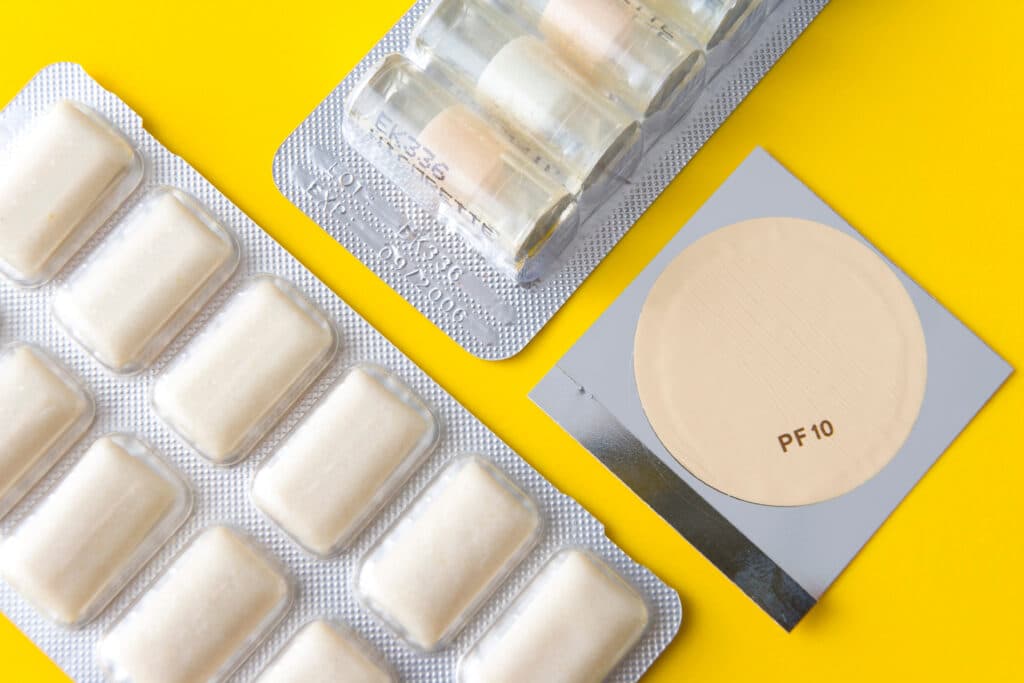
In its recommendations, the HCSP advises healthcare professionals to use proven effective drug or non-drug treatments, such as nicotine replacement therapy (NRT), as part of care provided by a healthcare professional. It states that evidence-based knowledge is insufficient to recommend vaping products as smoking cessation aids. The body advises against the use of e-cigarettes for pregnant women as a precautionary principle in the absence of data on the risks.
Although e-cigarettes do not emit carbon monoxide or tar, the most harmful substances in tobacco smoke, their long-term effects are unknown. The body warns against dual tobacco/vaping use and reiterates that using vaping while simply cutting down on cigarettes does not represent a risk reduction. Only completely quitting smoking provides health benefits.
The HCSP does not, however, exclude the use of electronic cigarettes in certain cases. They can be used with certain vulnerable groups with high nicotine dependence in whom proven treatments have not been effective. "The lack of evidence-based knowledge does not exclude the possibility that the benefit/risk ratio of these products used outside the health system may represent an aid for certain consumers and thus contribute to improving their health."
The need to implement therapeutic trials in accordance with national and international methodological recommendations is emphasized to evaluate, compared to a placebo and/or reference treatments, with a sufficiently high level of evidence, the therapeutic efficacy and tolerance of vaping products in smoking cessation. As well as research on the initiating role or not of these products in young people, a subject still under discussion. The HCSP also recommends acquiring knowledge on the attractiveness of flavors for vaping products – particularly among the youngest – taking into account practices in France.
Maintaining regulations on vaping products
The HCSP recommends maintaining all legislative and regulatory measures relating to vaping products aimed at limiting their attractiveness and accessibility, particularly among minors. The HCSP recommends ensuring their effective implementation (prohibition of sales to minors, ban on advertising, ban on consumption in public places). The objective is to delay the initiation and use of these products among adolescents who do not use tobacco.
The HCSP also requests that the population receive official information on these products and their use and that health education interventions aimed at young people on smoking include informed information on electronic cigarettes.
This advice follows the latest findings of the World Health Organization (WHO), which points out that the scientific evidence relating to e-cigarettes as smoking cessation aids is not conclusive to date and it is difficult to say whether these products have a role to play in smoking cessation.[2]. In addition, the WHO specifies that if electronic cigarettes, in the event of complete cessation of smoking, induce a reduction in risks for the person, these products are not harmless.[3]E-cigarettes generate toxic chemicals, which have been linked to potentially harmful cardiovascular and pulmonary health effects. In a July 2021 report[4], she also warned against "the tobacco industry and related industries that manufacture these products and often market them to children and adolescents using thousands of attractive flavors and making deceptive claims about them."
Keywords: High Council of Public Health, HCSP, vaping, withdrawal, electronic cigarette, WHO
©Generation Without TobaccoAE
[1] Opinion of the High Council for Public Health, relating to the benefits and risks of electronic cigarettes, published on January 4, 2022 [2] It's time to invest in cessation: the global investment case for tobacco cessation. Geneva: World Health Organization; 2021. License: CC BY-NC-SA 3.0 IGO. [3] Dr. Ruediger Krech, World No Tobacco Day 2021 campaign – Commit to Quit, World Health Organization, May 19, 2021, accessed January 6, 2022 [4] WHO report on the global tobacco epidemic 2021: addressing new and emerging products. Geneva: World Health Organization; 2021. License: CC BY-NC-SA 3.0 IGO. National Committee Against Smoking |