The tobacco industry behind the smuggling
March 16, 2020
Par: communication@cnct.fr
Dernière mise à jour: March 16, 2020
Temps de lecture: 3 minutes

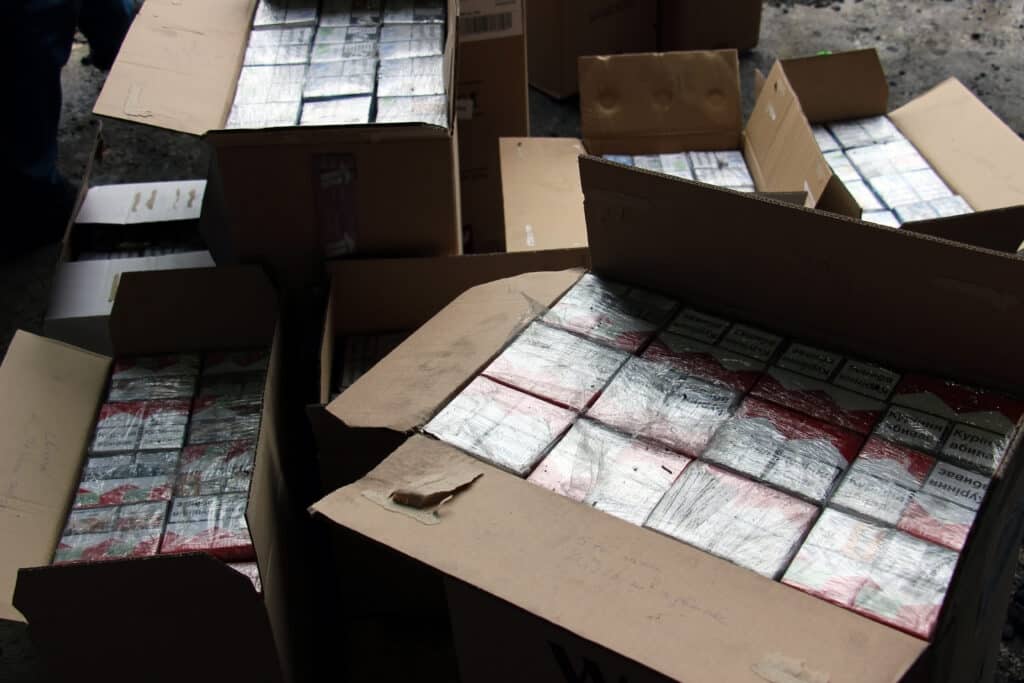
The illicit or contraband cigarette trade is a global industry that represents a considerable loss of revenue for governments around the world: cigarettes, sold outside legal channels, escape taxation. Thus, it is estimated that the illicit trade in tobacco products represents 40 billion dollars of lost revenue per year[1].
Tobacco is now considered the most widely distributed legal substance in the world by smuggling networks. According to the World Bank, one in ten packs of cigarettes ends up on the black market. However, this situation is far from affecting the tobacco industry. Indeed, as shown by a report by the Tobacco Control Research Group, 60 to 70% of illegally marketed tobacco products are produced by the cigarette manufacturers themselves.
Despite its public statements, the tobacco industry is very complacent about smuggling, which remains an economic outlet for it. Big Tobacco has notably been accused by the European Union of running a " global program (...) to smuggle cigarettes, launder the proceeds of drug trafficking, interfere with government oversight of the tobacco industry, fix prices unfairly, bribe foreign officials, and conduct illegal trade with terrorist groups and state sponsors of terrorism ".
In 2004, as part of a $1.25 billion anti-smuggling settlement with the European Union, Philip Morris International agreed to install a system designed to provide greater transparency into its supply chain. The software, Codentify, can in principle trace any package from the time it leaves the factory to the time it is purchased by the consumer.
Yet all experts say that the software, far from being effective, appears more like a black box for the tobacco industry, allowing it to manipulate and hide key data on its activity from legal authorities.
Cigarette companies are also seeking to make this software the standard for the tobacco industry. In 2010, Philip Morris licensed its technological solution to its three main competitors for free, while internal documents demonstrated their shared desire to sell the software to governments and decision-makers, through third-party organizations presented as independent. Today, the European Union has set up a system for tracking and tracing tobacco products that, however, entrusts many of the key operations to tobacco manufacturers or third parties linked to them. [2]In this context, the role of the tobacco industry in the parallel markets of contraband and oversupply of border markets fully persists.
The challenge today is therefore to succeed in implementing an international solution which provides, as required by the WHO protocol, for combating the illicit trade in tobacco products.[3], to have a device that is fully independent of manufacturers.
©Generation Without Tobacco[1] DOWN Aisha, OCCRP, “The EU's Tracks & Trace Smokescreen”, 03/11/2020 https://www.occrp.org/en/loosetobacco/without-a-trace/the-eus-track-trace-smokescreen [2] Framework Convention Alliance, FCA, Policy Briefing November 2019 Why the EU tracking and tracing system works only for the EU https://www.fctc.org/wp-content/uploads/2019/07/FCA-Policy-Briefing_Why-the-EU-tracking-and-tracing-systems-works-only-for-the-EU.pdf [3] Protocol to combat illicit trade in tobacco products, https://www.who.int/fctc/protocol/Protocol-to-Eliminate-Illicit-Trade-in-Tobacco-Products-FR.pdf | ©National Committee Against Smoking |