The assessment of smoke-free beaches on smokers' behavior is very favorable to the measure
July 13, 2023
Par: National Committee Against Smoking
Dernière mise à jour: July 13, 2023
Temps de lecture: 5 minutes
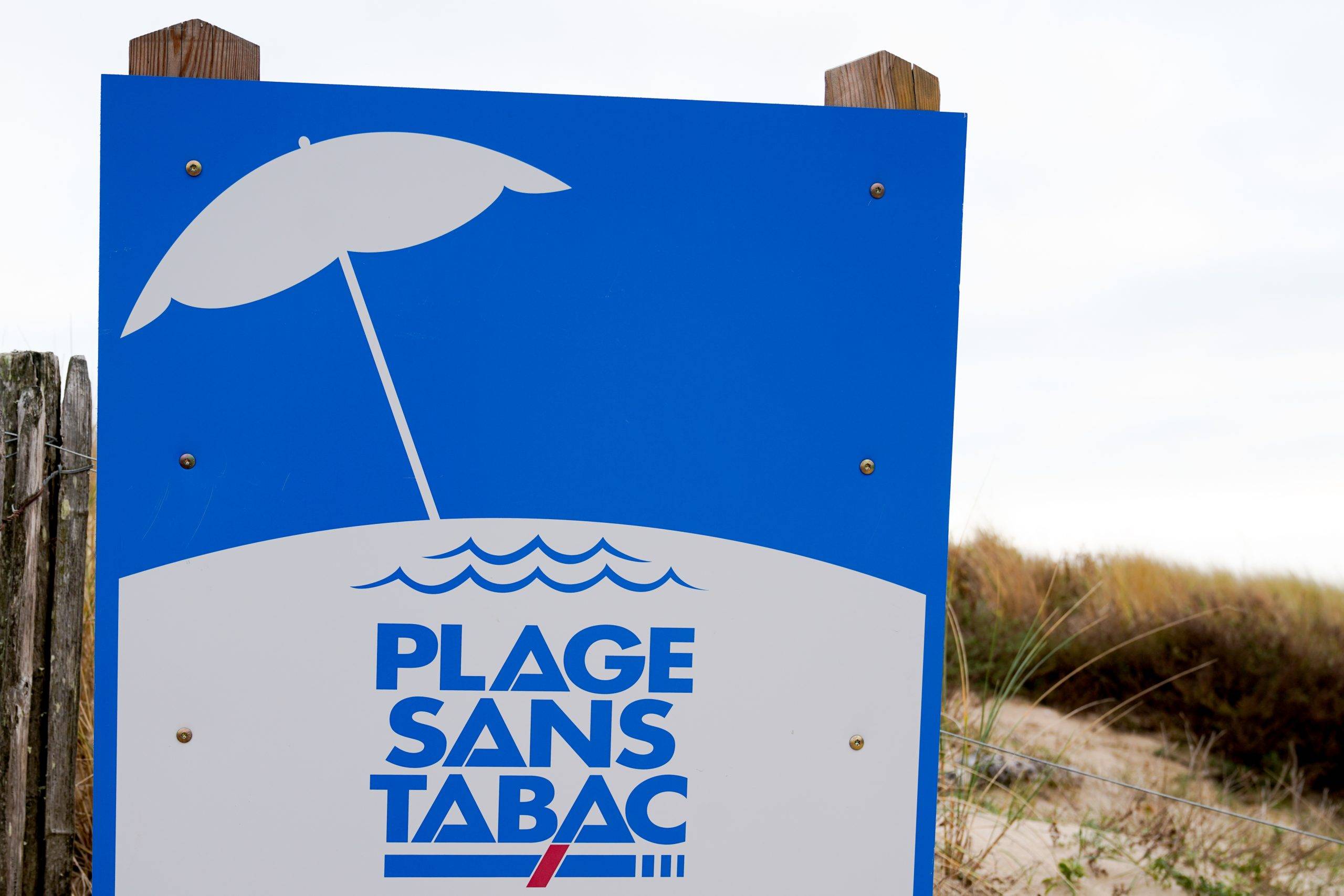
A quasi-experimental study conducted on several Barcelona beaches that have become smoke-free reveals lower tobacco consumption and highlights how this change is welcomed by other beachgoers. It thus validates the principle of smoke-free beaches, which are multiplying across the world.
The principle of smoking-free beaches appeared in the United States in the early 1990s, before spreading to Australia and Canada, then to Italy, in Spain And In France. However, studies that have evaluated this type of measurement are rare. A team of Spanish researchers proposed to conduct an evaluation of this type on several beaches of Barcelona, using a quasi-experimental protocol[1].
Study and observation on several beaches, with and without tobacco
In this protocol, 4 smoke-free beaches were selected as observation sites, while 5 other beaches not yet benefiting from this measure served as a control group. Several teams of investigator-observers both interviewed beach users and observed them according to proven study protocols. During the interviews, in addition to smoking status and sociodemographic data, the person was asked whether the person had observed changes in smokers on the beach and whether they were satisfied with this measure.
These operations were carried out before and after the municipal decree establishing these smoke-free beaches, accompanied by a communication campaign conducted in the media and on social networks; information panels and loudspeakers also broadcast this information on the beaches. Cigarette butt collection operations were also carried out before and after this intervention, in an attempt to evaluate the effectiveness of such a measure.
Two survey periods took place, from May 15 to 28, 2021, and from May 29 to September 12, 2021, before and after the announcement of the measure. A total of 3,751 people were interviewed, including 619 before the announcement of this measure and 3,132 after it. 1,108 behavioral observations were carried out, 144 in the pre-announcement period and 964 in the post-announcement period, and made it possible to analyze the behavior of 7,204 beach users.
A health protection measure that also denormalizes tobacco
The number of beachgoers who noticed someone smoking was significantly lower, down 30%. Similarly, the number of sightings of people smoking on the beach fell by 70% before and after the adoption and implementation of the measure.
The rating given to the smoke-free beach policy is 8.3 on a satisfaction scale of 1 to 10. This rating being close to the satisfaction rate obtained by a similar study conducted on smoke-free beaches in Vancouver, the authors believe that this extension of the smoking ban in public spaces is a measure that is both feasible and socially appreciated. They emphasize the value of such a measure, both in protecting the health of non-smokers – exposed to passive smoking – and that of smokers – by encouraging them to smoke less and protecting them from the increased risk associated with passive smoking. In addition, the authors believe that this reduces the visibility of smokers and denormalizes tobacco consumption.
However, the observations indicated an increase in the smoking population on beaches where smoking was still permitted, suggesting that some smokers had shifted to these beaches. They also noted a greater presence of elderly people on smoke-free beaches after the intervention, suggesting a positive effect of the measure on a vulnerable population. The number of cigarette butts collected, for its part, seems to show a reduction in smoking on beaches that became smoke-free, but the data were too fragmented to draw any real conclusions; however, similar data were also established in New York City's smoke-free parks and beaches.
The presence of a control group and the use of a standardized and proven methodology make it possible to validate a certain effectiveness of smoking bans on beaches and in other public spaces even though sanctions were not imposed here by control bodies. However, the introduction of controls may prove necessary to achieve complete compliance with the smoking ban in these spaces, and not just to obtain a reduction.
Keywords: Barcelona, smoke-free beaches, evaluation, denormalization.
©Generation Without TobaccoMF
[1] Valmayor S, González K, López MJ, et al. Evaluation of a smoke-free beaches intervention in Barcelona: a quasi-experimental study, Tobacco Control, Published Online First: 04 July 2023. doi: 10.1136/tc-2022-057873
National Committee Against Smoking |