The Alliance Against Tobacco warns about the presence of cigarettes in cinema and series
May 16, 2025
Par: National Committee Against Smoking
Dernière mise à jour: May 16, 2025
Temps de lecture: 5 minutes

The Alliance Against Tobacco (ACT), based on various studies, highlights that tobacco remains strongly integrated into cultural works such as films, series and music videos, despite the ban on all forms of advertising.[1]More than 90 of the more than 150 French box-office-ranked films analyzed between 2015 and 2019, in a joint survey by the Ligue contre le cancer and Ipsos, contain at least one scene or mention related to tobacco, and around 53 of the popular series, particularly those watched by young people, show scenes of smoking.[2]The repeated representation of tobacco contributes to its trivialization and normalization in the collective imagination, thus reinforcing its presence in modern culture and its consumption.
The impact of pop culture on youth tobacco use
The report highlights that this portrayal of tobacco products has a strong influence on young people, with 66 % of them stating that films and series promote cigarettes, and 48 % of 15- to 25-year-olds believing that seeing tobacco in the media encourages them to smoke. Exposure to tobacco in films doubles the risk of starting to smoke and triples the risk of starting to vape. Furthermore, 72 % of ex-smokers state that these scenes revive their desire to smoke.
On screen, this presence is equivalent to dozens of advertising spots. For example, Anora shows 14 minutes of tobacco (or 28 spots), Asteroid City shows 19 minutes of tobacco, Love phew shows 11 minutes of tobacco (or 22 spots)... Series like Stranger Things (over 260 smoking scenes in season 2) or clips of stars like Bruno Mars and Lady Gaga (Die With a Smile has been viewed over a billion times on YouTube) or Addison Rae continue to glamorize smoking.
Since the 1970s, the tobacco industry has exploited pop culture to circumvent advertising bans and maintain the appeal of its products. American films like James Bond, Grease Or Basic Instinct received funding mainly from Philip Morris and British American Tobacco to promote the cigarette as a trendy accessory, synonymous with independence or rebellion. In France, a film like Amélie Poulain was subsidized by Seita, since absorbed by Imperial Brands. Some stars have even been paid to smoke on screen, such as Sylvester Stallone in the 1980s or the musician The Avener in 2015. Although these practices are now officially banned, they persist in more discreet forms and continue to massively expose young people to representations that glorify smoking.
Despite progress in reducing overall youth consumption, trivialization through pop culture could undermine these results.
ACT's responses and recommendations to limit this influence
To denounce this trivialized presence, the ACT is launching the " Festival where you can », an awareness campaign on the sidelines of the Cannes Film Festival[3]. Led by influencer Doigby and broadcast live on Twitch, this fake ceremony parodies the official festival to reveal the strategies of the tobacco lobby. The campaign is divided into several actions: a broadcast followed by a round table relayed by influencers, a poster campaign with supporting figures denouncing the presence of tobacco, happenings in Paris and Cannes to highlight the omnipresence of the tobacco lobby, as well as a video developed with Sens Critique to decipher the role of cigarettes on the big and small screen.
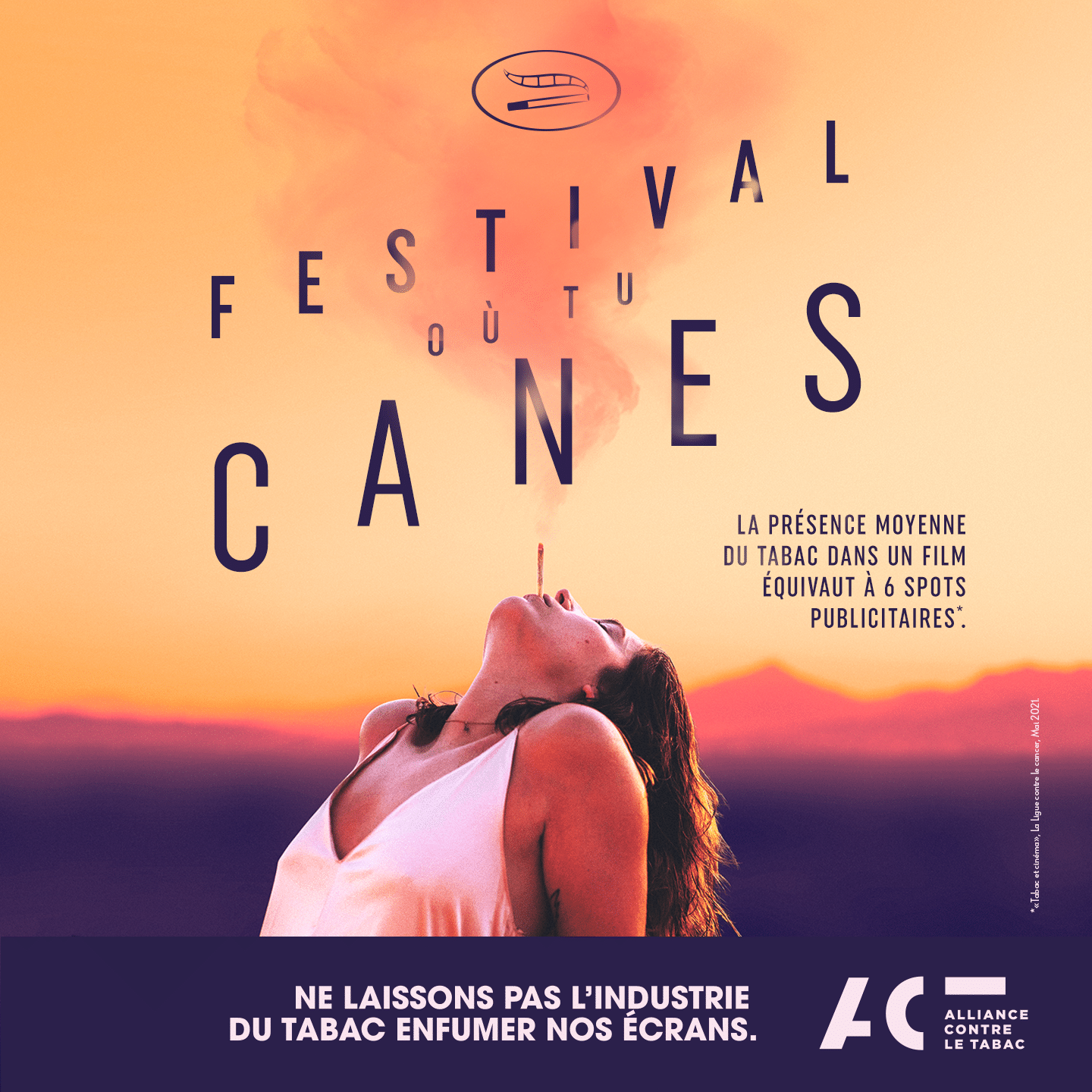
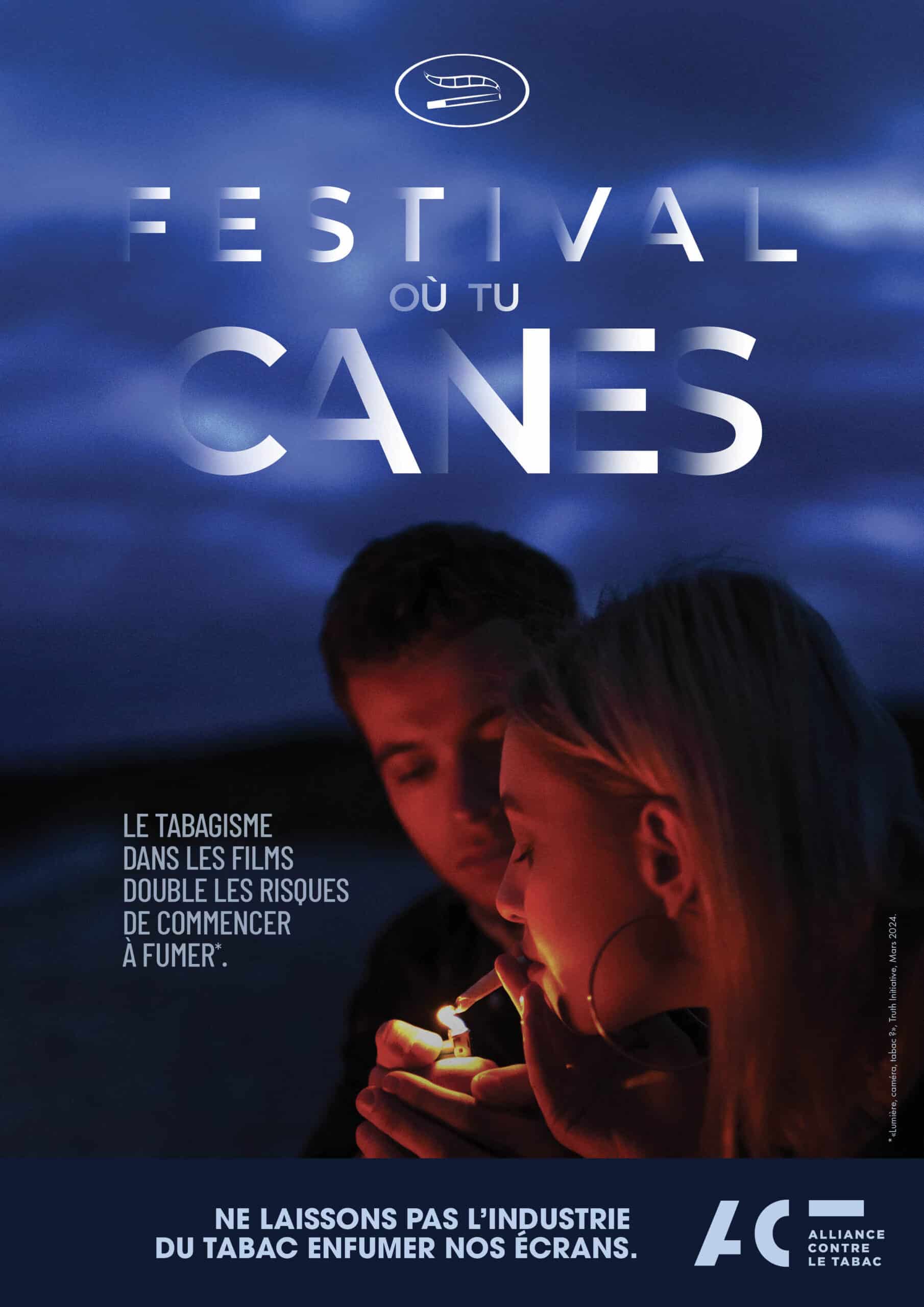
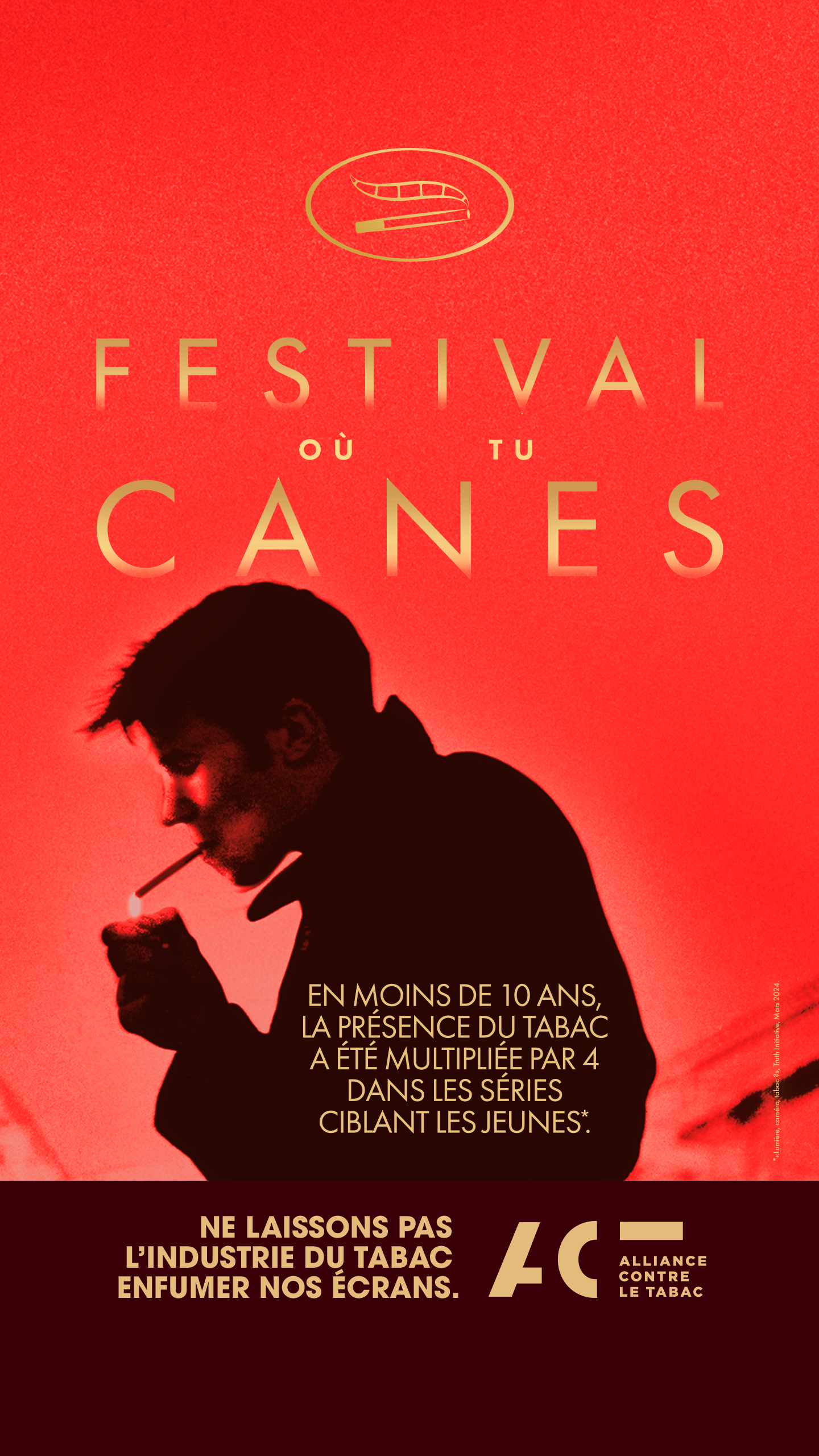
Furthermore, as the over-representation of tobacco on screen hinders the fight against smoking, especially among young people, and violates the provisions in force strictly prohibiting all forms of advertising and promotion in favor of tobacco, the ACT calls to the creation of a charter, similar to that of ARCOM on food, to limit the distribution and promotion of tobacco in audiovisual works. This measure, provided for in the PNLT 2018-2022, has never been implemented and the current PNLT simply provides for the " denormalization of tobacco in current cinematographic works "This measure would be in line with commitments already made by certain large companies such as Disney, Paramount and Warner Bros, which have restricted the representation of tobacco in content aimed at young people.
While smoking remains the leading cause of preventable premature death in France with 75,000 annual deaths (13.1% of total mortality), and the country still has 23.1% of daily adult smokers[4], the tobacco industry continues to profoundly influence culture and thus consumption. In March 2025, a Truth Initiative investigation also showed thatAt the 2025 Oscars, 80 of the nominated films still contained tobacco and nicotine products..
AD
[1]Alliance against tobacco, The Festival where you can, published May 8, 2025, accessed May 15, 2025
[2]The League Against Cancer, Tobacco and cinema, published May 31, 2021, accessed May 15, 2025
[3]Catellin Marion, “Tobacco & pop culture: the tobacco industry in the spotlight”, Alliance against tobacco, May 14, 2025, https://alliancecontreletabac.org/wp-content/uploads/2025/05/DP-ACT_-Tabac-et-pop-culture.pdf
[4]Leroux Solene, Tobacco in cinema has "never been so present" and encourages young people to smoke, denounces a study, RMC, published May 14, 2025, consulted May 15, 2025