Spain: Tobacco industry involved in management of cigarette butt collection
March 16, 2025
Par: National Committee Against Smoking
Dernière mise à jour: March 11, 2025
Temps de lecture: 5 minutes
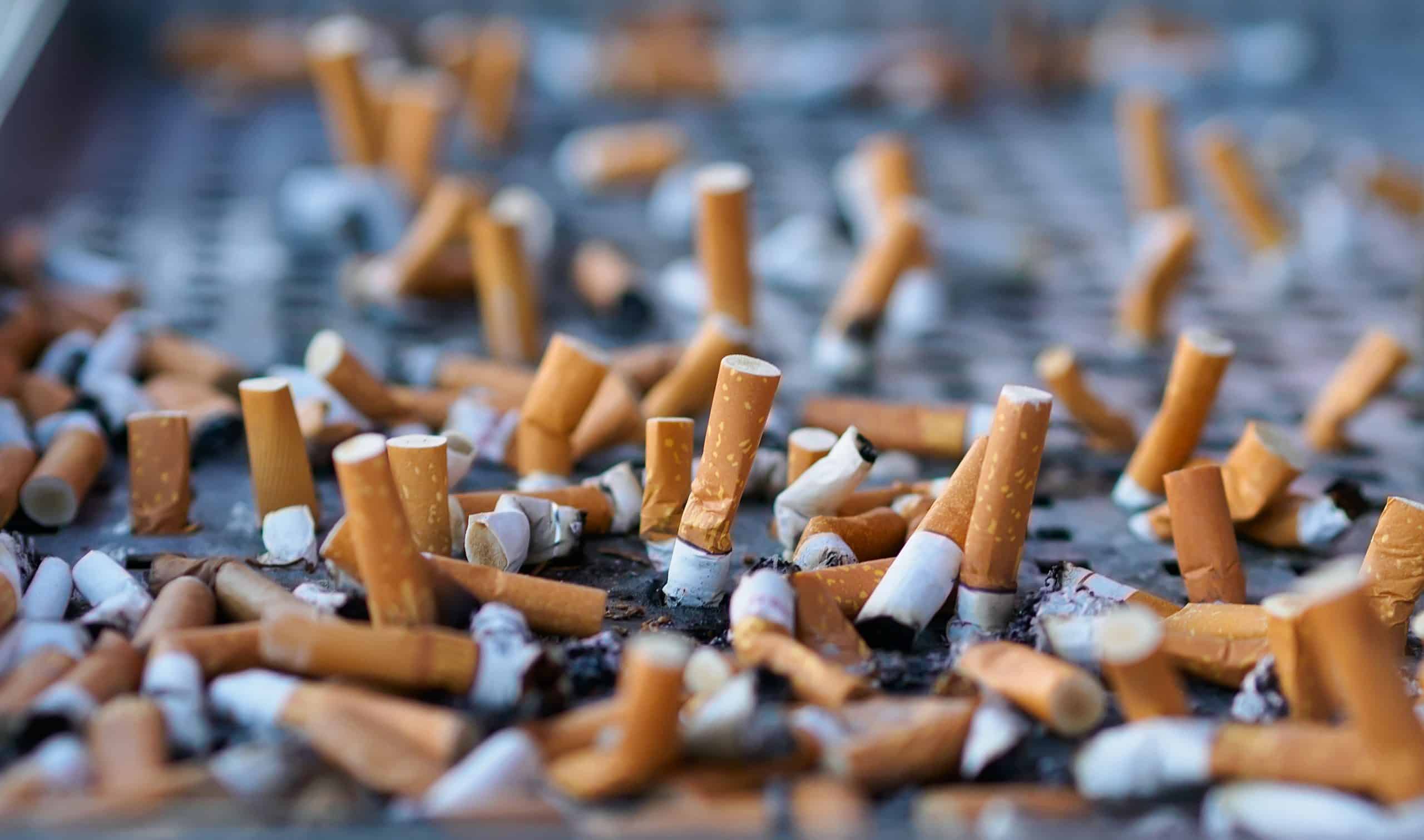
In October 2024, the Spanish government adopted Royal Decree 1093/2024, requiring tobacco manufacturers to cover the costs of cleaning up waste from their products. This measure is part of Directive (EU) 2019/904, which aims to reduce the use of single-use plastics, particularly cigarette filters containing plastic.
Creation of an eco-organization managed by the tobacco industry
In accordance with the "polluter pays" principle, the decree requires tobacco manufacturers to finance the collection and processing of cigarette butts. However, beyond this financial responsibility, it also entrusts them with the management of cleanup operations. This direct involvement raises a risk of conflict of interest, allowing the tobacco industry to direct management and collection strategies and enhance its image through social responsibility actions, thus obscuring the real health and environmental impacts of its products.[1].
Initiatives such as the distribution of pocket ashtrays are regularly promoted by the industry. However, these actions are criticized for directly contributing to the process of normalizing tobacco consumption, thereby incentivizing consumption and thus having a counterproductive effect. Furthermore, this type of initiative tends to shift the responsibility for pollution onto consumers alone.
On the same day the decree was published, the major tobacco companies—Philip Morris, Imperial Tobacco, British American Tobacco, and Japan Tobacco International—announced the creation of Avora, a non-profit organization. According to its official website, Avora aims to: “support the proper management of cigarette filters containing plastic and raise public awareness of the correct disposal of cigarette butts, in accordance with sustainable management principles”This organization's direct involvement in waste management allows it to interact with municipalities and autonomous communities in Spain, thus strengthening the industry's influence on local policies.
An eco-organization in contradiction with the WHO Framework Convention
Seventy-four health and environmental organizations have sent a letter to the Spanish government, requesting a change to the decree so that the tobacco industry remains responsible for funding the cleanup, but is not involved in its management.
These organizations believe that the decree violates Article 5.3 of the WHO Framework Convention on Tobacco Control (FCTC), which aims to protect public health policies from tobacco industry interference. According to this article, interactions with this industry must be limited to what is strictly necessary and any form of partnership with the tobacco industry must be prohibited, as well as any communication of the "socially responsible business" type. The creation of Avora, composed exclusively of tobacco manufacturers, raises a major question regarding the likely coordination between the Ministry of Ecological Transition and the tobacco industry during the drafting of the decree.
A precedent in France
A similar situation exists in France, where cigarette butt management is entrusted to the eco-organization Alcome, created in 2021 and composed solely of representatives of the tobacco industry, including major manufacturers and the Confédération des buralistes (Confederation of Tobacconists). This configuration contravenes the commitments made by France when it ratified the FCTC in 2004.
Alcome has thus been able to conduct large-scale awareness campaigns, distribute pocket ashtrays, and establish partnerships with approximately 1,200 municipalities. This involvement gives it influence over local waste management policies, raising concerns about conflicts of interest.
Furthermore, the eco-organization has been sanctioned twice by the Ministry of Ecological Transition for failure to comply with its obligations. In November 2023, a first financial penalty was imposed due to delays in the installation of collection systems, including street ashtrays. In June 2024, a second fine of €690,000 was imposed for persistent breaches of its specifications.[2].
The National Committee Against Smoking (CNCT) has been warning for several years about the risks associated with the tobacco industry's involvement in the management of its own waste. It points out that the interests of Alcome and the public interest in reducing cigarette butt waste are opposed and irreconcilable. The public interest aims to eliminate these butts themselves by reducing consumption, based on the principle that the best waste is waste that does not exist. The tobacco manufacturers united within Alcome, on the other hand, have no interest in this reduction in consumption. The CNCT emphasizes that the current situation provides an opportunity for the industry to improve its image, to the detriment of public health and environmental protection issues.
AE
[1] Laurent Huber, Raquel Fernández Megina, Ubaldo Cuadrado, Tobacco Industry Interference in Spanish Tobacco Product Waste Management, British Medical Journal Blog, published March 10, 2025, accessed the same day
[2] Tobacco-free generation, The eco-organization Alcome condemned once again by the State, published June 26, 2024, accessed March 11, 2025
National Committee Against Smoking |