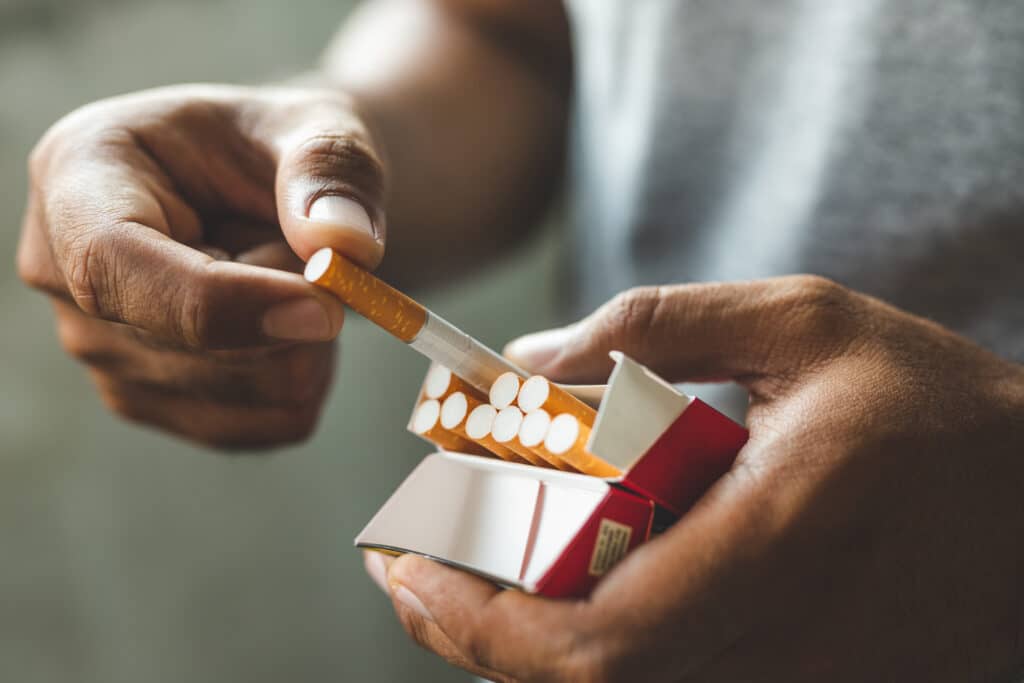
Confirmation of the efficacy of cytisine in smoking cessation
January 16, 2024
Par: National Committee Against Smoking
Dernière mise à jour: January 16, 2024
Temps de lecture: 4 minutes

A recent meta-analysis indicates that, in the context of smoking cessation, cytisine could prove to be more than twice as effective as a placebo, slightly more effective than nicotine replacement therapies, and as effective as varenicline. This recognition should facilitate the integration of cytisine into therapeutic protocols.
Cytisine is an alkaloid extracted from the common laburnum or false ebony tree (Laburnum anagyroides). It is known to reduce smoking withdrawal symptoms and is believed to be a partial agonist of alpha4 beta2 nicotinic receptors. Marketed as a medication in Eastern Europe since 1964, it currently exists under various brand names: Tabex® in Bulgaria, Desmoxan® in Poland, and under the brand names Cravv® and Todacitan®.
Long dismissed for fear of the adverse effects it could cause, cytisine has in recent years enjoyed renewed interest in smoking cessation. A team of Argentinian researchers has undertaken a meta-analysis of the existing scientific literature on this topic.
Effectiveness recognized in randomized trials
The researchers analyzed the results of 12 randomized studies that included cytisine[1]. Comprising 5,922 patients, including 2,996 who received cytisine, eight of these studies showed that cytisine would have an efficacy 2.25 times greater than that of a placebo. The number needed to treat (NNT) for a person to perceive a benefit from the treatment is estimated at 11.
Two studies comparing the action of cytisine with nicotine replacement therapy (NRT) found a slight advantage for cytisine. In three studies, the action of cytisine was compared with that of varenicline, without showing a significant advantage but with estimated similar efficacy.
The meta-analysis thus concludes that cytisine is useful in smoking cessation and considers that it has a benign incidence profile of the adverse effects identified, which would be limited to intestinal disorders and sleep disorders.
A drug to compensate for the unavailability of varenicline
This recognition of the therapeutic benefits of cytisine represents an opportunity for many smokers wishing to quit. It would notably make up for the lack of varenicline, previously considered the most effective drug for smoking cessation. Marketed under the name Champix®, varenicline has been withdrawn from the market worldwide since May 2021, due to the presence of impurities linked to the manufacturing process.[2].
Beyond the long-standing reluctance related to its potential side effects, the lack of interest in cytisine is thought to be commercial in origin. This molecule is marketed for around 15 euros per treatment in Poland, while the cost-effectiveness threshold for this treatment in high-income countries is estimated at 130 euros, the same as treatment with varenicline. In the United Kingdom, cytisine should be available from the end of January 2024, at a cost of 115 pounds sterling (132 euros).[3]In 2015, Professor Henri-Jean Aubin, member of the Primary Care and Prevention team at INSERM, estimated that: "The pharmaceutical industry is not interested in this molecule because it is not very profitable: its marketing in France would only generate small profits."[4].
Keywords: cytisine, varenicline, NRT, smoking cessation
©Generation Without TobaccoMF
[1] De Santi O, Orellana M, Di Niro CA, Greco V, Evaluation of the effectiveness of cytisine for the treatment of smoking cessation: A systematic review and meta-analysis, Addiction, First published: December 31, 2023 https://doi.org/10.1111/add.16399
[2] Unavailability of CHAMPIX: an impurity at the origin of the suspension of distribution, Vidal, updated October 14, 2021, accessed January 11, 2024.
[3] Butt M, Smokers 'twice as likely to quit' with cytisine pills available in UK this month, the Independent, published January 3, 2024, accessed January 11, 2024.
[4] Carballo C, Cytisine, an anti-smoking drug that works, Le Figaro, published January 5, 2015, consulted January 11, 2024.
National Committee Against Smoking |