Energy drinks: an investigation reveals how Red Bull funded research favorable to its interests
August 10, 2026
Par: National Committee Against Smoking
Dernière mise à jour: August 4, 2026
Temps de lecture: 9 minutes
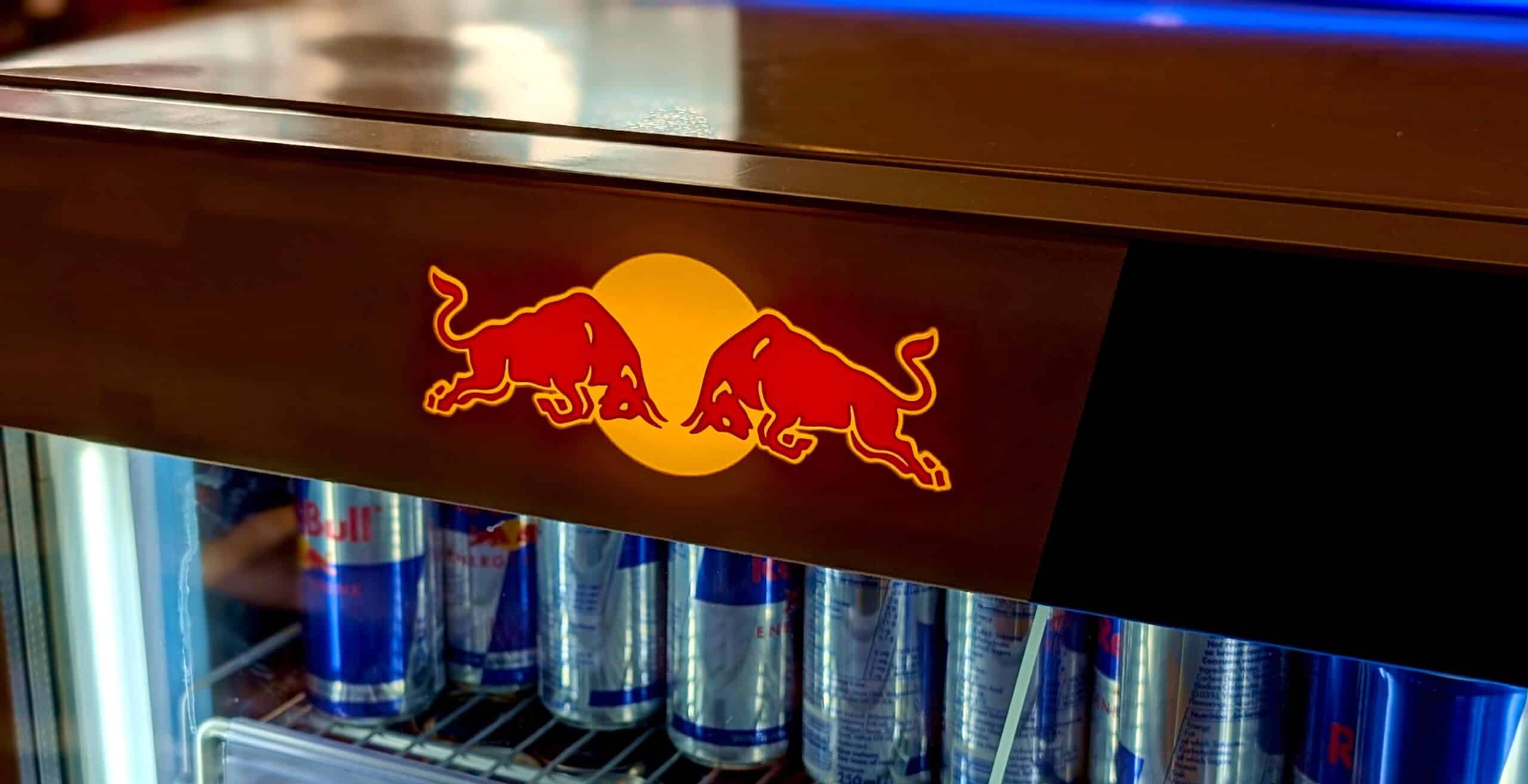
An international investigation conducted by The Examination[1] and its partners have uncovered a system of academic research funding by Red Bull, now at the heart of a scientific integrity investigation at Utrecht University. The documented mechanisms—manufacturing doubt, influencing health authorities, and a lack of transparency regarding conflicts of interest—reproduce well-known strategies of commercial determinants of health, already tested by the tobacco industry.
A collaborative investigation published in late July 2026 by The Examination, in partnership with The Bristol Cable, Daraj, Investico, Paper Trail Media, Der Spiegel, Der Standard, STAT, and the Toronto Star, reveals that Red Bull paid hundreds of thousands of dollars to university researchers for over a decade to produce studies on the effects of combining alcohol and energy drinks. According to the journalists, who analyzed more than 100 studies on the subject, 95% of the work funded by the company or conducted by researchers declaring a conflict of interest with it concluded that this combination did not increase health risks, compared to 80% of the independent studies that reached the opposite conclusion.
A Dutch researcher at the center of the system
The pharmacologist Joris Verster, from Utrecht University, appears as the central figure of this system. Between 2010 and 2022, he produced 28 publications on energy drinks, 17 of which were funded by Red Bull, all favorable to the company, concluding in particular that the consumption of Red Bull improved driving performance in simulators, or that the mixture of alcohol/energy drinks exposed one to less risk than alcohol alone.
His involvement went beyond mere scientific publication: in February 2011, he traveled to Suffolk County (New York State), alongside a British professor and the scientific director of Red Bull, to convince local authorities to abandon a proposed ban on sales to minors, comparing the criminalization of these drinks to «"That of attributing shark attacks to ice cream sales in the summer.". The three parties involved, all paid by Red Bull, won their case.
The investigation also documents a recurring methodological bias. In 2012, a team from Boston University withdrew from a study co-funded by Red Bull after Mr. Verster refused to correct a questionnaire that only counted alcohol consumption within two hours of an energy drink as "mixed consumption," without an equivalent restriction for alcohol alone, even though caffeine's effects extend well beyond this window. The study was nevertheless published with this contested methodology; at least five subsequent studies, conducted between 2016 and 2021 in the UK and Australia, used the same definition, with the same conclusions favorable to the company.
This work had a concrete regulatory impact: in 2022, the Canadian Beverage Association cited to Health Canada three studies whose authors had all received funding from Red Bull, while the European Union relied on the 2015 EFSA report. Health Canada subsequently waived the requirement to place a warning on cans regarding the risks of mixing with alcohol.
An integrity investigation at Utrecht University
These revelations, along with investigations conducted by Investico, Trouw, and De Groene Amsterdammer, led Utrecht University to open an inquiry into its entire pharmacology department. Mr. Verster is accused of having received, through his company NeuroClinics, payments from Red Bull and the American pharmaceutical company Sen-Jam, in which he also held shares, into his personal account, while publishing his results solely under his university affiliation, without systematically disclosing these connections.
The Sen-Jam case illustrates the same pattern. A consultant for the company since 2016, Mr. Verster has published at least ten articles related to his "hangover cure," presenting himself as a researcher from Utrecht. These include a study of five subjects concluding that there was a "significant" reduction in symptoms, and a 2025 article describing the product as "promising" without mentioning its market share until the end. Several Dutch researchers have criticized this work: Frits Rosendaal (Leiden UMC) judged that a questionnaire cannot "provide any certainty about people's actual behavior"; Mariëtte van den Hoven (Amsterdam UMC) questioned the very purpose of research on a product whose documented effect would be to encourage increased drinking.
An initial university evaluation, conducted in 2013 on research related to Red Bull, publicly concluded that there had been no breach of scientific integrity. According to Investico, which obtained access to the anonymized report of this commission, the report was in fact critical: conclusions "not supported by data," correlations presented as causal links, and a lack of transparency regarding payments made to the researcher's private company. The university now acknowledges that it did not sufficiently assess the extent of these extracurricular activities at the time and has launched an evaluation of the "scientific culture" of the entire department, which was already implicated in 2016 for the influence exerted by the Danone group on its research policy.
When contacted, Mr. Verster stated that he has always been transparent about his consulting activities and denies any ethical breaches. He has been on sick leave since May 1, 2026, and indicated that he has ceased all professional activities.
Methods reminiscent of those used by the tobacco industry
Several researchers cited in the investigation explicitly draw a parallel with the historical practices of the tobacco industry. Peter Miller, a professor at Deakin University (Australia), asserts that Red Bull "is doing the same thing as the tobacco industry": these funded studies "have undermined the scientific evidence base," creating enough doubt to paralyze government action, an "investment using the reputation of universities to influence public policy.".
This description overlaps with a mechanism long identified in the literature on the commercial determinants of health: the creation, by economic actors, of artificial scientific controversies designed to delay or prevent the regulation of their products. The tobacco industry was the first to theorize and systematize this strategy, documented since the 1950s in its own internal archives. The same mechanisms are at play here: funding of university research, non-disclosure of conflicts of interest, lobbying of this research with health authorities, and systematic challenging of independent data.
Laura Schmidt, a professor at the University of California, San Francisco, summarizes this work as "marketing disguised as science." The concept of the "funding effect," theorized by researcher Sheldon Krimsky, has long been observed in research funded by the pharmaceutical, chemical, and tobacco industries.
Vigilance is necessary in the face of the porous nature of interests
This case illustrates the limitations of conflict-of-interest disclosure mechanisms when they rely solely on the researchers' declarations of good faith, without effective institutional oversight. Interviewed by The Examination, Silvia Valtueña Martínez, a scientist who contributed to the 2015 EFSA report, defended the inclusion of industry-funded studies on the grounds that "science is science, regardless of who funds it." This position precisely illustrates the blind spot denounced by independent researchers: it overlooks the fact that industry funding does not necessarily alter the raw data, but rather influences the choice of research questions, the design of methodologies, and the interpretation of results.
The Verster case is not an isolated incident in the history of Utrecht's pharmacology department, which was already implicated in 2016 for the influence exerted by the Danone group on its research policy. This recurring issue raises questions about the ability of academic institutions to proactively detect and manage the blurring of lines between private funding and public scientific output, rather than reacting after the fact to journalistic revelations.
It also raises questions about the functioning of risk assessment agencies. The 2015 EFSA report, which did not mention the links between the cited authors and Red Bull, served as a reference for several national health authorities for over a decade. Health Canada indicated that it relied "heavily" on this report to justify, in 2022, the removal of the warning label on cans, a decision made after the European Union itself invoked the same report. This mechanism of circulating biased expertise, relayed from one agency to another without critical re-examination of underlying conflicts of interest, is reminiscent of how contested scientific reports have, in the past, served as international references in the fields of tobacco and alcohol.
These findings argue for strengthening the financial transparency requirements imposed on researchers, as well as for systematic evaluation, by the health agencies themselves, of the independence of the studies on which they base their opinions. This is precisely the purpose of Article 5.3 of the WHO Framework Convention on Tobacco Control, which requires public authorities to protect the development of health policies from any influence of commercial and industrial interests—a principle conceived for tobacco, but whose relevance extends far beyond this sector alone.
AE
[1] Sasha Chavkin, Ashley Okwuosa, Fernanda Aguirre Ruízand, Romina Colman, Is it safe to drink Red Bull and vodka? Dubious research tied to the company has shaped energy drink policy, The Examination, published on July 30, 2026, accessed on August 4, 2026
National Committee Against Smoking |