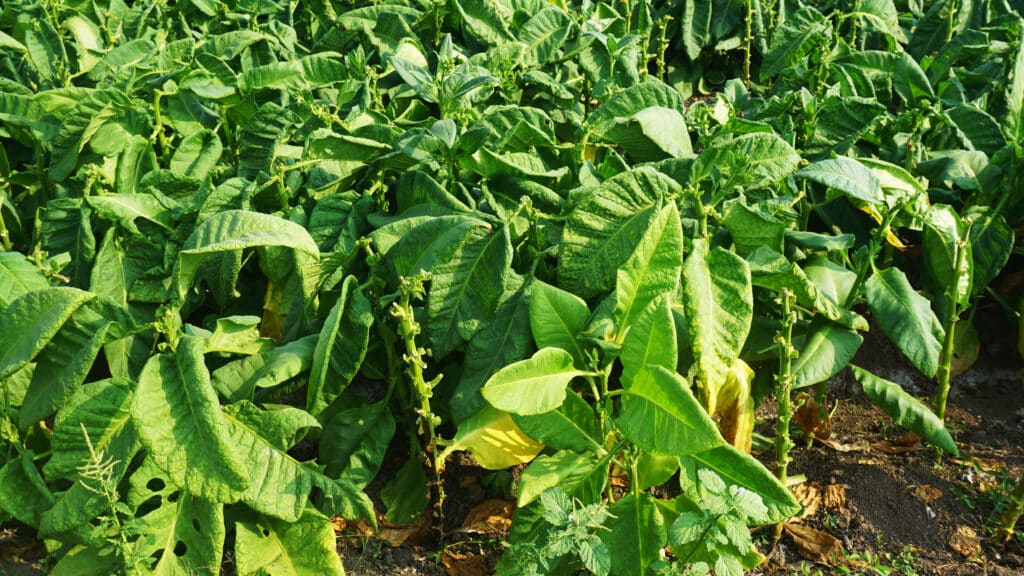
Africa, the new El Dorado of tobacco cultivation?
February 18, 2021
Par: National Committee Against Smoking
Dernière mise à jour: February 18, 2021
Temps de lecture: 3 minutes

A report by the World Health Organization (WHO) shows that tobacco leaf production is growing in Africa, bucking the global trend.[1].
Africa's share of global tobacco leaf production appears to be increasing. Coupled with aggressive marketing practices by the industry, this phenomenon helps explain, according to the authors, the rise in consumption levels on the continent. Thus, between 2000 and 2018, the number of smokers increased from 64 million to 73 million, while it decreased by 60 million worldwide in the same period.
A growing sector
As the WHO report highlights, Africa seems to be going against current global dynamics. While the area dedicated to tobacco leaf cultivation declined worldwide by 15.7% between 2012 and 2018, it increased by 3.4% in Africa over the same period. Similarly, African tobacco leaf production increased by 10.6% in six years, while global production fell by nearly 14%. As a result, the center of gravity of tobacco cultivation seems to be shifting from year to year towards Africa, which now represents 18.1% of tobacco growing areas and 11.4% of global production.
East Africa, the continent's main producer
While in 1995, Zimbabwe and Malawi concentrated nearly 69% of African tobacco production, the latter is now also driven by new competitors, such as Zambia, Mozambique and Tanzania. Overall, more than 90% of African production now comes from the east of the continent. Between 2012 and 2018, the African continent significantly reduced its imports of tobacco leaves, at the same time as it saw its exports increase: in six years, Africa's trade surplus increased by 89% in this sector. However, the African trade balance deficit for cigarettes widened considerably between 2012 and 2018, rising from 322 to 701 million euros.
An obstacle to sustainable development
Although the share of the tobacco sector in the African economy remains residual, with rare exceptions such as Malawi, this increase in activity is not a sign of sustainable growth. Tobacco growing, which is unprofitable and particularly polluting and dangerous for populations as well as for local fauna and flora, is both an economic and environmental threat. Opposed to the UN Sustainable Development Goals, tobacco growing is identified as a vector of endemic poverty. As such, the WHO Framework Convention encourages Parties to give priority to substitute crops as much as possible.
©Generation Without Tobacco Keywords: Africa, Tobacco cultivation, environment, sustainable development Photo credit: Reuters[1] World Health Organization, Status of tobacco production and trade in Africa, February 12, 2021 (Report in English)
National Committee Against Smoking |