In France, the social affairs committee adopts the generational ban on the sale of tobacco
October 19, 2026
Par: National Committee Against Smoking
Dernière mise à jour: October 16, 2026
Temps de lecture: 5 minutes

As part of the examination of the draft social security financing bill (PLFSS) for 2027, the National Assembly's social affairs committee adopted amendment no. AS1601 tabled by Green Party MP Nicolas Thierry[1]. The text provides for a ban, starting from the 1ster January 2027, the sale and offering of tobacco to people born on or after January 1er January 2009, including when they reach adulthood. This provision, if definitively adopted, will establish a permanent ban on tobacco purchases for the generations concerned, in addition to the ban already applicable to minors.
A system designed to prevent people from starting to smoke, which exists elsewhere and is widely supported in France
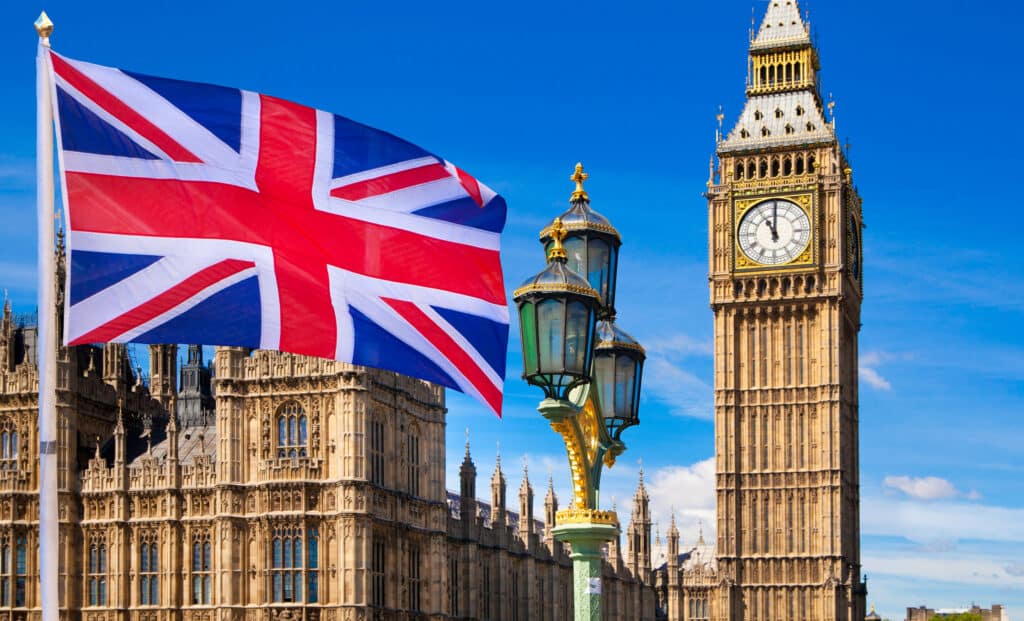
The measure is part of broader efforts to phase out tobacco use, based on the principle of a generational sales ban aimed at preventing new generations from starting to smoke. Green Party MP Marie-Charlotte Garin notably defended this approach as a way to encourage the development of new habits and reduce the initiation of smoking during adolescence, a period during which nicotine addiction can develop rapidly and lead to lasting health consequences. She cited examples of United Kingdom and Maldives which have already adopted such an approach. Other territories and countries have adopted or are considering adopting such a generational ban on sales.
In France, the generational ban on sales is supported by public health organizations united in an alliance called Contre-Feu. Among these organizations is the League Against Cancer, which has just unveiled, as part of its pact for the 2027 presidential election, 12 concrete proposals to make anti-cancer policy more effective, including this generational ban on the sale of tobacco products.[2]. This provision, which draws on the experience of other countries, was immediately supported by MP Nicolas Thierry, who introduced the current amendment. He had, in fact, already submitted a cross-party bill to establish such a measure.
In addition to civil society and a growing number of elected officials, this measure is also being adopted by health authorities. Thus, a A parliamentary report from September 2026 on health prevention, commissioned by Prime Minister Sébastien Lecornu, also recommended this same measure. to reduce healthcare spending. The recommendation had been supported by the Health Insurance in July 2026. Similarly, Health Minister Stéphanie Rist had immediately spoken out in favor of it.
Smoking is responsible for 68,000 premature and preventable deaths each year and causes hundreds of thousands of illnesses. It incurs a cost to the French community estimated at €156 billion. More than €20 billion of this is covered by the national health insurance system.
A financial contribution is planned in the event of an infringement to guarantee the effectiveness of the measure.
The amendment also provides for a penalty in the form of a contribution equivalent to 5% of the turnover from the sale of manufactured tobacco products in the event of a violation of the system. This would apply to offending retailers and would be allocated to the National Health Insurance Fund to contribute to the financing of public health policies and tobacco prevention. The text specifies that this mechanism aims to combine an ambitious prevention measure with an incentive system that empowers tobacconists, by making exemption from the contribution conditional on compliance with the sales ban to the target generations. It should be noted that, for the time being, A third of tobacconists inspected in France during independent investigations still do not comply with the ban on selling tobacco to minors.
Such an approach ensures the effectiveness of the measures and finances the harm and costs incurred by non-compliance with this protective ban. Furthermore, in the long term, a decrease in smoking is likely to reduce the costs of non-communicable diseases attributable to it.
Questions about the legislative procedure
The general rapporteur for the Social Security budget, Thibault Bazin (Republican Right), expressed reservations about the admissibility of the measure within the framework of the Social Security Financing Bill. He believes that the Constitutional Council could consider it a "« legislative rider »"That is to say, a provision insufficiently linked to the subject of the text under consideration. He specifically warned of the risk that the ban would be struck down while the financial contribution would be maintained.".
Marie-Charlotte Garin, for her part, indicated that she wanted to« send a message to the tobacco industry telling them that they need to take action to change the economic model »She also emphasized the need to support tobacconists in adapting their business model. At this stage, the amendment has been adopted in committee, but its final adoption depends on the remainder of the parliamentary process.
AD
[1]Maxence Kagni, Banning the sale of tobacco to an entire generation: the measure voted on in committee, LCP – National Assembly, published on October 15, 2026, accessed on October 16, 2026
[2]2027 Presidential Election. Our Pact – 12 Measures to Meet the Challenges of Cancer, The League Against Cancer, published in October 2026, accessed on October 16, 2026