Germany: Towards a €12 pack of cigarettes by 2030
July 18, 2026
Par: National Committee Against Smoking
Dernière mise à jour: July 15, 2026
Temps de lecture: 7 minutes

The German federal government is planning a sharper-than-expected increase in tobacco taxes, according to an internal Finance Ministry document revealed by the German press. This trajectory, which would bring the average price of a pack of cigarettes to close to €12 by 2030, is part of the healthcare reform adopted by the Bundestag in early July. Beyond the German case, this announcement reignites the debate on harmonizing tobacco prices across the European Union, currently being discussed as part of the revision of the Tobacco Tax Directive (TTD), and raises the question of the positioning of countries like Luxembourg, whose pricing policy deviates from this trend.
A strengthened fiscal trajectory, linked to health reform
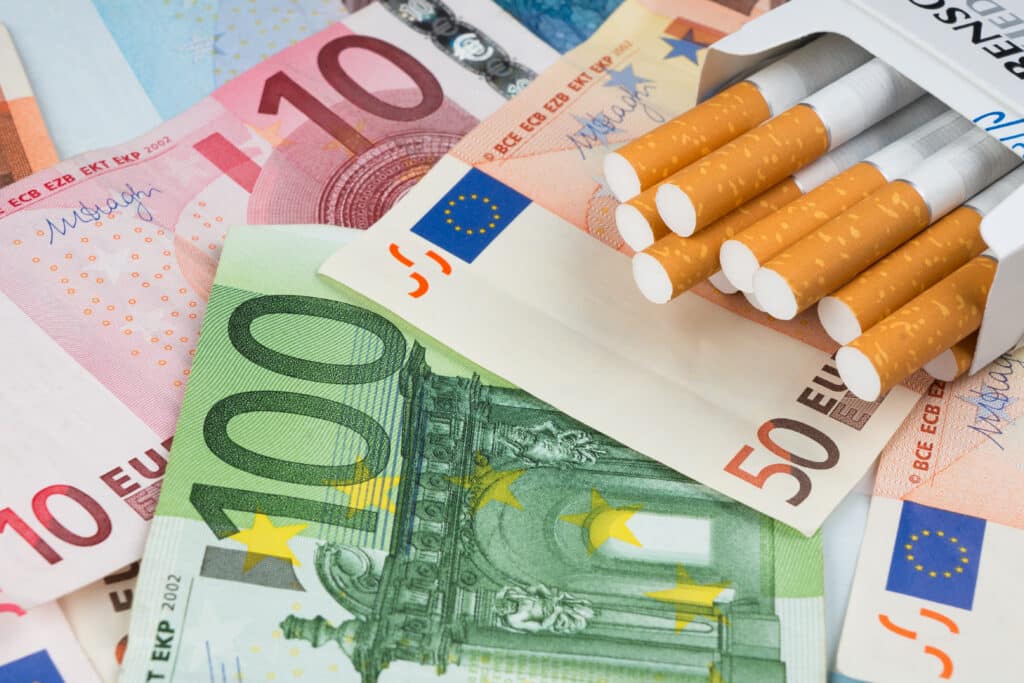
On July 10, 2026, the Bundestag adopted its healthcare reform, one aspect of which includes an increase in taxes on tobacco and sugary drinks.[1]. An internal document from the Ministry of Finance has since detailed this revised trajectory, which has been revised upwards compared to the initial proposal from the Council of Ministers. The average price of a pack of 20 cigarettes, currently around €8, would thus gradually increase to reach €9.10 in 2027, €9.91 in 2028, €10.81 in 2029, and then €11.78 in 2030, approximately 40 cents more than the trajectory previously announced by the government. The tax share of this price would increase, over the same period, from approximately €4 to €6.19 per pack.
This reform is not limited to cigarettes: rolling tobacco, pipe tobacco, cigars, and cigarillos would be subject to a similar tax trajectory, as would vaping liquids, the taxation of which would increase by one cent per milliliter each year. This reform would generate approximately €756 million in additional revenue starting in 2027, reaching nearly €3.6 billion per year by 2030.[2]. According to information provided by the government, this increase would serve a dual purpose: to contribute to the consolidation of the federal budget and to contribute to the protection of public health, in particular to the reduction of smoking among young people and adults.
This measure is part of a broader healthcare reform, several aspects of which were also scaled back prior to its adoption.[3]. Health Minister Nina Warken (CDU) has thus relaxed several of the 66 cost-cutting measures proposed in April 2026 by the commission tasked with stabilizing the finances of mandatory health insurance. This relaxation notably concerned contributions from non-working spouses and co-payments for medications. In this context, the increase in tobacco taxes is among the provisions maintained, and even strengthened, in the final version of the text. Furthermore, Germany was identified in June 2026 by the Tobacco Control Scale, which assesses the tobacco control policies of 37 European countries, as a country that still needs to strengthen its efforts in this area.
Effectiveness is contingent upon the coherence of European tax policies
For public health organizations, this type of national measure raises the question of the effectiveness of tax policies at the European Union level in the face of persistent price disparities between member states. In the absence of convergence between tax levels, a price increase decided in one country exposes its citizens to the temptation of cross-border purchases, which can limit both the health impact of the measure and the expected tax revenue. Rather than strict price harmonization, an argument also used by the tobacco industry to delay any increase until neighboring countries have aligned their own prices, public health organizations are calling for strengthening the independence of the tobacco product traceability system and regulating the volumes delivered to distributors in relation to the actual consumption of each national market, in order to limit the oversupply observed in some countries. They also support, within the framework of the ongoing revision of the European directive on tobacco taxation (TTD), the introduction of a harmonized weighted average price, accompanied by a mechanism for induced increases for other Member States when a country raises its own taxation.
The Luxembourg counter-example
Leveraging the tobacco manufacturers' oversupply strategy, Luxembourg stands out for its relatively low taxation of tobacco products, designed to capture tax revenue paid by cross-border consumers. Thus, while tobacco consumption is declining in most European countries, it has followed the opposite trajectory in the Grand Duchy: tobacco sales there increased by 53 million metric tons between 2019 and 2024, while they fell by 32 million metric tons in the Netherlands, 31 million metric tons in France, and 28 million metric tons in Belgium over the same period. This difference is explained less by changes in local consumption than by the tobacco industry's strategy of oversupplying the Luxembourg market. Of the five billion cigarettes sold in Luxembourg in 2024, only 12 million metric tons were actually consumed by Luxembourg residents, with the vast majority destined for neighboring countries.
According to the organizations behind this analysis[4], This maintenance of significant price differences has a cost that falls not on Luxembourg, but on its European partners: these tax dumping practices undermine the effectiveness of anti-smoking policies implemented in France, particularly in border regions, while generating an estimated tax shortfall of several hundred million euros. The revision of the Tobacco Tax Directive (TTD), which aims to adjust tax levels based on member states' purchasing power, could theoretically result in a substantial increase for Luxembourg, one of the world's wealthiest countries. However, this legislation remains pending: on June 17, 2026, the European Parliament failed to adopt a formal position on this revision, referring the matter back to the Council of the EU, now under Irish presidency since July 1. Furthermore, the proposed revisions continue to be the subject of sustained lobbying by the tobacco industry and have been described as excessive by Luxembourg's Finance Minister, Gilles Roth himself. Beyond taxation alone, an effective fight against this type of dumping also requires strengthening other levers at the European level, starting with the independence of the tobacco product tracking and tracing system (TSS) from the industry, as well as better regulation of the volumes delivered to each national market in relation to its actual consumption. These conditions, combined with the revision of the TTD (Tobacco Products Tax), remain necessary for a coordinated response to practices such as those observed in Luxembourg.
AE
[1] Olivia Logan, Germany to raise tobacco tax more than initially planned, I'm Expat, published on July 15, 2026, accessed the same day
[2] Warum das Rauchen teurer werden soll, Tagesschau, published on July 13, 2026, accessed on July 15, 2026
[3] Olivia Logan, Germany waters down healthcare reform before Bundestag vote, I'm Expat, published July 7, 2026, accessed July 15, 2026
[4] Three European NGOs are calling on Luxembourg to stop its tobacco tax dumping, Tobacco-Free Generation, published on March 26, 2026, accessed on July 15, 2026
National Committee Against Smoking |