Germany: New take-back obligation for disposable e-cigarettes
July 9, 2026
Par: National Committee Against Smoking
Dernière mise à jour: July 8, 2026
Temps de lecture: 6 minutes
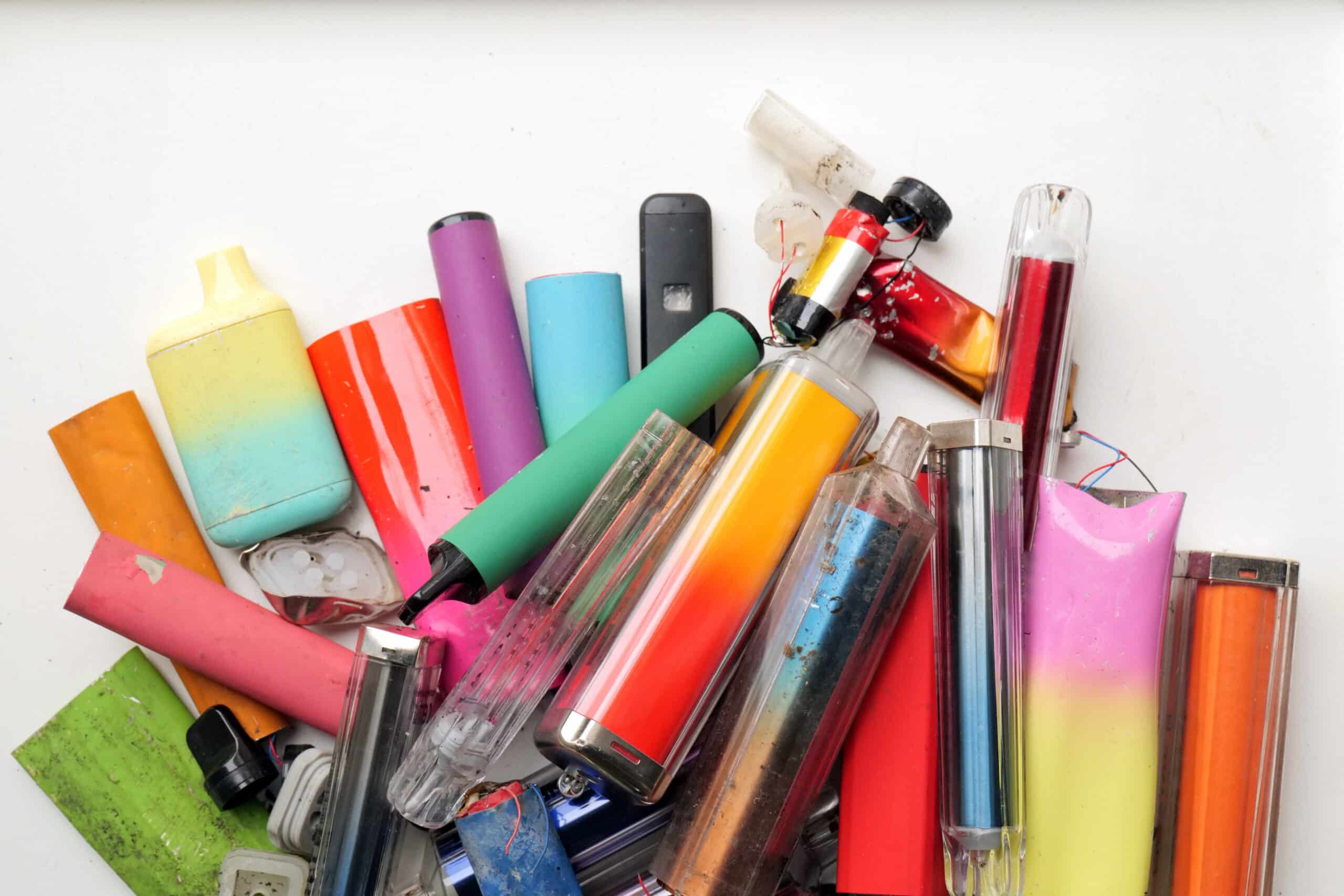
Since July 1, 2026, all German points of sale offering disposable electronic cigarettes, including kiosks, petrol stations and tobacconists, are required to take back used devices free of charge, without any obligation to purchase.[1]. This extension of the German law on electrical and electronic equipment (ElektroG4) aims to facilitate the collection of these end-of-life products. However, it comes at a time when several stakeholders, in Germany and elsewhere in Europe, are highlighting the persistent limitations of recycling these devices and questioning the true impact of this type of measure, while other European countries have opted for an outright ban on the sale of these products.
What changes with the new obligation
This obligation stems from the revision of the German Electrical and Electronic Equipment Act (ElektroG4), which came into force on January 1, 2026. After a six-month transition period, all businesses selling e-cigarettes or disposable heated tobacco devices must take back end-of-life devices free of charge, including small businesses that were not previously subject to this requirement. The criterion used by the legislature is the sale of this type of product, regardless of the size of the business.
The trade-in program is not contingent on purchasing a new device: consumers can dispose of their old device without buying a new one, and at any point of sale, not necessarily the one where the initial purchase was made. Businesses will be required to indicate this trade-in option with a dedicated logo to make collection points more easily identifiable.
This requirement is in addition to existing measures: special containers at recycling centers, municipal collection points, supermarkets, drugstores, and electronics stores, which already accepted these devices free of charge, just like other small electronic waste. It addresses, in particular, a safety concern: disposable e-cigarettes contain lithium-ion batteries which, if damaged during transport or sorting, can ignite and cause fires in waste management systems.[2].
Recycling these devices is a topic that is still being debated.
Several experts and stakeholders in the waste management sector point out that the take-back program alone does not solve the issue of device disposal. A disposable e-cigarette combines, in a small space, a lithium battery, electronic circuits, a nicotine liquid reservoir, and various plastics and metals, assembled in such a way as to make disassembly complex. According to several recycling professionals, this implies largely manual processing, and some of the materials that make up these devices are not recovered at the end of the process. Furthermore, the German system does not include a deposit associated with the take-back program, which, according to some observers, limits the incentive for consumers to return their devices rather than throwing them away with household waste or abandoning them in public spaces.
This type of measure is part of a European context where the environmental dimension of disposable devices is playing an increasingly important role in public and regulatory debate. In France[3] As in the United Kingdom, where the sale of disposable puffs has been banned since 2025, several manufacturers have marketed devices presented as refillable, without always ensuring widespread availability of refills. Tobacco control and environmental groups have noted a discrepancy between the actual use of these products, often treated as disposables, and their marketing, which emphasizes their sustainable alternatives. A British analysis[4] It also examined the positions taken by the tobacco industry during the public consultations preceding the ban in the United Kingdom, noting that these emphasized voluntary recycling and improved eco-design more than stopping the marketing of disposable products.
Approaches vary across European countries
Several European countries have chosen to ban the sale of disposable e-cigarettes rather than organize their resumption. The Netherlands, for its part, announced in June 2026 that it would not introduce a national ban on disposable puffs, the government believing that a measure taken solely at the Dutch level would run up against the limitations of the current European Tobacco Products Directive (TPD) and would remain vulnerable to cross-border or online purchases. The Dutch authorities[5] have indicated that they favor an approach taken at the European Union level, within the framework of the ongoing review of the TPD. Estonia[6] made a request along the same lines to the European institutions.
Numerous public health and environmental organizations recommend that a ban on disposable devices be directly incorporated into the revision of the TPD and the Single-Use Plastics Directive (SUP). They argue that a harmonized measure at the European level would send a stronger political signal and would better protect young people from these products while having a much more effective environmental impact.
AE
[1] E-Zigaretten richtig entsorgen: Einfach im Handel , Bayerisches Landesamt für Umwelt, published on June 30, 2026, accessed on July 7, 2026
[2] CNN – UK to ban sale of disposable vapes in response to soaring waste and safety risks : https://www.cnn.com/2025/05/31/uk/uk-ban-disposable-vapes-gbr-dg
[3] Legifrance – Law No. 2025-175 of February 24, 2025, prohibiting single-use electronic vaping devices: https://www.legifrance.gouv.fr/jorf/id/JORFTEXT000051244550
[4] Lomngam P, Hiscock R, Evans-Reeves K, Matthes BK. The tobacco industry at the health-environment nexus: a framing analysis of the UK 'disposable' e-cigarette ban. Health Promot Int. 2025 Oct 30;40(6):daaf218. doi:10.1093/heapro/daaf218. PMID: 41429913; PMCID: PMC12721999.
[5] Tobacco-Free Generation – The Dutch government is incorporating the ban on cigarette filters and puffs at the European level. : https://www.generationsanstabac.org/fr/actualites/le-gouvernement-neerlandais-integre-linterdiction-des-filtres-a-cigarettes-et-des-puffs-au-niveau-europeen/
[6] Tobacco-free generation – Estonia is asking the EU to strengthen regulations on vaping : https://www.generationsanstabac.org/fr/actualites/estonie-demande-a-lue-de-renforcer-les-reglementations-sur-le-vapotage/
National Committee Against Smoking |