Maine: an EPR scheme on e-cigarettes that could primarily benefit the industry
June 6, 2026
Par: National Committee Against Smoking
Dernière mise à jour: June 4, 2026
Temps de lecture: 9 minutes
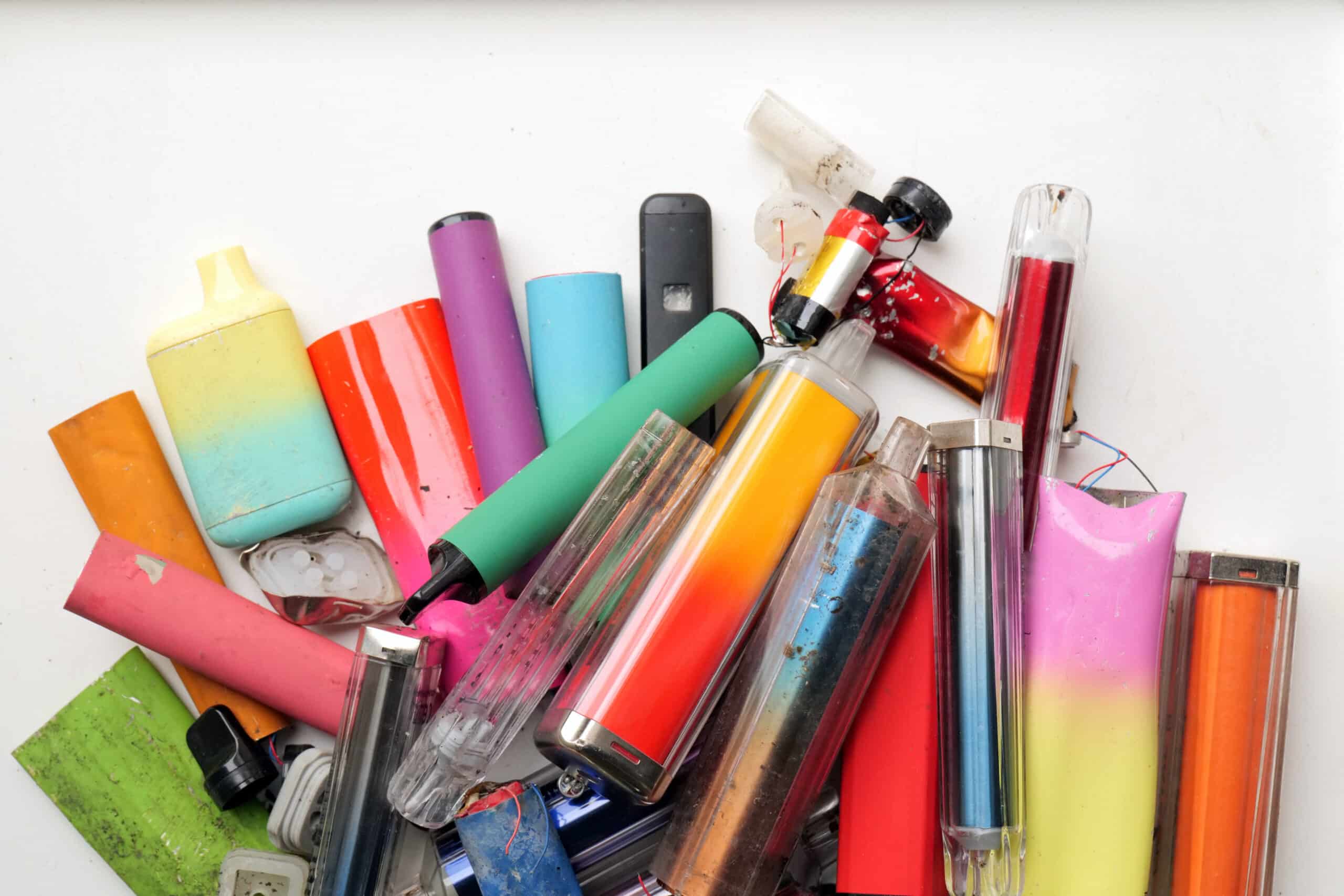
In April 2026, the US state of Maine adopted the world's first legislation establishing an extended producer responsibility (EPR) scheme specifically for e-cigarettes and related products. Presented as an innovative environmental response to the explosion of vaping waste, this law now requires manufacturers to finance and organize the collection, processing, and recycling of used devices themselves.[1].
While this initiative reflects a growing awareness of the environmental impacts of vaping products, it also raises significant concerns from both a public health and environmental perspective. By placing the central role of managing the waste it generates on the industry itself, this model replicates the limitations already observed in Europe with Extended Producer Responsibility (EPR) schemes applied to tobacco products. Above all, this approach perpetuates the idea that improved collection or increased recycling would be sufficient to address the environmental challenges associated with e-cigarettes. However, while the scheme may allow for the recovery of certain components, recycling these devices remains extremely limited, complex, and largely ineffective on a large scale, and source control measures are proving far more effective.
A unique EPR scheme entrusted directly to manufacturers
The law passed by Maine mandates a collection and management program for e-cigarette waste, including devices, their components, and the substances they contain, whether or not they contain nicotine. Manufacturers will be required to fund a statewide collection system with drop-off points located in businesses, schools, community centers, and recycling facilities. The legislation stipulates that permanent collection points must be accessible within 15 miles (approximately 25 kilometers) for 90% of the state's residents.
The program will gradually require all retailers to participate in the collection system and includes financial incentives to encourage the return of used products. Consumers will be able to receive up to two dollars per item returned. The law also provides for education and communication campaigns to promote the recycling program to the public.
However, this approach is based on a particularly problematic principle: that of entrusting the organization, financing and communication surrounding the management of waste generated by their own products to the electronic cigarette producers themselves.
A logic already widely contested in Europe
The model adopted by Maine strongly resembles the extended producer responsibility mechanisms already implemented in the European Union for tobacco products, particularly within the framework of the Single Use Plastics Directive (SUPD).
In Europe, Article 8 of the directive led to the creation of eco-organizations directly funded by tobacco manufacturers. The problem lies in the composition and governance of these eco-organizations. For example, the Alcome eco-organization in France is run by representatives of manufacturers and tobacconists. This type of structure primarily develops campaigns focused on "good habits," collection systems, and clean-up operations, while largely neglecting consumption reduction policies and source prevention measures. It is also supposed to conduct research, but none of it focuses on relevant methods for reducing pollution at the source of this waste, as the manufacturers' interests remain focused on maximizing sales. This model is facing increasing criticism from public health stakeholders and environmental organizations. In practice, these mechanisms tend primarily to shift the responsibility for pollution onto consumers and local communities, while offering the industry new opportunities for environmental communication, enhancing its image, and preventing the adoption of much more effective measures to reduce product consumption and their environmental impact.
European experience shows that extended producer responsibility (EPR) schemes rarely lead to a significant reduction in pollution generated by tobacco and nicotine products. They primarily focus on downstream management of waste discarded in public spaces, including collection, cleanup, and behavioral awareness campaigns, without questioning the products themselves or the industrial strategies that promote their widespread distribution.
E-cigarette recycling is largely illusory
One of the main blind spots in these policies lies in the very issue of recycling vaping devices. Electronic cigarettes, and in particular disposable or semi-disposable devices, are composed of a complex assembly of plastics, metals, electronic components, lithium-ion batteries, and chemical residues that sometimes contain nicotine.
In practice, recycling these products remains extremely difficult to implement on a large scale. Manually dismantling the devices is time-consuming, expensive, and technically complex. Batteries present significant fire and explosion risks in waste sorting and treatment facilities. The different materials are often interlocked or bonded together, making their separation particularly difficult.
In the United States as in Europe, millions of e-cigarettes still end up in regular household waste or in the environment due to a lack of truly operational and accessible collection and processing systems. Several studies also highlight that actual recycling rates remain very low compared to the volumes placed on the market.
In this context, the development of specific collection and processing systems can nevertheless be a useful tool for limiting some of the environmental impacts associated with vaping waste, particularly by enabling the recovery of certain components and materials contained in these electronic products. However, these systems cannot be presented as a sufficient or central solution on their own. Electronic cigarettes remain products with a high rate of obsolescence, often designed for very short-term use, which structurally limits the prospects for a truly large-scale circular economy.
The risk therefore remains that recycling will be used as an environmental communication argument to trivialize these products or to delay more ambitious measures to reduce at source, particularly concerning disposable devices, volumes placed on the market or the responsibility of manufacturers.
The collection of used products is therefore essential for environmental and safety reasons in order to process them, but other effective measures exist to reduce the amount of this waste. These include banning disposable e-cigarettes, limiting the spaces where these products are consumed, preventing initiation of vaping, and encouraging quit smoking among those who have stopped using tobacco.
The risk of a new greenwashing tactic for the industry
Beyond the technical challenges, this type of legislation also raises important questions regarding industry influence. By organizing their own collection, communication, and awareness systems, e-cigarette manufacturers can strengthen their presence in environmental policies and develop strategies to enhance their image under the guise of environmental commitment, thereby hindering the adoption of effective measures to reduce vaping.
Collection campaigns, recycling programs, and awareness campaigns thus allow manufacturers to be repositioned as "responsible" actors, even though their products continue to be the source of increasing pollution and increasingly documented health risks. This logic also raises questions about the coherence of policies that prioritize waste management mechanisms without simultaneously addressing consumption and limiting the distribution of these products.
The Maine law illustrates a growing evolution in environmental debates surrounding tobacco and nicotine products. However, European experience shows that extended producer responsibility (EPR) schemes are not a sufficient response to products designed to generate complex, toxic, and difficult-to-recycle waste.
If the polluter-pays principle is to be maintained, limiting manufacturers' funding of an independent eco-organization seems far more appropriate and capable of implementing truly effective measures. An approach focused solely on collection and recycling by manufacturers risks legitimizing the continued mass marketing of these products while shifting the debate away from health and environmental concerns. In this context, many stakeholders are now advocating for more ambitious policies aimed at directly reducing the distribution of disposable products and limiting manufacturers' role in environmental schemes to solely financing the costs generated by their products.
©Generation Without TobaccoAE
[1] Megan Quinn, Maine becomes first state to enact EPR for vapes, Waste Dive, published on June 2, 2026, accessed the same day
National Committee Against Smoking |