Postal Service blocks shipment of illicit vapes to the United States
September 2, 2025
Par: National Committee Against Smoking
Dernière mise à jour: August 29, 2025
Temps de lecture: 7 minutes

The US Postal Service (USPS) has announced it is blocking shipments of unauthorized vaping products into the United States. This decision marks a turning point in the control of a market largely dominated by imported disposable devices, often outside legal channels. While this measure could limit access to non-compliant products, it also raises questions about the indirect benefits derived by major tobacco companies, already well established in the sector.[1].
A market dominated by unauthorized products
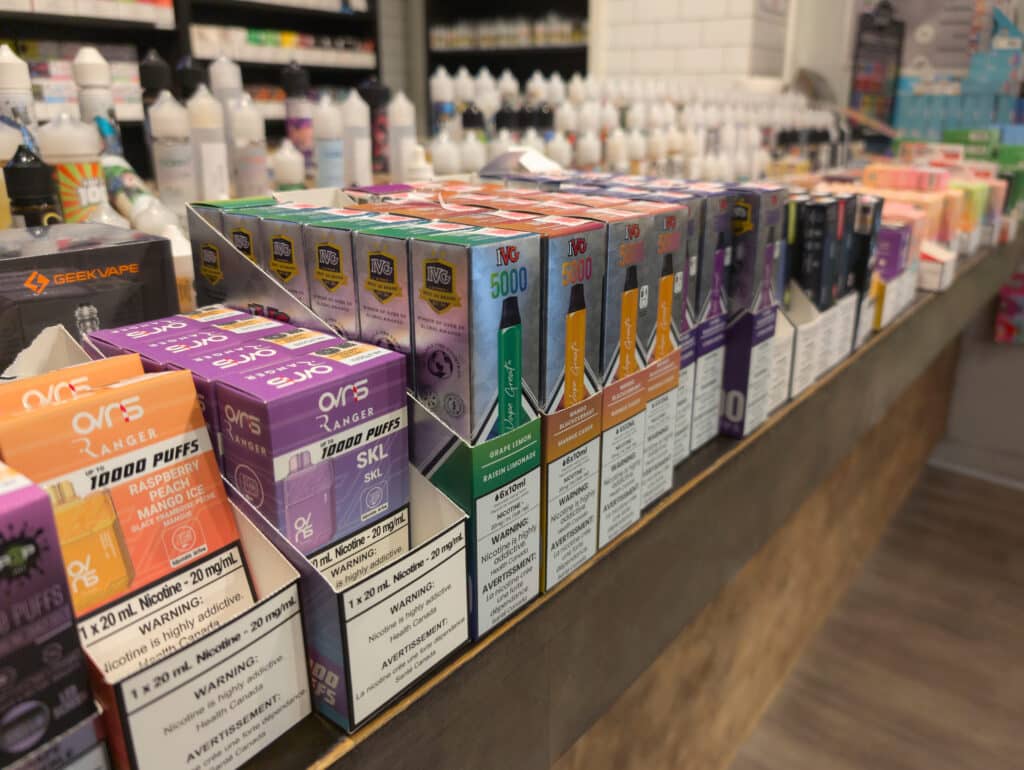
In the United States, the vaping market is largely driven by disposable devices, which have exploded in popularity in recent years. Offered at relatively low prices, readily available online or in select retail outlets, and featuring a wide range of fruity and sweet flavors, these products are particularly appealing to young adults and minors. Their "ready-to-use" nature, with no need for refills or maintenance, further enhances their appeal.
However, a significant portion of these devices circulate outside of legal channels. Many of them are manufactured abroad and then imported without prior authorization from the Food and Drug Administration (FDA). According to estimates relayed by the American authorities, millions of non-compliant units are sold each month, escaping any verification in terms of composition, nicotine dosage, or health compliance. This situation makes the market particularly difficult to control and increases the risk of exposure of consumers, especially young people, to products whose safety is not guaranteed.
A measure that could benefit tobacco manufacturers
The USPS's ban on the shipment of illicit vapes represents a turning point in the control of the American market. By limiting the circulation of unauthorized products, this measure certainly helps curb the growth of a parallel sector. But it also has an indirect effect: strengthening the position of major tobacco companies, already present in the vaping market through ranges subject to FDA authorization.
For several years, these groups have been denouncing the proliferation of non-compliant disposable devices, which they perceive as a direct threat to their market share. Their products, registered and regulated, find themselves competing with a massive offering, often cheaper and more varied in terms of flavors, but not subject to the same constraints. By now blocking shipments via the country's main postal service, the USPS is helping to narrow this competitive gap.
The industrial strategy: aligning to better control
The tightening of controls on the transport of illicit vapes comes as major tobacco companies adjust their strategies in the face of a rapidly expanding market. After long adopting a denunciation stance towards non-compliant products, these players are now choosing to invest directly in the disposable vape segment, with the aim of occupying a dominant position in a particularly lucrative sector.
The recent initiative of British American Tobacco (BAT) illustrates this development.[2]While its American subsidiary had until now focused its efforts on highlighting the risks associated with unauthorized products and on requests for increased controls, the group is now preparing the launch of Vuse One, a disposable device based on synthetic nicotine currently under review by the Food and Drug Administration (FDA). This strategic choice reflects a desire to enter this market by distinguishing itself from informal operators, by promoting a product presented as supervised by the authorities and compliant with legal requirements.
This approach is explained by several considerations. On the one hand, it aims to consolidate the legitimacy of manufacturers in the eyes of public authorities by demonstrating their ability to offer products that comply with current requirements. On the other hand, it responds to a commercial logic: faced with the rapid growth of the disposable vape segment, particularly among young adults, not being present would amount to ceding a significant share of the market to competitors acting illegally. Finally, this strategy allows cigarette companies to strengthen their influence in the regulatory debate, by positioning themselves as key interlocutors for the supervision of the sector.
This development illustrates a broader movement by the tobacco industry: transforming an environment perceived as a constraint into an opportunity, and leveraging regulation to consolidate its role in new forms of nicotine consumption. For public health authorities, this dynamic underscores the importance of maintaining heightened vigilance to ensure that the expansion of the industry's offerings does not come at the expense of health protection objectives.
A regulatory framework under pressure and increased vigilance for public health
The Food and Drug Administration (FDA) faces a complex task: on the one hand, combating the proliferation of unauthorized vaping devices that continue to circulate massively in the United States, and on the other, reviewing a considerable number of authorization applications submitted by manufacturers wishing to legitimize their presence in this market. Despite the strengthening of its prerogatives since 2022, processing times remain long, creating a climate of uncertainty that some players exploit by marketing products even while their evaluation is still underway.
In this context, the USPS's decision to block the shipment of illicit vapes sends a strong signal, but it does not address the structural challenges of controlling a constantly evolving sector. The arrival of synthetic nicotine products on the market further complicates the authorities' task: although this substance is now included in the scope of FDA regulations, it has the same addictive properties as nicotine from tobacco and exposes consumers, particularly young people, to the same risks of addiction.
Thus, while the USPS's shipping ban may help reduce the availability of non-compliant products, it must be accompanied by increased vigilance to prevent new industrial strategies from fostering the expansion of an attractive and addictive offering in other forms. The challenge for public health authorities is to effectively regulate a rapidly changing market while maintaining the priority of protecting the health of the most vulnerable populations.
AE
[1] Emma Rumney, Exclusive: USPS blocks shipping of illicit vapes in boost for Big Tobacco, Reuters, published August 11, 2025, accessed August 26, 2025
[2] Tobacco-free generation, British American Tobacco is banking on synthetic nicotine to establish itself in the disposable vape market, published August 28, 2025, accessed August 26, 2025
National Committee Against Smoking |