INC-5.2 in Geneva: New failure of the global treaty on plastic pollution
August 20, 2025
Par: National Committee Against Smoking
Dernière mise à jour: August 19, 2025
Temps de lecture: 5 minutes
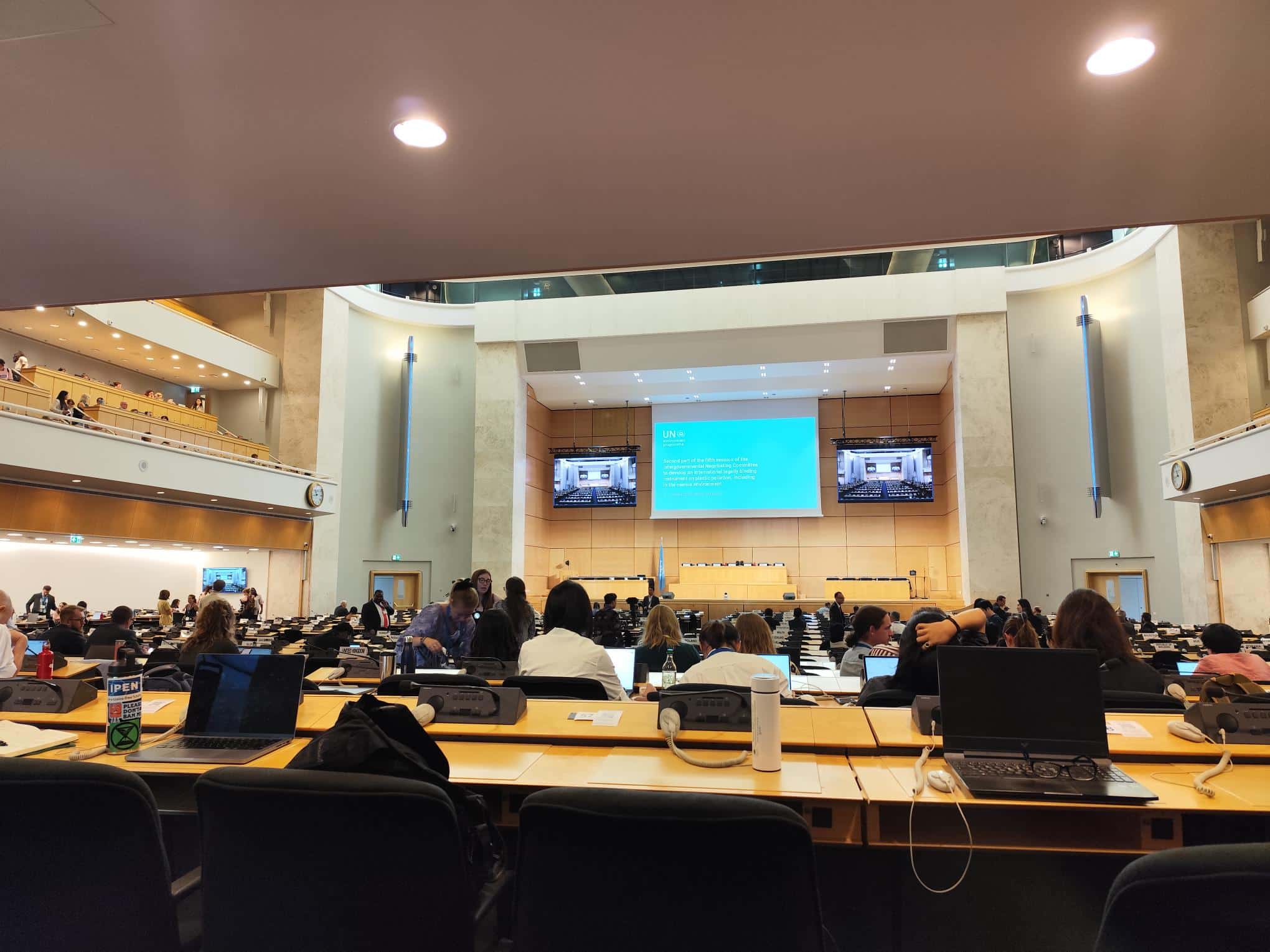
The fifth session of the Intergovernmental Negotiating Committee on Plastic Pollution (INC-5.2), held from 5 to 14 August 2025 in Geneva, concluded without an agreement. Despite the environmental and health emergency linked to the growing production and consumption of plastics, deep differences between states and the influence of fossil fuel industries have prevented any significant progress.
Initially scheduled to conclude in Busan in 2024, the process has already been delayed once by the failure of this South Korean session. In Geneva, despite ten days of discussions, no consensus emerged, once again delaying the finalization of the text.
Political divisions aggravated by the weight of the petrochemical industry
The Geneva discussions highlighted a deep divide between two visions of the future treaty. On the one hand, the so-called coalition High Ambition, bringing together more than 100 countries, advocated for an ambitious agreement, covering the entire life cycle of plastics, including a reduction in production and legally binding commitments. On the other hand, a bloc of oil and plastic producing countries, grouped within the Like-Minded Group, opposed any limitation on the production of virgin plastic and defended a text focused solely on waste management and recycling.
This political divide was reinforced by the decisive influence of the petrochemical industry and associated lobbies. The session was marked by a massive presence of representatives linked to plastics and hydrocarbon interests, who largely influenced the content of the draft text. Provisions aimed at reducing production were systematically weakened, in favor of approaches based on the circular economy and recycling, insufficient solutions to curb the global plastics crisis.
Several civil society organizations, including Greenpeace and CIEL, have denounced the direct interference of industrial lobbies, accusing them of diverting the negotiations from their initial objective. Their influence helped neutralize the ambitions of the majority of delegations, to the point of stripping the draft agreement of its substance. For many observers, INC-5.2 once again illustrates the difficulty of moving forward on a truly binding text as long as the economic interests of the petrochemical industry take precedence over the general interest and the protection of the environment and health.
Public health, the great absentee from the negotiations: an essential political leap forward
One of the most worrying findings of this Geneva session is the almost total absence of the health dimension in the discussions. The draft text presented by the presidency has in fact deleted the article initially devoted to health, thus illustrating the weight of the industries concerned in the process and marking a significant step backward in the recognition of the proven link between plastic pollution and impacts on human health.
However, the plastic crisis is also a health crisis. Microplastic contamination of soil, air, and oceans, as well as exposure to the toxic chemicals associated with them, are now widely documented by the scientific community. Excluding these issues from the negotiating text undermines the credibility of the future treaty and limits its scope.
In this context, civil society, united in particular within the Stop Tobacco Pollution Alliance (STPA), reiterates the need for the treaty to take into account the specific nature of tobacco products. Cigarette filters, which represent the most widely disseminated toxic plastic waste in the world, have no health justification and are primarily a marketing tool intended to increase the acceptability of the product. Banning them would be a concrete, symbolic, and effective measure, enabling a lasting reduction in plastic pollution while addressing a public health issue.
More broadly, a political leap forward is essential. States must refocus negotiations on the public interest and fully integrate the health dimension, in line with other international instruments, notably the WHO Framework Convention on Tobacco Control (FCTC). The latter has demonstrated that it is possible to contain industry interference and adopt ambitious public health provisions. Drawing inspiration from this example is essential to ensure that the global treaty on plastic pollution truly addresses the current environmental and health emergency, the STPA reminds us.
Upcoming strategic deadlines
A new negotiation session remains to be organized, at a date yet to be determined, in an attempt to finalize this treaty, announced since 2022. In the meantime, the 11th Conference of the Parties to the WHO Framework Convention on Tobacco Control (FCTC), scheduled for November in Geneva, will be a decisive step in reaffirming the need to integrate public health at the heart of discussions on plastic pollution. This deadline will notably be an opportunity to reiterate the urgency of banning cigarette filters, a product devoid of any health benefits for smokers and responsible for massive and persistent plastic pollution, specifies the National Committee against Tobacco (CNCT), in a press release[1].
AE
[1] Press release, Global treaty on plastic pollution: a failure in Geneva that calls for renewed ambition, CNCT, published on August 19, 2025, consulted the same day
National Committee Against Smoking |