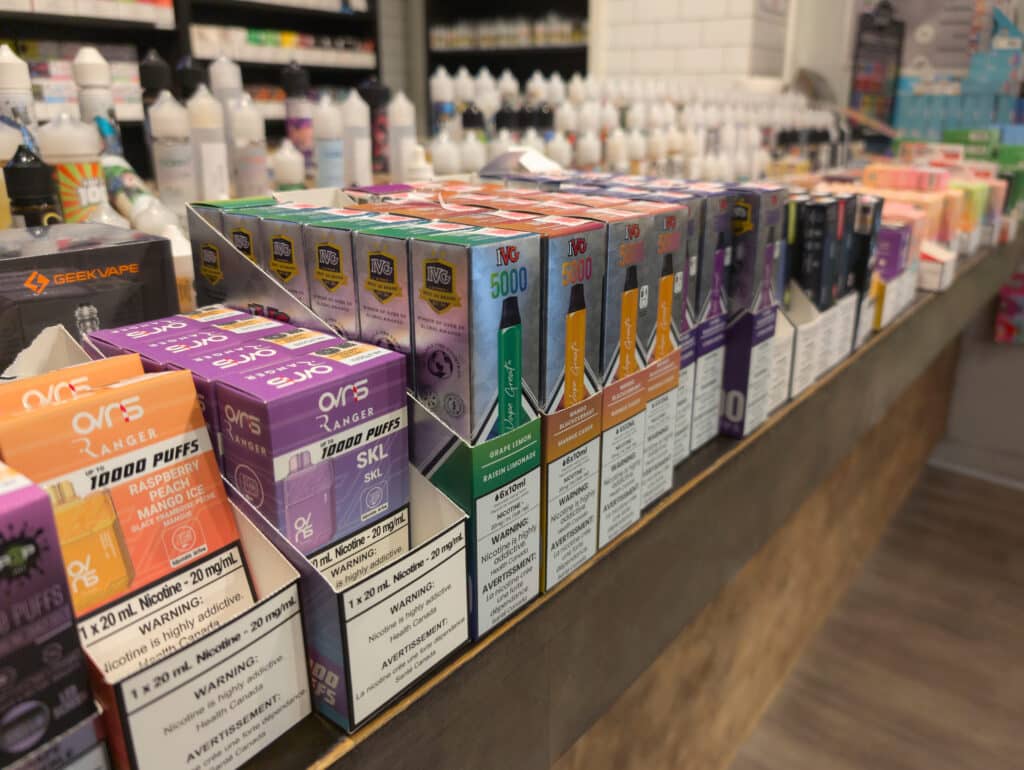
Tobacco sales in supermarkets soon to be authorized in Tunisia
November 20, 2020
Par: chef-projet@dnf.asso.fr
Dernière mise à jour: November 20, 2020
Temps de lecture: 4 minutes

Tunisians will soon be able to buy cigarettes in supermarkets, following the signing in August 2020 of a memorandum of understanding between the National Tobacco and Matches Authority (RNTA) and the Union of Large Retailers.
On August 31, 2020, the National Tobacco and Matches Board, a public company that holds monopolies on the manufacturing and marketing of tobacco in Tunisia, signed a memorandum of understanding with the country's Chamber of Large Surfaces regarding the sale of cigarettes in Tunisian supermarkets. The objective of this memorandum of understanding is clearly stated: "[it] must allow large surfaces to operate the distribution of tobacco"[1].
While the sale of cigarettes in supermarkets is fortunately not on the agenda in France, it is legal in several European countries, such as Germany. In addition, several of our neighbors, including Germany and Spain, also allow the sale of cigarettes in vending machines, a dangerous sales practice because it does not allow for any real control over the age of consumers.2].
Smoking in Tunisia: a real public health issue
Obviously, such an agreement can be expected to have major consequences in terms of public health and smoking within Tunisian society, which in 2018 was already ranked first among the countries in the Arab world in terms of smoking prevalence among men, according to Yemeni academic Mustapha Absi[3]. The figures for smoking among adolescents and young adults are particularly worrying: according to Habib Ghedira, responsible for coordinating a joint anti-tobacco strategy between the Tunisian Ministry of Public Health and the World Health Organization, "among 12 to 20 year olds, 55.8% of boys and 17.7% of girls are smokers."4].
An agreement certainly motivated by short-term financial interest, but which represents a very bad calculation in the medium and long term.
While the Tunisian state has been engaged in the fight against smoking for years, the fact that a public company has signed an agreement facilitating the distribution of cigarettes and, more broadly, tobacco is surprising. Since legal tobacco production and sale in Tunisia are state monopolies through the RNTA, the Tunisian state certainly hopes to make additional profits by facilitating and expanding tobacco distribution, while the RNTA's current profits already contribute 9,% to the state budget.5].
However, while the Tunisian government may hope to benefit financially from this agreement in the short term, the economic outcome of this decision can only be negative in the medium and long term. Indeed, facilitating and expanding access to tobacco will undoubtedly lead to increased tobacco consumption in the country, and the health and social costs of tobacco far exceed the revenue obtained through taxes on tobacco products, everywhere in the world.
Thus, the monopoly on tobacco production and marketing circuits exercised by the Tunisian state through the RNTA is proving very problematic, to the extent that financial issues are hampering the government's intentions to fight tobacco.
©Generation Without Tobacco[1] Memorandum of understanding signed between the RNTA and the National Chamber of Large Surfaces, rnta.tn (September 16, 2020, accessed November 17, 2020). [2] Gérald Roux, What's it like elsewhere? Cigarette sales in Europe, Franceinfo (October 4, 2017, consulted November 17, 2020). [3] Tunisia has the highest rate of male smokers, Le Temps (May 4, 2018, consulted November 17, 2020). [4] Hassen Mzoughi, Soon, smoking will be banned in public spaces, Kapitalis (July 19, 2017, accessed November 17, 2020). [5] Mohamed Ben Abderrazek, Tobacco sales in supermarkets: a blow for smugglers and speculators, Digital Tunisia (October 14, 2020, accessed November 17, 2020). DNF - For a Zero Tobacco World |