COP11: Structuring decisions, unprecedented pressures and prospects for the global fight against tobacco
December 8, 2025
Par: National Committee Against Smoking
Dernière mise à jour: December 8, 2025
Temps de lecture: 24 minutes
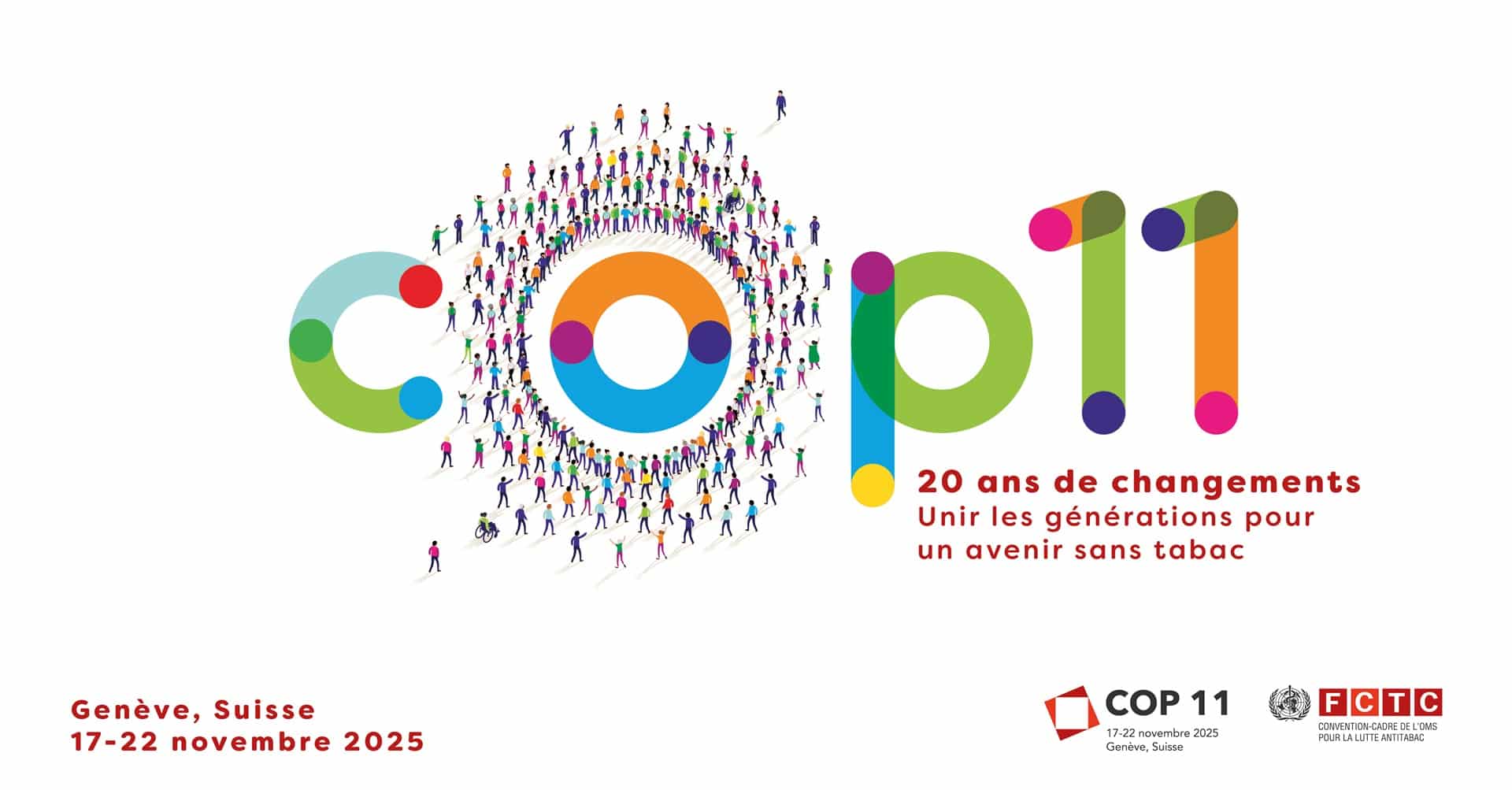
The 11th session of the Conference of the Parties (COP11) to the WHO Framework Convention on Tobacco Control (FCTC), held in Geneva from 17 to 22 November 2025, marked a decisive step for global tobacco governance. Despite constant pressure from the tobacco and nicotine industry, exerted before and throughout the negotiations, the Parties managed to contain it and adopt several major decisions concerning forward-looking tobacco control measures (Article 2.1), holding the industry accountable (Article 19), and protecting the environment (Article 18).
These advances, welcomed by public health organizations, pave the way for stronger national and international policies. However, they occur within a context characterized by multifaceted and highly organized interference, illustrating once again the extent of the strategies deployed by industry to undermine collective decision-making.
I. The FCTC and the COPs: an essential global framework for protecting public health
Adopted in 2003, and entering into force in February 2005, the WHO Framework Convention on Tobacco Control The Comprehensive Tobacco Control Framework (CCTF) is the first and only international public health treaty. Today, 183 States Parties, including France and the European Union, have committed to implementing coordinated policies to reduce tobacco use, prevent tobacco-related diseases, and limit the influence of the tobacco industry. The Conferences of the Parties (COPs), held every two years, are the treaty's decision-making body: they allow representatives of participating countries to discuss emerging issues, adopt new directions, and strengthen existing obligations within a framework of international cooperation. Each session thus plays a crucial role in adapting tobacco control efforts to evolving markets and industry strategies, whether related to new nicotine products, environmental challenges, misinformation, or the legal responsibility of manufacturers. In a context where tobacco remains the leading cause of preventable premature death worldwide, these international negotiations are a key moment for setting a common course and ensuring that protecting health takes precedence over commercial interests.
It is also important to remember that all the decisions adopted at COP11 were reached by consensus, a principle that has governed the work of the FCTC since its inception. This decision-making process ensures that each approved measure ultimately benefits from the support of all Parties, regardless of the sometimes heated debates that punctuate the negotiations. It constitutes a major element of the treaty's democratic legitimacy and directly contradicts the narrative promoted by the tobacco industry, according to which these decisions are imposed, unilateral, or disconnected from the public interest. On the contrary, this consensus demonstrates the collective commitment of States to strengthening the protection of public health in the face of a preventable global epidemic.
In parallel, it is essential to clarify that COP sessions are not held behind closed doors, contrary to what some industry groups suggest. The presence of the tobacco and nicotine industry is strictly prohibited due to a structural conflict of interest that is irreconcilable with the Convention's public health objectives: tobacco manufacturers, whose products cause millions of deaths each year, cannot participate in the development of policies designed to reduce this very harm. This exclusion is in accordance with Article 5.3 of the FCTC and is a fundamental basis for the integrity of the process.
This in no way hinders transparency. The negotiations welcome accredited journalists, representatives of public health organizations, and observers from civil society who have no ties to industry. Their presence guarantees the public nature of the debates, allows for independent monitoring of the discussions, and contributes to the accountability of the process. Thus, contrary to the accusations of ’opacity“ regularly relayed by industry groups, the work of the COP takes place within a resolutely open framework, where the principles of transparency, integrity, and protection against conflicts of interest prevail to ensure the primacy of the public interest.
II. A session marked by structuring decisions for the global fight against tobacco
A. The decisions adopted: a significantly strengthened international framework
The decisions adopted in Geneva significantly strengthen the operational architecture of the Framework Convention. The decision on Article 2.1 clarifies for the first time the scope of this provision and confirms that Parties are expressly encouraged to adopt measures going beyond the minimum requirements of the FCTC. It endorses the work of the expert group mandated at COP10 and recognizes the relevance of the forward-looking measures identified in the report FCTC/COP/11/5. It requests the Convention Secretariat to disseminate this work, facilitate the exchange of experiences between States, and make available technical documents to support the adoption of innovative policies. It thus establishes Article 2.1 as a strategic instrument, designed to encourage the most ambitious approaches to prevention, regulation of nicotine products, and protection against tobacco exposure.
There decision adopted The amendment relating to Article 19 represents an equally significant step forward. It reiterates that the judicial and extrajudicial liability of the tobacco industry and its accountability are integral parts of a comprehensive tobacco control policy. Parties are invited to examine the options outlined in the expert report, strengthen their national frameworks, enhance the cooperation mechanisms provided for in Articles 21 and 22 of the Convention, and utilize all available instruments to hold the industry accountable for the health and environmental damage it causes. The Secretariat is tasked with developing a self-assessment tool to enable States to identify gaps in their national frameworks, preparing a report on feasible policy options for extrajudicial liability, and inviting the WHO to provide practical tools to facilitate cost recovery measures, including through fiscal instruments.
There decision relating to Article 18 This three-pronged approach is completed by fully integrating the environmental dimension of tobacco into international action. It recognizes the extent of the damage generated throughout the tobacco lifecycle. It reiterates the need to ensure consistency with existing international environmental conventions and emphasizes the importance of appropriate legal, technical, and scientific tools to support the management of waste from tobacco products and other nicotine products. It calls upon Parties to strengthen their national frameworks, produce data on environmental impacts, develop intersectoral coordination mechanisms, and create awareness campaigns. Finally, it tasks the Secretariat with preparing a comprehensive report for COP12 containing recommendations on the potential classification of tobacco waste, protection against industrial interference, the internalization of environmental costs, and methodologies for accurately assessing environmental and health impacts.
All of these decisions, adopted in a context of strong external pressure, strengthen the FCTC, highlighting how the interests of the population and public health can prevail over the vested interests of toxic industries. They reinforce its internal coherence and confirm a collective commitment to equipping the Convention with a more robust framework, capable of keeping pace with the rapid evolution of the tobacco and nicotine markets and the growing environmental challenges.
B. Expected implications: a clear signal for more ambitious policies
The decisions adopted in Geneva open a new phase for public policy. By clarifying the scope of Article 2.1, the Parties now have fully established international legitimacy to adopt stronger measures in often sensitive areas. This clarification should accelerate the introduction of ambitious policies, whether it be strengthening tobacco-free environments, increasing restrictions on emerging nicotine products, or strategies aimed at reducing supply, including through sales restrictions or generational bans. The formal recognition of this room for maneuver should also reassure States wishing to anticipate the rapid developments in the tobacco and nicotine markets.
The use of Article 19 could transform how states approach manufacturer liability. The announced administrative and fiscal tools should encourage the systematic internalization of health and environmental costs, strengthen liability actions, support reforms related to extended producer responsibility, and secure cost recovery mechanisms. This dynamic is part of a growing international trend aimed at preventing industry from externalizing the damage and costs associated with its products onto the community and citizens. This approach is consistent with the recommendations of international institutions and with ongoing work in several regions of the world, particularly in Europe.
The provisions intended to support the implementation of Article 18 also signal a major shift in national policies for managing tobacco and nicotine waste. The preparatory work expected for COP12 should consolidate a more harmonized approach, based on common scientific methodologies and comparable data across countries. This could facilitate the recognition of cigarette butts and tobacco product residues as hazardous or high-risk waste, strengthen coherence between public health policies and environmental regulations, and contribute to better alignment with the negotiations of the global treaty against plastic pollution. Finally, the emphasis on combating tobacco industry interference in environmental mechanisms, particularly those related to extended producer responsibility, should encourage states to adopt more protective and transparent governance models aligned with the principles of Article 5.3.
Taken together, these decisions constitute a clear signal from the countries, which they will have to transpose into their domestic law. They call for raising the level of ambition, modernizing national frameworks, strengthening the coherence between public health and the environment, and taking greater precautions against industry influence strategies.
C. Tensions surrounding "harm reduction" and new products
One of the most contentious issues at COP11 concerned the regulation of new nicotine products (e-cigarettes, heated tobacco, and nicotine pouches) and the role of the concept of "harm reduction," widely promoted by the industry to market these products as supposedly "less harmful" alternatives. This debate appeared on the agenda under item 4.5, which aimed to discuss how Parties can prevent nicotine addiction, limit exposure to tobacco smoke, and protect public policies from commercial interference, while taking into account the growing narrative of this "harm reduction" concept being misused by manufacturers. Despite the importance of these issues, no substantive decisions were adopted in Geneva, and the entire matter was ultimately deferred to COP12, to be held in Armenia in 2027.[1].
This postponement reflects the deep divisions between countries, including within the European Union. Several Southern and Eastern European states opposed an ambitious position.[2], by adopting a more industry-friendly stance and challenging the idea of strict regulation of new products, particularly heated tobacco. These obstacles prevented a consensus from being reached on the obligations linked to Articles 9 and 10.[3], These agreements, which aim to regulate the composition, emissions, and transparency of tobacco products, are being postponed until the next session. This postponement therefore represents a significant setback, leaving crucial decisions unresolved to limit the appeal and distribution of new tobacco and nicotine products. It also underscores the importance of increased vigilance against industry influence strategies, which are particularly active on these issues and attempt to operate through countries party to the treaty.
III. Persistent and multifaceted interference from industry, before and during COP11
A. A global disinformation offensive ahead of the session
The weeks leading up to COP11 were marked by a notable intensification of disinformation efforts led by the tobacco and nicotine industry.[4]. Several organizations presenting themselves as independent, but maintaining direct or indirect links with manufacturers, sought to influence the positions considered by countries at the regional level in the lead-up to the COP. This strategy also involved the coordinated dissemination of articles, opinion pieces, and social media messages aimed at undermining the legitimacy of the WHO, discrediting its scientific reports, and portraying the FCTC as an outdated framework, hostile to innovation, even undemocratic, and operating in secrecy. The arguments used focused primarily on emerging nicotine products, with a systematic emphasis on the "harm reduction" narrative and an attempt to pit e-cigarettes and nicotine pouches against combustible cigarettes.
This media offensive has also taken the form of campaigns seeking to sow doubt about the Parties' ability to adopt balanced decisions, to downplay the environmental impacts of tobacco, and to portray existing restrictions as infringements on individual freedoms. This type of operation is now characteristic of the periods leading up to the FCTC conferences, but the sophistication observed this year demonstrates a more structured strategy, mobilizing local actors, international platforms, and groups claiming to represent consumer interests.
B. An organized and sometimes intrusive presence during negotiations
Despite the strict ban on tobacco industry representatives attending the negotiations, COP11 was marked by several infiltration attempts and a particularly visible presence in the immediate vicinity of the conference center. From the opening of the session, NGOs and delegates reported incidents related to attempts at irregular accreditation, notably when an industry representative tried to register as a journalist before, according to a witness, managing to infiltrate an African delegation on the first day.[5].
Civil society also raised concerns about the presence of industry representatives in several Geneva hotels where delegates and experts were staying. According to testimonies gathered on site, some of these representatives allegedly attempted to approach members of official delegations to influence their positions or intimidate them. These practices, which are part of a long tradition of interference at each COP session, appear to have been particularly coordinated this year, giving the impression of a targeted strategy focused on direct contact and interpersonal influence.
C. Parallel events: showcases of influence and relays of the industrial narrative
Several events organized on the sidelines of COP11 illustrated the circumvention strategy adopted by industry to occupy media space and influence perceptions of the negotiations. The "Good Cop – Bad Cop 2.0" event, organized by the Taxpayers Protection Alliance The event at the Hôtel Royal had the stated objective of "correcting" the discussions held at the WHO by promoting industry-based theories on harm reduction. Running throughout the week, the event attracted very few attendees, according to observations from members of [organization name missing].«Oxysuisse Those present at the event reported marginal participation and a very limited impact. This weak response contrasts sharply with the logistical resources deployed and highlights the growing difficulty these organizations face in attracting an audience outside their usual networks.
Meanwhile, a "« French-language forum on nicotine »The event, held in Geneva, was presented as a forum for scientific discussion but was organized by actors directly involved in the marketing of nicotine products. One of its main organizers, Norbert Neuvy, is president of Nicoswitch—formerly Liberté de Fumer—a commercial company that sells VELO (BAT) and ZYN (PMI) nicotine sachets online in France, even though these products are banned from the French market. The holding of this event, under the guise of scientific debate, highlights one of the industry's common tactics: using "quasi-associative" formats to influence discussions without appearing directly under its own banner.
D. An industrial narrative relayed within the discussions themselves
The industry's presence was also felt indirectly through the interventions of certain delegations during plenary sessions and committee meetings. European delegates reported that several states appeared to have been briefed beforehand, using almost identical talking points promoting "risk reduction." From the very first hours of some sessions, it was not uncommon to hear a succession of interventions defending the same line of argument, aimed at psychologically influencing the course of the discussions.
Among the most active states in this dynamic were some tobacco-producing countries, particularly in southern Africa, as well as countries in the Balkans, island states in the Caribbean and several countries in Central Asia where the industry is investing in new production capacities.
E. Digital amplification driven by satellite organizations
Alongside official interventions, social media provided a strategic platform for disseminating and amplifying the industry narrative throughout the week of negotiations. Organizations such as the World Vapers' Alliance and the Consumer Choice Center published numerous posts relaying the positions of certain delegations in favor of nicotine products or criticizing the WHO's work. These entities, whose financial ties to Japan Tobacco International, British American Tobacco, and Philip Morris International are documented, contributed to strengthening the visibility of the "harm reduction" narrative and fueling an artificial controversy surrounding the recommendations made in the FCTC expert reports.
This digital strategy also aimed to exert indirect pressure on delegates in Geneva, notably by attempting to create a climate of public opinion supposedly opposed to restrictive measures concerning emerging products. By combining institutional channels, individual accounts, sponsored messages, and pseudo-scientific content, these organizations seek to influence not only official negotiations but also the international public debate.
F. Attempts at manipulation even within civil society spaces
The public health organizations present in Geneva were themselves the target of influence operations. During a parallel session to the negotiations, organized by Smokefree Partnership and dedicated to deconstructing the so-called "Swedish model"—a discourse regularly exploited by the industry to promote nicotine pouches—elements of the discussion were picked up the very next day by blogs and platforms favorable to the industry.[6]. Several participants indicated that some discussions may have been secretly recorded or transcribed. This episode illustrates the industry's desire to closely monitor the work of civil society and neutralize its effects whenever they contradict its commercial interests.
G. A continuous strategy, observed at each COP, but more coordinated than ever
While tobacco industry interference has been a recurring phenomenon since the start of the UNFCCC negotiations and its adoption and implementation, several observers present in Geneva emphasized that COP11 stood out for its particularly structured organization, combining direct pressure, digital influence, physical presence in strategic locations, and a proliferation of parallel events. Attempts to taint discussions and monopolize debate spaces appeared to be more systematic, better synchronized, and more targeted. The efforts of industry and the third parties involved focused particularly on countries deemed strategic, aiming to block decisions concerning new products or slow progress on environmental issues.
This widespread interference confirms the relevance of the protective measures provided for in the treaty with regard to the tobacco industry and the central importance of Article 5.3 of the Convention, which is dedicated to this issue. However, it also demonstrates that the implementation of the decisions adopted in Geneva will require increased vigilance, enhanced transparency in decision-making processes, and close cooperation between States and civil society to maintain the integrity of public health policies.
H. A strengthened European mandate to accelerate regulatory reforms
COP11 also had a direct impact on the European Union's ability to advance its own legislative reforms on tobacco and other nicotine products. The debates preceding the session revealed deep internal divisions among Member States. A majority of countries, led by France, the Netherlands, and Germany, advocated for an ambitious approach, consistent with scientific recommendations and the Union's public health priorities. Conversely, a group of states including Italy, Greece, Slovakia, the Czech Republic, Romania, and Bulgaria sought to weaken the European position by challenging certain elements of the preparatory text and opposing any overly explicit reference to the forward-looking measures in Article 2.1.
These countries, perceived as particularly sensitive to industry interests, expressed concern that the voluntary guidelines discussed at the COP could ultimately influence the future revision of the Tobacco Products Directive (TPD) and become legally binding. They also argued that certain sections of the proposed European mandate fell under national rather than EU competence. The European Commission refuted this argument, asserting that it had acted strictly within its prerogatives, reiterating that coordinating the EU's external positions and protecting public health are indeed within its mandate.
These internal disagreements led, a few days before the opening of the COP, to a proposal from Denmark, then President of the Council of the EU, to abstain on the elements of the dossier concerning forward-looking measures and the regulation of new nicotine products. The Union thus arrived in Geneva without a common position on elements that were nevertheless central to the negotiations, which limited its ability to intervene fully as a bloc. For the European NGOs present in Geneva, including the CNCT, Contre-feu, and Smokefree Partnership[7], This lack of unity risked undermining the bloc's credibility and directly benefiting industry, which traditionally exploits disagreements between states to weaken international decisions. They called on the most ambitious capitals to maintain pressure, arguing that European silence on these issues would amount to "leaving a vacuum that industry would be quick to fill.".
Despite these tensions, the decisions adopted at COP11 strengthen the European mandate to act in the coming months. Progress on Articles 2.1, 18, and 19 creates a favorable political environment for an ambitious revision of European directives, whether the Tobacco Products Directive (TPD), the Tobacco Tax Directive (TED), or the directive on related products such as electronic vaping devices. These decisions consolidate the international legitimacy of stricter measures at a time when the Commission is preparing key proposals for 2026–2027. By explicitly recognizing the need to act on the proliferation of new products, to integrate the environmental impacts of tobacco into regulations, and to strengthen the legal liability of manufacturers, COP11 provides the Union with a solid political basis to accelerate its internal reforms despite the reluctance of some Member States with close ties to industry.
For European public health organizations, this consolidation sends a clear signal: the next phase will now take place in Brussels. Future discussions must take into account both the tensions observed in Geneva and the growing demand for consistency between the Union's international commitments and its internal policies. For the CNCT, COP11 demonstrated that internal divisions resulting from tobacco industry interference weaken the European voice on the international stage; it now provides the necessary arguments and framework to overcome these obstacles and assert a stronger regulatory ambition.
AE
[1] Edoxie Allier, The anti-smoking COP stumbles on the issue of harm reduction, Context, published on November 24, 2025, accessed on December 3, 2025
[2] Thomas Mangin, COP11: NGOs push EU countries for last-minute common stance on tobacco rules, Euractiv, published on November 19, 2025, accessed on December 3, 2025
[3] Press release, The results of COP11 reinforce the European mandate for ambitious tobacco regulation, CNCT, published on November 26, 2025, accessed on December 3, 2025
[4] Tobacco-free generation, A global disinformation offensive ahead of COP11, Published on October 8, 2025, accessed on December 3, 2025
[5] Thomas Mangin, Inside Big Tobacco's push to sway the World Health Organization, Euractiv, published on November 21, 2025, accessed on December 3, 2025
[6] COP11 slams, rather than celebrates, Sweden's smoke-free success, Snus forum, published on November 19, 2025, accessed on December 3, 2025
[7] Press release, The results of COP11 reinforce the European mandate for ambitious tobacco regulation, CNCT, published on November 26, 2025, accessed on December 3, 2025
National Committee Against Smoking |