Switzerland: The tobacco company Philip Morris used the University of Geneva for research on minors
June 24, 2026
Par: National Committee Against Smoking
Dernière mise à jour: June 19, 2026
Temps de lecture: 5 minutes
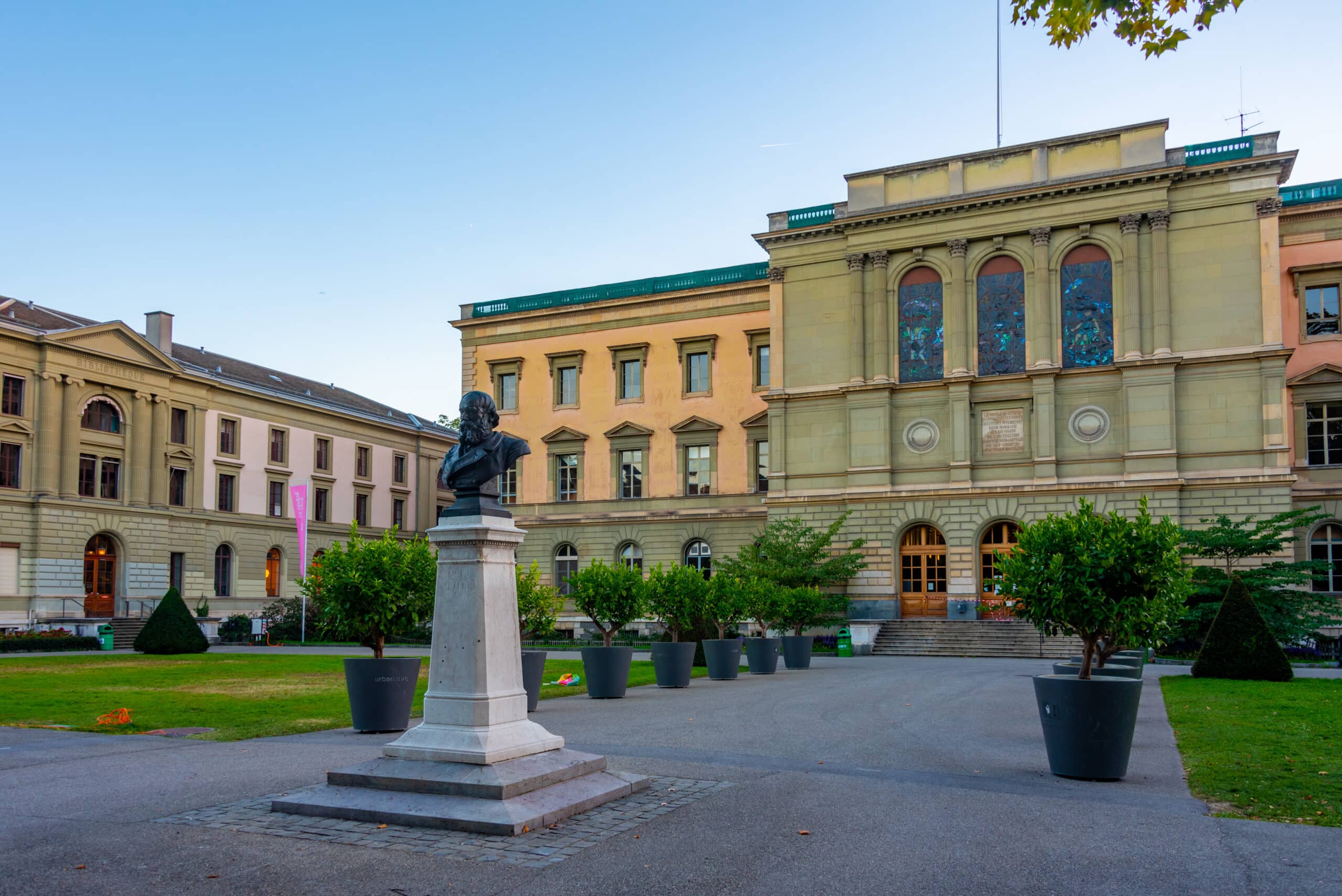
In French-speaking Switzerland, a collaboration between the University of Geneva and Philip Morris began in the early 1990s with a study on risk perception[1]. According to OxySuisse, the initiative dates back to 1993, when a former student who had become an executive at Philip Morris Europe contacted Elsa Schmid-Kitsikis, a professor of clinical psychology at the University of Geneva (UNIGE), and her assistant Helga Kilcherune, to discuss a research project funded by the tobacco company. The initial project, focused on the potential effects of secondhand smoke on children's cognitive development, was rejected by the faculty for ethical reasons. A different research direction was then proposed, concerning risk perception in children and adolescents.
Children and adolescents at the heart of the study
The selected research program focused on how children and adolescents perceive risky activities, with a particular emphasis on smoking. The report indicates that an initial phase was conducted in 1994 with 186 young people aged 9 to 17, funded to the tune of 30,000 Swiss francs by Philip Morris.
The researchers then wanted to extend the work to a larger population, considering studying adolescents and young adults. OxySuisse mentions a total budget of 60,227 Swiss francs for the period from December 1994 to the end of 1995, followed by further annual funding until 1997.
Results deemed useful to the industry for its targeting, communication and CSR
According to the OxySuisse report, the study's results showed that age, family background, and social representation played a role in the perception of smoking. Young people from smoking families attributed a lower average risk to cigarettes than those from non-smoking families.
The report also highlights that smoking was perceived more positively when associated with adulthood, while judgments were more negative when a young person smoked. According to the report's authors, this information could provide Philip Morris with useful arguments for understanding adolescent behavior, enabling them to better influence teenagers, and for shaping its communication strategy. The company could then argue that social and environmental factors are crucial in shaping perceptions of smoking, thus qualifying or even discrediting the idea that advertising is the primary driver.
Moreover, this allowed the company, with a view to greenwashing, to associate itself with a respectable university to project the image of a responsible company, increasing its influence and alliances with prominent members of the scientific community.
Long-standing collaborations in Switzerland between academia and the tobacco industry, which continue to this day.
While the University of Geneva now prohibits all collaboration with the tobacco industry following scandals revealed in the early 2000s, the majority of Swiss universities do not apply such restrictions. Indeed, More than half of them still maintain collaborations with this sector today, as revealed by the survey published by OxySuisse in February 2026.. Four universities even refused any transparency. Yet, the history of the tobacco industry is marked by decades of scientific manipulation, concealment of the risks associated with its products, and aggressive lobbying aimed at undermining public health policies. OxySuisse believes it is essential to remember that any collaboration with this industry exposes academic institutions to major risks. These include, in particular, attacks on scientific integrity, challenges to academic freedom, a lack of transparency in research, and damage to their reputation.
Furthermore, the fact that Switzerland has still not ratified the WHO Framework Convention on Tobacco Control, Article 5.3 of which stipulates that public health policies must be protected at all costs from the special interests of industry and its allies, demonstrates fierce industry lobbying against which there are no robust safeguards. This structural weakness is one of the reasons why In the European Tobacco Control Scale 2025, Switzerland ranks second to last. The country remains a prime location for multinational tobacco companies. Outdoor advertising is prohibited, but not on private property such as shopping centers and underground parking garages, resulting in massive advertising campaigns with large billboards for heated tobacco and nicotine products. Minor amendments to the advertising law will come into effect in 2027, but will not lead to a total ban on tobacco advertising. Switzerland continues to struggle to adopt protective legislation due to this intense lobbying.
AD
[1]Molineaux H., Lonchampt S., Canevascini M., Diethelm P., When the University of Geneva studied children for Philip Morris, Transparency and Truth, OxySuisse, published in May 2026, accessed on June 2, 2026