Questions on the traceability and taxation of tobacco products in Europe
June 17, 2023
Par: National Committee Against Smoking
Dernière mise à jour: June 17, 2023
Temps de lecture: 5 minutes

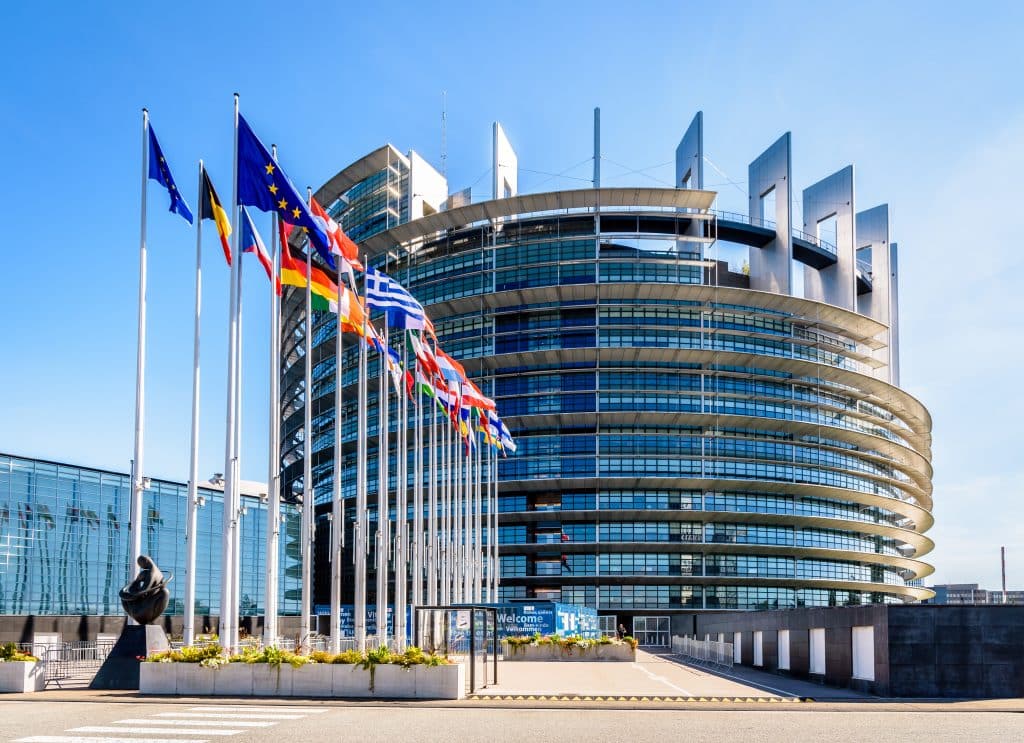
"Taxation, traceability, levers in the fight against the parallel market" was the title of a round table organized at the European Parliament by MEPs from The Left group. It provided an opportunity to discuss the current blockages surrounding the revision of the European directive on tobacco products and placed the issue of taxes at the center of the European debate.
Illicit tobacco trade is a theme usually used by the tobacco industry to counter tax increases on tobacco products. However, these increases in taxes and prices of tobacco products are one of the essential tools to reduce smoking prevalence. They were to be at the heart of the revision of European Directive 2011/64/EU on the taxation of tobacco products, scheduled for September 2022. This revision has been postponed to 2023, with no indication of a deadline.
To highlight the importance of product taxation and clarify the data on parallel trade, MEPs Michèle Rivasi and Anne-Sophie Pelletier brought together a panel of speakers for a round table on 14 June 2023, which was held online and at the European Parliament.
Philip Morris blocking draft revision of tax directive?
The round table speakers clearly stressed the need for harmonisation of tobacco taxes in Europe:
- Martin Drago (Alliance Against Tobacco/ACT) detailed how the tobacco industry is exploiting the issue of parallel trade. The figures from KPMG reports, whose methodology is highly criticized, are taken up indiscriminately by most media outlets and by political actors favorable to the tobacco industry. In France, the current focus on contraband and the hesitations in the adoption of the taxation of heated tobacco are two examples of interference by the tobacco industry.
- Lilia Olifir (Smoke Free Partnership/SFP) compared the postponement of the revision of the tax directive on 23 November 2022, without giving any reasons other than inflation and the price of energy, and the Swedish Match acquisition by Philip Morris International (PMI), finalized on December 5, 2022. A rumor that Sweden would leave the European Union (EU) if snus were taxed[1] would have thus contributed to blocking discussions on the harmonisation of taxes. However, the postponement of Directive 2011/64/EU also compromises the European Plan to Beat Cancer (EPVC) and its objective of a tobacco-free generation in Europe by 2040.
- Robert Branston (University of Bath) pointed out the need to harmonise taxes between European countries, in particular by imposing minimum collection rates that would avoid large price differences from one country to another. Convergence in the taxation of tobacco and nicotine products is also essential to prevent product variations in tax niches and to avoid consumption delays.
- Cardiologist Olivier Milleron (Bichat Hospital/AP-HP) finally recalled the weight of the tobacco industry in the history of global capitalism. He questioned the lack of mobilization of activist movements, particularly environmentalists, against the many economic, social and environmental consequences of tobacco production and trade.
To combat oversupply in certain countries, which fuels cross-border purchases, Article 7 of the Protocol to Eliminate Illicit Trade in Tobacco Products simply proposes to limit the quantities of tobacco delivered to a country in proportion to its population.
Traceability of tobacco products hampered by conflicts of interest
Michèle Rivasi has announced her intention to take legal action against the conflict of interest raised by Dentsu's hiring of Jan Hoffmann, a former senior European official. Dentsu, the group in charge of tobacco traceability in the EU, has been heavily criticised for its direct links to the tobacco industry: it counts Japan Tobacco International (JTI) among its clients and had acquired Blue-Infinity, a technology company linked to the tobacco industry, which does not guarantee its independence. Jan Hoffmann, for his part, was in charge of the system for selecting the company that would ensure the traceability of tobacco products, and of the evaluation of this company. Then joining the same company appears to be a clear conflict of interest.
Ms Rivasi also expressed her regret at the lack of political will of the Member States and European institutions on the issue of tobacco, which is the cause of the delay in the revision of the directive on the taxation of tobacco products.
Keywords: European Union, Michèle Rivasi, TPD, tax harmonization, traceability, Dentsu, PMI, JTI
©Generation Without TobaccoMF
[1] Snus are tobacco pouches that are placed between the lip and gum. In Europe, they are only marketed in Sweden, Norway and Switzerland. Not to be confused with nicotine pouches, which do not contain tobacco. Swedish Match is a world leader in the snus and nicotine pouch segments.
National Committee Against Smoking |