Nicotine promotion on social media: three out of four reports go unanswered
October 18, 2026
Par: National Committee Against Smoking
Dernière mise à jour: October 12, 2026
Temps de lecture: 7 minutes
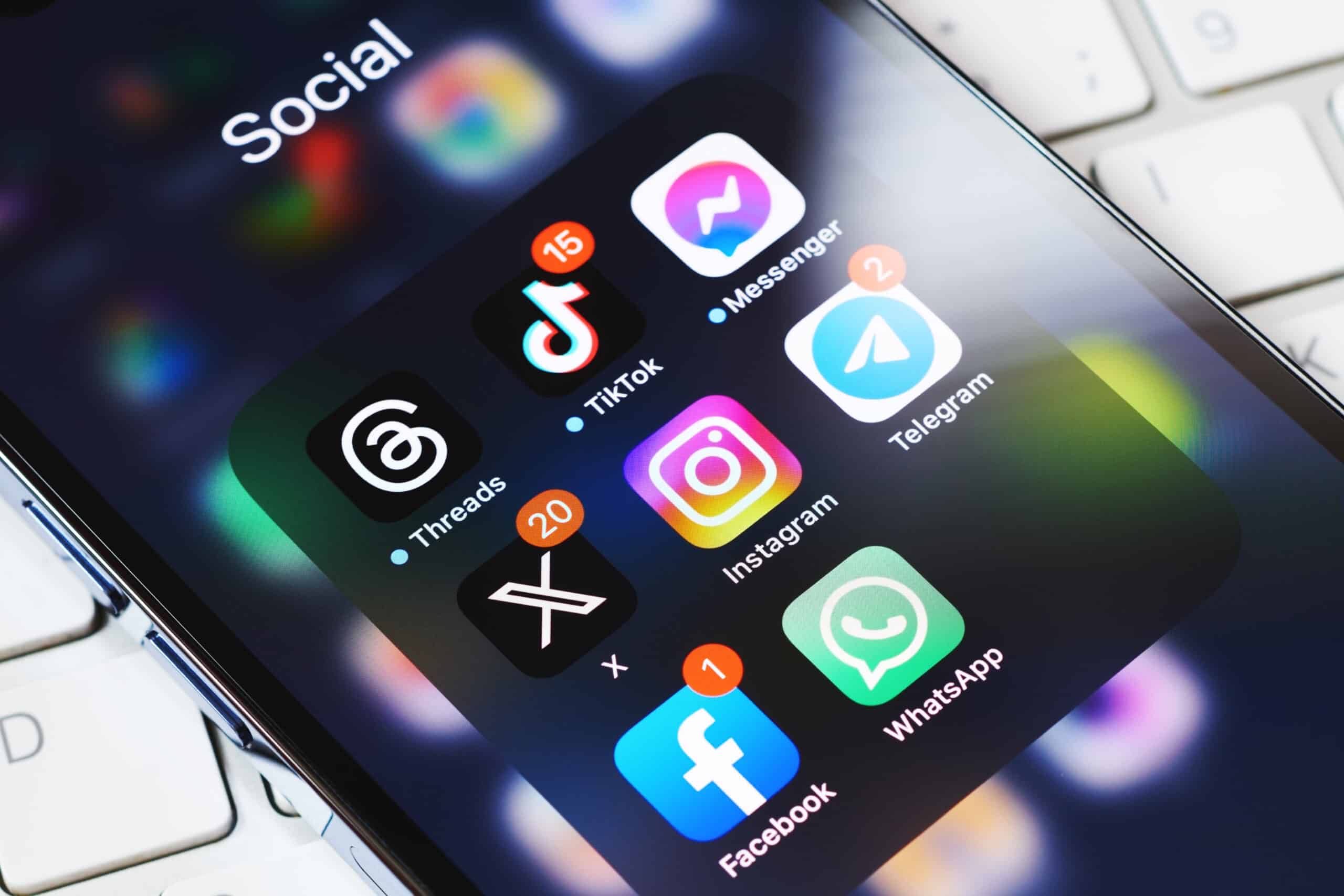
Instagram, TikTok, and YouTube have community guidelines that strictly regulate content related to tobacco, nicotine, and cannabis. A study by researchers at the Truth Initiative[1], published in the Journal of Online Trust and Safety[2] This shows, however, that these platforms rarely act on user reports. Of 294 pieces of content clearly contrary to their own rules (sales of e-cigarettes without age verification, paid promotions, minors vaping), 221, or 75 %, remained online after being reported. This unmoderated content had accumulated nearly 690,000 "likes" and approximately 15.7 million estimated views. This failure of self-regulation by economic actors is not new and calls for the establishment of rules monitored by independent bodies, leading to sanctions for non-compliant content.
Between July 29 and October 16, 2025, researchers created a dedicated account on each of the three platforms most used by American teenagers. Using keyword searches (brand names, "buy nic no id," "zyn challenge," etc.) and recommendation feeds, they identified content that clearly violated each platform's rules, categorized into five groups: lack of age restrictions, prohibited promotion, illegal sale, use by minors, and dangerous practices. Each piece of content was reported using the platform's built-in reporting tool, just as any user would, and then monitored for at least two weeks. The exercise immediately encountered a difficulty: the reporting options offered did not align with the published rules. For example, Instagram offers no option related to tobacco, forcing researchers to use the "other drugs" category, and YouTube does not allow account reporting for this reason, so only videos were flagged.
Significant disparities exist between platforms and depending on the offenses involved.
Of the three platforms, Instagram reacted the most: it acted on slightly more than half of the reports (51 out of 98, or 52 %), compared to barely one in seven on YouTube (14 out of 97) and less than one in ten on TikTok (8 out of 99). This difference is mainly due to the way illegal sales were handled: Instagram removed 32 of the 36 reported pieces of content, while TikTok removed only one out of 36 and YouTube 2 out of 29. For these last two platforms, the finding cannot be explained by the small sample size: even in the most favorable scenario, at least 85 % of the illegal sales content reported on TikTok and 77 % on YouTube would have remained online, according to the authors' calculations.
Age restriction is the only category for which more than half of the reports were acted upon (29 out of 56), although the proportion of no action taken remains particularly high. The weakness of the response is even more evident regarding illegal promotions: fewer than 10 of the targeted content (4 out of 79) were removed, and the same is true for content depicting dangerous practices (1 out of 29). These latter include challenges involving consuming an entire box of nicotine pouches in one go or simultaneously inhaling several cannabis vaporizers. Instagram's relatively good performance on illegal sales does not extend to other categories of violations: the platform removed only 2 of the 28 sponsored posts promoting tobacco or vaping products, even though its own rules prohibit this type of paid partnership.
These answers also contradict the stated rules.
Beyond inaction, the study documents explicit responses from the platforms. Instagram and TikTok have consistently stated that flagged content "does not violate" their community guidelines, including sponsored posts for e-cigarettes on Instagram. On TikTok, an account previously documented for selling vapes to minors again disseminated such promotional posts. According to Truth Initiative, some flagged accounts openly displayed "no ID required" or "we also sell to minors." The unmoderated TikTok accounts whose entire activity violated the rules alone had nearly 482,000 followers.
On several occasions, researchers received notifications from the platform confirming the removal of content they had reported, even though that content was still accessible nearly 48 hours after the notification. Some reports even disappeared from the history where users can track their progress. An ordinary user might therefore believe that the content they reported had been removed, when in fact it was still online. The authors believe these shortcomings risk fostering a false sense of trust in moderation or, conversely, discouraging users from reporting problematic content.
Self-regulation in question
These results should be interpreted in light of several limitations, which the authors themselves acknowledge. The study focuses solely on the American context and relies on small samples in each category. Furthermore, the reports were made from a recently created account, which the processing systems may have deemed unreliable. Instagram also lacks specific rules regarding consumption by minors or dangerous practices: outside of these two categories, its moderation rate reaches 57%. According to the authors, however, this situation stems primarily from the platforms' business model. Their revenue is based on advertising, and therefore on the time users spend viewing and sharing content. Moderation is expensive and can reduce this activity, discouraging platforms from removing content that generates audiences, even when it violates their own rules.
In Europe, the legal framework is more stringent. The Digital Services Act (DSA) requires major platforms to offer a reporting mechanism and to quickly remove illegal content that is brought to their attention. Within the European Union, a significant portion of the content studied is indeed illegal. Online advertising for tobacco products has been prohibited since the 2003 Tobacco Advertising Directive, and for e-cigarettes and their refill cartridges since the 2014 Tobacco Products Directive.
Despite protective legislation, France is not immune. Data from the CNCT's observatories shows that a significant amount of illicit content promoting tobacco and nicotine products remains accessible on social media. While its volume is decreasing, the phenomenon remains recurrent: manufacturers and retailers are trying every possible means to circumvent moderation algorithms to continue promoting their products.
AE
[1] Truth Initiative, «Social media platforms claim to protect their users, but rarely act on reported tobacco content», October 8, 2026, accessed October 12, 2026.
[2] Pearson, G., Kucherlapaty, P., Silver, N., Schillo, B., & Kreslake, J. (2026). “It Doesn't Violate Our Community Standards”: Examining Social Media Platforms' Moderation Practices for User-Reported Rule-Breaking Tobacco Content. Journal of Online Trust and Safety, 3(4). https://doi.org/10.54501/jots.v3i4.338