Yes, there are alternatives to tobacco growing
January 20, 2020
Par: communication@cnct.fr
Dernière mise à jour: January 20, 2020
Temps de lecture: 3 minutes

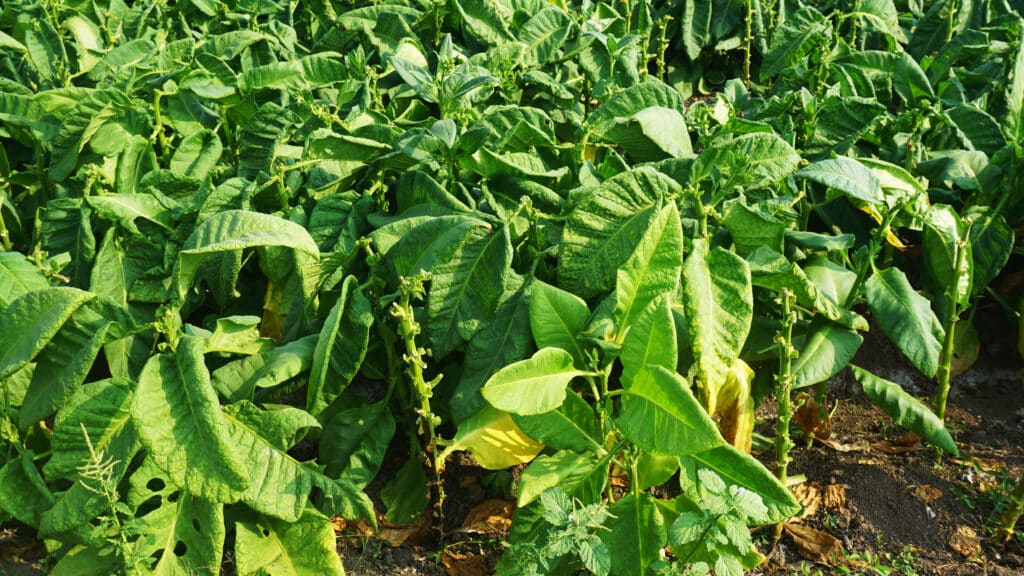
The problem : Tobacco cultivation is associated with child labor, health risks for farmers, deforestation, and jeopardizes food security.
The solution: The existence of economically viable substitute crops such as kenaf[1], parsley or soybeans.
The preconditions for exiting tobacco cultivation vary greatly from country to country. Are these alternatives economically viable? Ecologically justifiable? Do they contribute to greater social justice? In Malaysia and Germany, tobacco cultivation was not the main source of income for the economy as a whole. Various countries such as Brazil and Malaysia are experimenting with projects to convert the activity of their planters.
The interest in such a conversion concerns even a country like Malawi for which tobacco is today a major export crop. Indeed, the smallholders who grow most of the world's tobacco crop suffer from the enormous disadvantages of this crop.
Malaysia
In order to meet its obligations under the WHO Framework Convention on Tobacco Control and to mitigate the impact of the ASEAN Free Trade Agreement, the Malaysian government has been promoting the cultivation of kenaf as an alternative to tobacco farming since 2005. Kenaf is a versatile plant whose fibres are used to produce, for example, door trims, bioplastics, fibreboards or furniture.[2]
Germany
After the end of EU subsidies for tobacco cultivation in 2010, tobacco growers and tobacco processing companies in Germany had to look for alternatives to the tobacco trade. In the Palatinate, a traditional tobacco growing area in southwest Germany, farmers switched from tobacco to herbs such as parsley.
Malawi
Malawi is the most tobacco-dependent economy in the world. The government has realised that switching to other crops is essential for the country and is supporting, among other things, the cultivation of pulses. The German development agency GIZ is promoting the transition to soybeans, peanuts, sunflowers and cassava.
©Generation Without TobaccoTo go further Our news on the subject Case study on kenaf cultivation in Malaysia [pdf] Case study on herb cultivation in Germany [pdf] Case study on vegetables and sunflower in Malawi [pdf] [1] Textile plant providing a fiber whose characteristics are close to those of jute [2] https://www.unfairtobacco.org/en/tobacco-map/#alternatives | ©National Committee Against Smoking |