The WHO warns of the spread of tobacco cultivation in Africa
September 7, 2026
Par: National Committee Against Smoking
Dernière mise à jour: September 2, 2026
Temps de lecture: 8 minutes
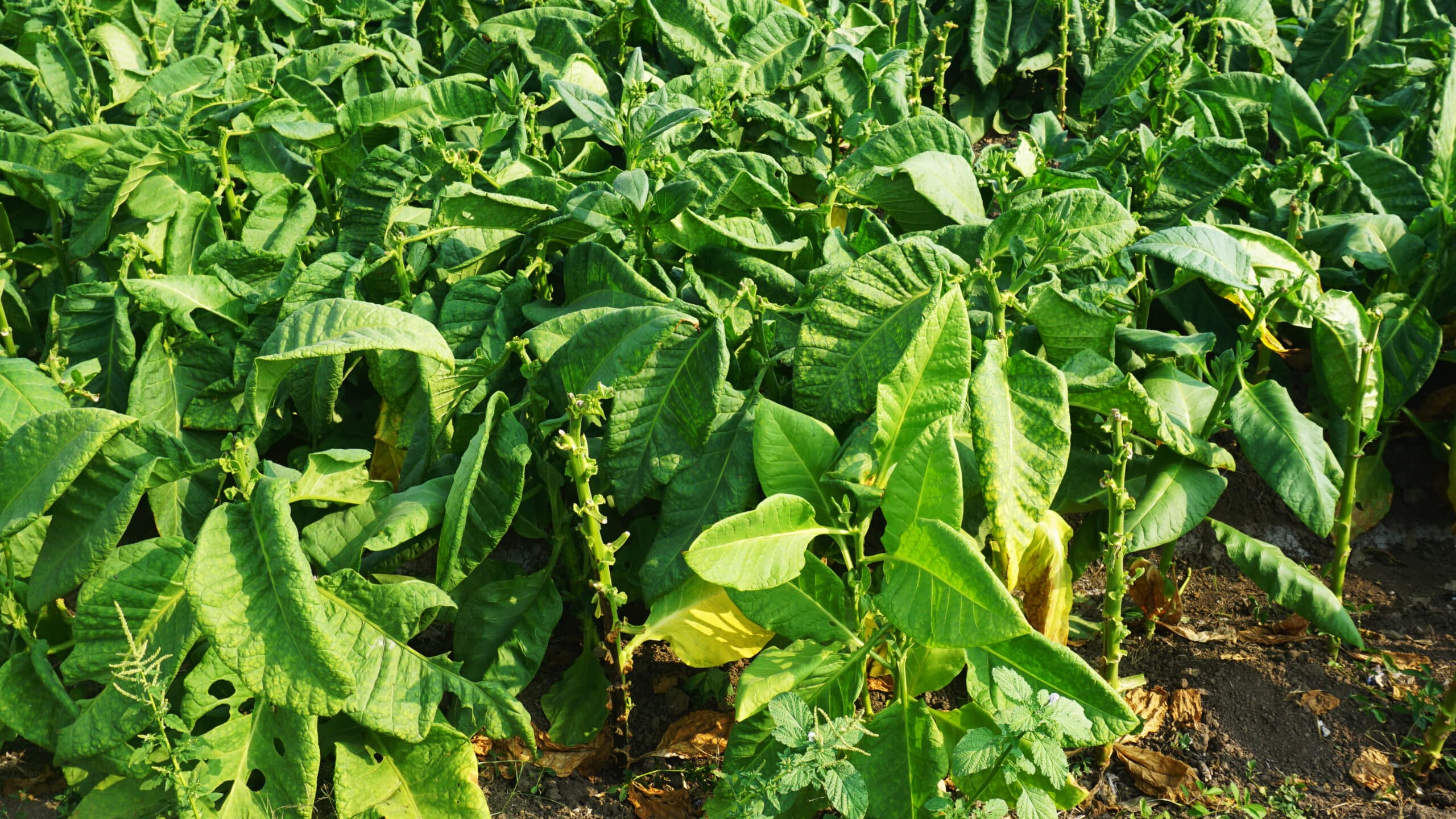
The World Health Organization (WHO) published the second edition of its report on August 31, 2026[1] on tobacco production and trade in Africa. Based on data from 54 African countries covering the period 2010 to 2024, this document highlights a continental trajectory that runs counter to the global trend: while tobacco leaf production decreased by 18.8 % in the world between 2012 and 2024, it increased by 8.61 % in Africa, reaching 639,130 tonnes in 2024, or 10.81 % of world production.
The report also shows that tobacco cultivation remains concentrated in a very small number of countries, has little impact on national economies, and is accompanied by a growing trade imbalance, with the continent exporting raw tobacco leaves while importing manufactured cigarettes in quantities that have more than doubled in twelve years. At the same time, the number of tobacco users is increasing in Africa while it is decreasing globally. However, available research on the actual profitability of tobacco cultivation and agricultural conversion experiments conducted with the support of United Nations agencies demonstrate that another economic model is viable for tobacco farmers.
Production and trade that go against the global trend
Between 2012 and 2024, the global area dedicated to tobacco cultivation declined by 20.34 million tonnes, compared to only 1.73 million tonnes in Africa, where 581,451 hectares remain under cultivation. The gap is even more pronounced for production: global volume fell to 5.9 million tonnes in 2024, a decrease of 18.82 million tonnes since 2012, while African production increased by 8.61 million tonnes. However, the average yield per hectare remains significantly lower in Africa, at 1,151 kilograms compared to 1,814 kilograms globally, representing approximately two-thirds of the international average.
This growth is concentrated in a limited number of countries: East Africa accounts for 89.97 million tonnes of continental production, and ten countries together represent 93.1 million tonnes of harvested volumes, led by Zimbabwe (204,911 tonnes, or 32.06 million tonnes of the African total), Malawi, the United Republic of Tanzania, Mozambique, and Uganda. The contribution of tobacco cultivation to national economies remains limited: tobacco leaf exports represent less than 1 million tonnes of gross domestic product in all African countries, with the exception of Zimbabwe (5.01 million tonnes) and Malawi (4.04 million tonnes). The argument of the macroeconomic weight of this crop therefore appears to be poorly founded in view of the available data, even though almost all African countries have ratified the WHO Framework Convention on Tobacco Control (FCTC), whose articles 17 and 18 provide for support for producers towards viable alternative activities and the protection of their health and environment.
Trade reveals an unequal distribution of value. The continent remains a net exporter of tobacco leaves, with a positive balance of approximately US$1,746 million in 2024, but the trend is reversed for processed products: the import bill for cigarettes more than doubled between 2012 and 2024, rising from US$833 million to US$1,769 million, an increase of 112.3 million TEUs, while African cigarette exports represent only 2.13 million TEUs of global exports. The continent's trade deficit in cigarettes thus widened from US$422.4 million to US$1,292.5 million. Producing countries supply the raw material to international markets, while processing, which concentrates the profit margins, remains largely carried out outside the continent.
Health, social and environmental costs borne locally
The WHO warns of the negative externalities of tobacco farming, particularly highlighting workers' exposure to green tobacco sickness. This illness is caused by nicotine absorption through the skin when handling wet leaves. Other negative impacts include pesticide exposure, the use of child labor in low-income households (leading to school absences), and recurring debt for farmers. Environmentally, the report cites soil degradation, deforestation, pressure on water resources, and greenhouse gas emissions.
In addition to these costs, there is an unfavorable consumption dynamic. According to the WHO's global report on tobacco prevalence trends, the number of smokers in the African Region increased from approximately 59 million adults in 2000 to 65 million in 2024, while the global figure declined from 1.379 billion to 1.202 billion over the same period. This increase in absolute numbers is explained by the continent's population growth, with more than 60% of its population under the age of 25. The WHO warns that, without strengthened measures, youth initiation of smoking could reverse progress made in tobacco control and significantly increase the burden of tobacco-related diseases in the coming decades.
A dependency maintained by the industry, when other crops are possible
The continued cultivation of tobacco in Africa is explained less by its profitability than by the way the sector is organized. The economic data available at the farm level contradict the narrative of prosperity supposedly brought by this production. A study conducted[2] A 2017 study of 685 Malawian farmers found that the average profit was US$79 per acre after accounting for the cost of family labor, a level that places the households concerned below the national poverty line. For independent farmers, i.e., those without contracts, the average profitability becomes negative once this cost is factored in.
This low profitability coexists with a contract farming system in which leaf-buying companies provide seeds, fertilizers, and inputs as advances, the amount of which is then deducted from the price paid upon delivery. Producers are subject to the buyer's grading of their harvest and have limited bargaining power. Furthermore, recourse to credit appears to be the main factor in entering into these contracts. A field survey conducted by the STOP initiative [3]A study of 160 producers in Malawi concluded that diversification programs financed by the tobacco industry perpetuate this dependency: inputs are still advanced in the form of loans, declared incomes decrease, and obligations to companies increase. Several witnesses described these programs as primarily serving as institutional communication and public relations exercises.
Experiments conducted by United Nations agencies show that a transition away from this production system is possible. The Tobacco Free Farms initiative, launched in March 2022 in Migori County, western Kenya, brings together the WHO, the Food and Agriculture Organization of the United Nations (FAO), the World Food Programme (WFP), and Kenyan authorities. It supports farmers in cultivating iron-rich beans by providing seeds, training, and a guarantee of purchase for the harvest. Nearly 1,700 farmers had joined the initiative, and approximately 607 hectares had been converted, yielding over 620 tons of beans sold. According to the WHO, the annual net income generated by this crop is about six times higher than that of tobacco, the difference being mainly due to the absence of debt burdens associated with upfront input costs. The scheme aimed to extend to 5,000 producers in Kenya and Zambia, while the Secretariat of the Framework Convention set itself the objective of supporting at least 10,000 producers worldwide in transitioning to economically viable alternative food crops.[4].
These results reinforce the position advocated by the WHO, which calls on States to support agricultural diversification, protect the rural communities concerned and strengthen the application of the Framework Convention, in particular its articles 17, 18 but also 5.3 concerning the protection of public policies against the powerful interests of tobacco manufacturers[5].
AE
[1] Status of tobacco production and trade in Africa, second edition. Geneva: World Health Organization; 2026. License: CC BY-NC-SA 3.0 IGO.
[2] Makoka D. et al., Costs, revenues and profits: an economic analysis of smallholder tobacco farmer livelihoods in Malawi, Tobacco Control, 2017.
[3] STOP, How crop diversification is failing tobacco farmers in Malawi.
[4] WHO Regional Office for Africa, Abandoning tobacco cultivation: an economic and health advantage for Kenyan farmers.
[5] Secretariat of the WHO Framework Convention on Tobacco Control, Grow food, not tobacco: World No Tobacco Day 2023 campaign, May 29, 2023.
National Committee Against Smoking |