In Belgium, the tobacco and nicotine lobby is trying to legalize the sale of nicotine sachets.
November 6, 2026
Par: National Committee Against Smoking
Dernière mise à jour: November 2, 2026
Temps de lecture: 7 minutes

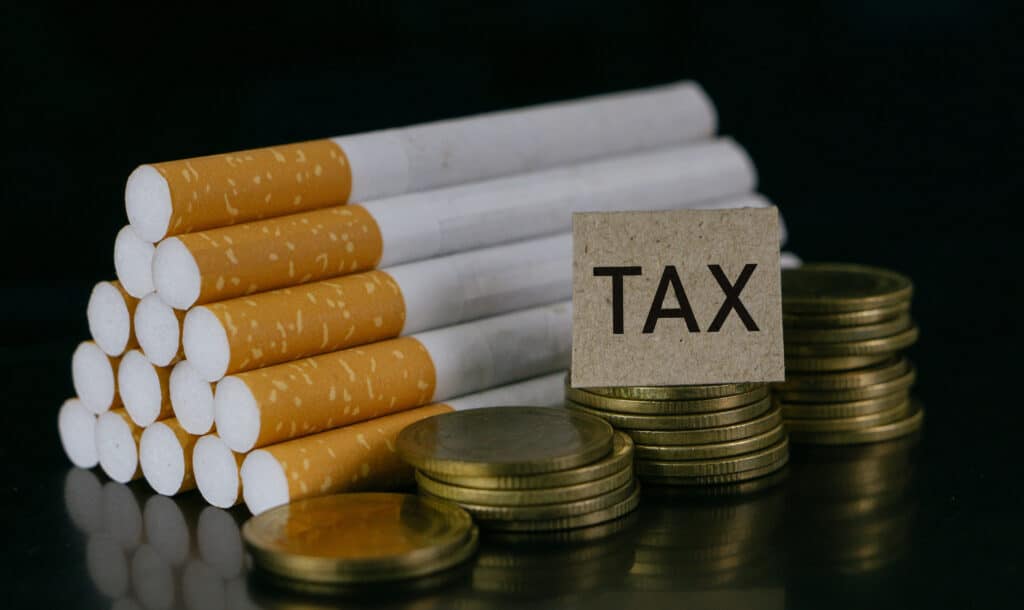
A joint investigation by the program Pano (VRT) and the weekly magazine Knack reveals that the French-speaking liberal party MR is seeking to legalize nicotine sachets in Belgium, based on documents provided by Philip Morris International (PMI).[1]. During federal budget negotiations, Deputy Prime Minister David Clarinval (MR) notably defended this measure as a way to generate additional tax revenue through excise duties. However, the sale of these products has been prohibited in Belgium since October 2023, even though their consumption remains legal. David Clarinval's office acknowledges communicating with industry representatives, believing they possess the necessary expertise to provide information on the sector. Such interference, however, contradicts Belgium's commitments to the WHO Framework Convention on Tobacco Control (FCTC). It also runs counter to Belgium's current commitments regarding the revision of European directives.
Contacts between industry and political leaders that do not comply with the provisions of the WHO treaty, the FCTC
The investigation reveals that five of the thirteen Flemish MEPs met several times with representatives of Philip Morris. Discussions focused on employment, taxation, and health policy. These meetings involved Hilde Vautmans (Anders), Kris Van Dijck and Johan Van Overtveldt (N-VA), as well as Tom Vandendriessche and Barbara Bonte (Vlaams Belang).
These practices raise questions in light of the Convention on Tobacco Control (CTC), ratified by Belgium and the European Union in 2005. Article 5.3 requires national authorities to protect public health policies from the commercial interests of the tobacco industry. Contacts with industry representatives must therefore be limited to exchanges strictly necessary for the regulation of their products and must be subject to complete transparency. Hans Van Scharen, a lobbying specialist at Corporate Europe Observatory, points out the industry's history of manipulating scientific information and influencing public policy.
Industry-funded communication campaigns with no transparency regarding their origin
The investigation also highlights influence strategies targeting the general public. The Antwerp-based communications agency Mind The View notably proposed to VRT, and later VTM, a co-production of a documentary about illegal e-cigarettes, entitled "Just No Reason." Ultimately released on YouTube in the spring, the film garnered approximately 70,000 views. Journalists from Pano and Knack discovered that British American Tobacco (BAT) had financed its production to the tune of €40,000, without this contribution being disclosed to those interviewed or to the public. The Belgian Federal Public Service for Health has since launched an investigation and informed the participants of the company's role.
Professor Filip Lardon, a tobacco prevention specialist at the University of Antwerp and a contributor to the documentary, denounced this lack of transparency. According to him, funding content focused on illegal products can indirectly improve the image of legally marketed nicotine products, even though these also pose health risks, particularly for young people. Young people are especially targeted by the marketing of new nicotine products, which remain highly accessible and appealing.
The health arguments are contested by the industry lobby, while these products are experiencing strong growth.
Philip Morris presents nicotine sachets as an "alternative" designed to wean smokers off cigarettes. Its Benelux spokesperson, Ellen Boydens, cites the example of Sweden, where these products are said to have health benefits. This interpretation is contested by Rosaria Galanti, professor of public health and epidemiology at the Karolinska Institute: she points out that the decline in smoking in Sweden began before the introduction of nicotine sachets, which were also used by people who had not previously smoked.. The "Swedish model" is particularly promoted by the tobacco and nicotine lobby to justify the expansion of the market for new nicotine products.. However, these products are characterized by their highly addictive nature, documented adverse health effects in the short term, and a lack of data on their long-term risks.[2], without even addressing the environmental issue.
Financial data illustrates the commercial interests linked to this market. Between 2016 and 2025, Philip Morris's revenue increased from approximately €24 billion to €36 billion, representing a growth of nearly 50%. Smoke-free products now account for almost half of its revenue. On the global market, sales of nicotine pouches have increased almost tenfold in five years, rising from 4 billion to 37 billion units. These developments demonstrate the growing economic importance of these products for manufacturers.
This initiative comes in the context of the revision of European directives that the tobacco lobby wants to block.
Belgium has gradually established itself as a leading player in tobacco prevention and the fight against nicotine addiction, particularly under the impetus of its Minister of Social Affairs and Public Health, Frank Vandenbroucke. The WHO has notably commended its political commitment to ambitious measures, including the ban on nicotine sachets in 2023, that of disposable electronic cigarettes in 2025 And that of non-tobacco flavors for vaping products from 2028, This is part of the goal of a tobacco-free generation by 2040. These advances make it all the more necessary to prevent the risk of industry interference in the development of public policies. In this context, the attempts at influence uncovered in Belgium illustrate the importance of guaranteeing the independence of health decisions, in accordance with Article 5.3 of the FCTC, and of ensuring that manufacturers' commercial interests do not compromise public health objectives.
By targeting Belgium today, the issue extends beyond purely national borders: the European Union is preparing to revise its Tobacco Products Directive (TPD) and its Advertising and Sponsorship Directive (TAD), while the proposed revision of the Tobacco Products Taxation Directive (TTD), scheduled for July 2025, explicitly plans to include nicotine pouches within its scope. Beyond simply taxing these products, Belgium, with the support of seven other member states, has expressly asked the European Commission to strengthen the European framework on tobacco and nicotine., This includes the European ban on oral products and permission for member states to adopt stricter national measures.
AD
[1]Eric Steffens, Jan Konings, Wim Van den Eynde, Pieter-Jan Lesage, A report by Pano reveals that the MR party wants to legalize the sale of nicotine sachets in Belgium with the support of the tobacco lobby., VRT NWS, published October 29, 2026, accessed October 30, 2026
[2]Jan Konings, Wim Van den Eynde, Pieter-Jan Lesage, "I have some things to do with what I do": we are going to take nicotine into account when we are young., VRT NWS, published October 28, 2026, accessed October 30, 2026