
Critique of the tobacco industry's exploitation of illicit trade
March 9, 2026
Par: National Committee Against Smoking
Dernière mise à jour: March 6, 2026
Temps de lecture: 7 minutes
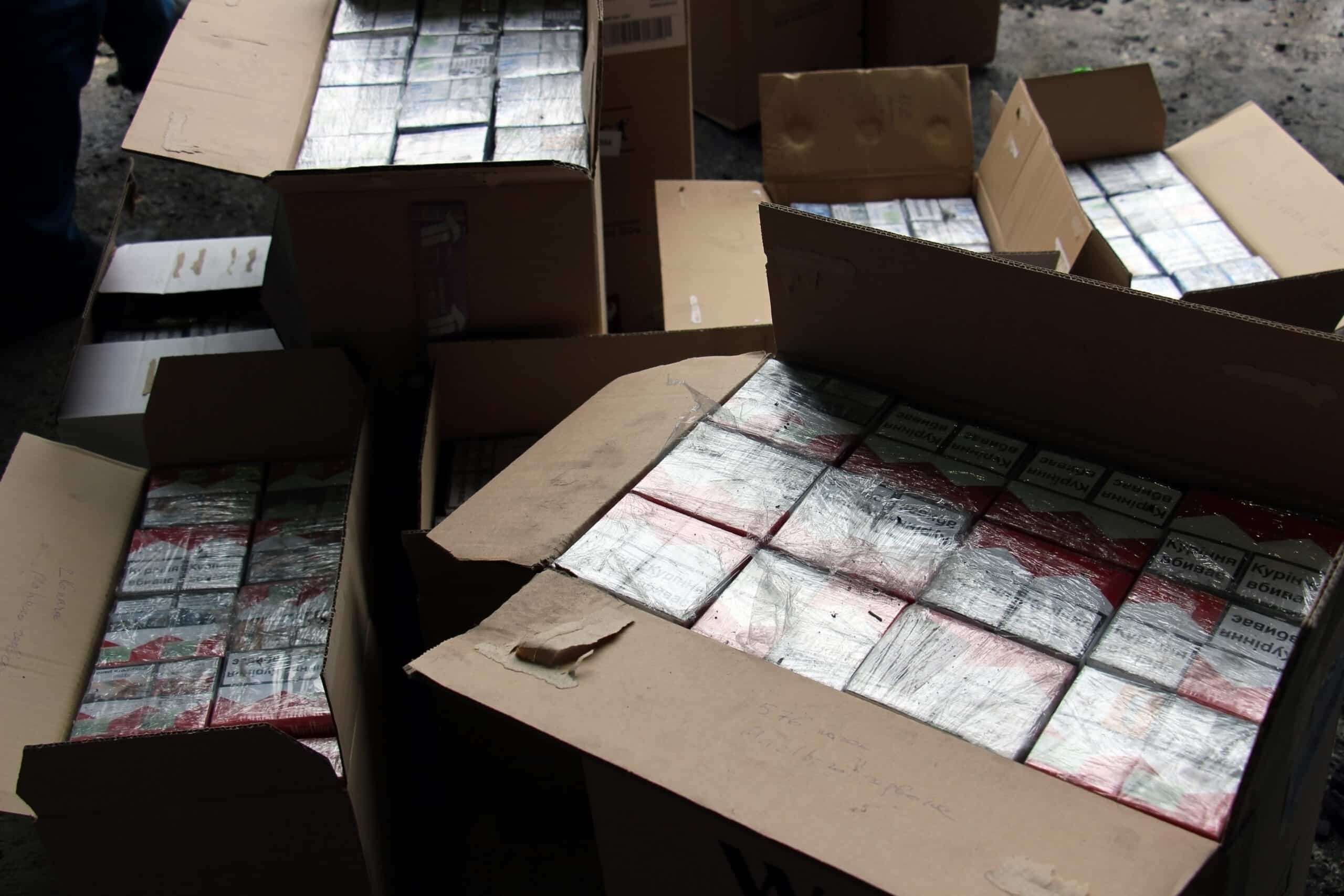
The Global Governance Centre for Tobacco Control (GGTC) has just published its first report using data from the 2023 and 2025 Global Tobacco Tax Policy Interference Indices (GTI).[1]. It appears that the tobacco industry uses illicit trade as leverage to oppose and undermine tax increases and anti-smoking measures in many countries. Furthermore, at least 19 countries have entered into agreements with the industry to combat illicit trade. This report critically examines the industry's lobbying strategies based on illicit trade and aims to inform public policy decisions with factual information.
The tobacco industry claims to be fighting the illicit trade, without providing any proof, while in fact it fuels it.
The report's authors analyze how the illicit trade in tobacco products is used in public policy discussions. Companies in the sector frequently argue that certain tobacco control measures, particularly tax increases and marketing restrictions, could lead to an increase in smuggling.
According to the document, these arguments are often used to challenge, slow down or weaken the adoption of new measures.
The report emphasizes, however, that these claims should be viewed with caution. Several independent analyses indicate that estimates of the scale of illicit trade produced or funded by the tobacco industry are overestimated, which can influence policy decisions. Reports by KPMG and Euromonitor International, which are often the primary sources used, have been particularly criticized for their reclassification bias, methodological weaknesses, and lack of transparency. These studies are funded by tobacco manufacturers and, moreover, include disclaimers regarding the accuracy of the data.
The report also cites several legal cases and international investigations involving major tobacco companies. These precedents are presented as an important element for understanding the current debate: they show that the industry, while claiming to fight smuggling, has been, and may still be, involved in practices that have contributed to the development of illicit markets.
In this context, the authors emphasize that contraband products primarily originate from manufacturers' factories. For example, an independent analysis of Philip Morris International's (PMI) methodology revealed that up to two-thirds of illicit cigarettes worldwide are products of major tobacco manufacturers, entering informal channels due to oversupply, insufficient supply chain control, and deliberate leaks.
The risks associated with government-industry relations in the fight against smuggling
The document also highlights the forms of collaboration that can exist between public authorities and the tobacco industry in the fight against illicit trade.
These collaborations take different forms: memoranda of understanding between governments and companies, training or technical assistance programs for customs, sharing of information on distribution channels, as well as joint awareness campaigns against smuggling.
These agreements contravene the provisions of the World Health Organization (WHO) Framework Convention on Tobacco Control (FCTC), which prohibits all types of voluntary, non-binding agreements. Furthermore, this type of agreement replaces the implementation of proven measures to combat the illicit trade in tobacco products. In this regard, the authors note that a Protocol to Combat Illicit Trade was developed under this WHO treaty, bringing together effective technical and legal mechanisms. Seventeen of the nineteen governments found to be collaborating with the tobacco industry on illicit trade were not parties to the Protocol.
The "triple tax loss" linked to these collaborations
The authors of the report also point out the risks associated with this type of agreement and introduce the concept of "triple loss": the first concerns the increased cost in health, environment and social matters; the second refers to the costs associated with state-funded anti-illegal operations sometimes based on industry-driven data; the third, the loss of tax revenue resulting from freezes or even reductions in taxes adopted under pressure from industry, worsening the overall deficit.
These tax losses are part of the global economic cost of tobacco, estimated at $1.4 trillion (€1.2 trillion) per year, including $422 billion (€364 million) in health expenditures, related in particular to the treatment of cancers, cardiovascular diseases and respiratory diseases associated with smoking, and approximately $980 billion (€854 billion) in lost productivity, caused by premature deaths, absenteeism and disability related to illness.
These costs are borne mainly by governments, including 40% by low or middle-income countries, and tax revenues from tobacco taxes do not cover these expenses, resulting in an overall fiscal deficit.
In highly effective tobacco tax regimes, excise duty revenue represents only a fraction, generally between 10 and 30 percent, of the total economic burden that tobacco places on the economy. The revenue shortfall created by illicit trade is therefore a loss in an already negative net fiscal situation. Reducing taxes to address this deficit does not restore fiscal balance; it exacerbates it by reducing partial compensation while leaving the underlying health and social costs entirely unchanged.
The recommendations of the report and the National Committee Against Smoking (CNCT)
The report's authors reiterate the importance of protecting public policies from tobacco industry interference, particularly in this area. They recommend ending existing cooperation agreements, relying on independent data such as customs data and specialized investigations, while implementing the Protocol's provisions for supply chain control with manufacturer-independent product tracking and traceability systems, and cooperation mechanisms between countries.
They point out that the provisions relating to Article 5.3 of the CCLT, which constitutes a general obligation to protect public policies, apply to all public authorities and not just to health authorities.
Faced with the tobacco industry's interference in French media and political discourse, which is exploiting these issues to curb tax increases, The CNCT itself advocates greater transparency regarding the origin of amendments and the adoption of public measures based on independent data.. Finally, as part of its symposium on parallel tobacco markets, The CNCT called for a limitation of tobacco product deliveries in each country, adjusting them to the prevalence of smoking and actual levels of consumption, and urged France to pay its contributions as a Party to the WHO Protocol to eliminate illicit trade in tobacco products.
AD
[1]Deborah Sy and Mary Assunta, A Response to Tobacco Industry's Illicit Trade Narratives to Interfere with Policy Making: The Triple Fiscal Loss, Global Center for Good Governance in Tobacco Control (GGTC), published March 2026, accessed March 5, 2026


