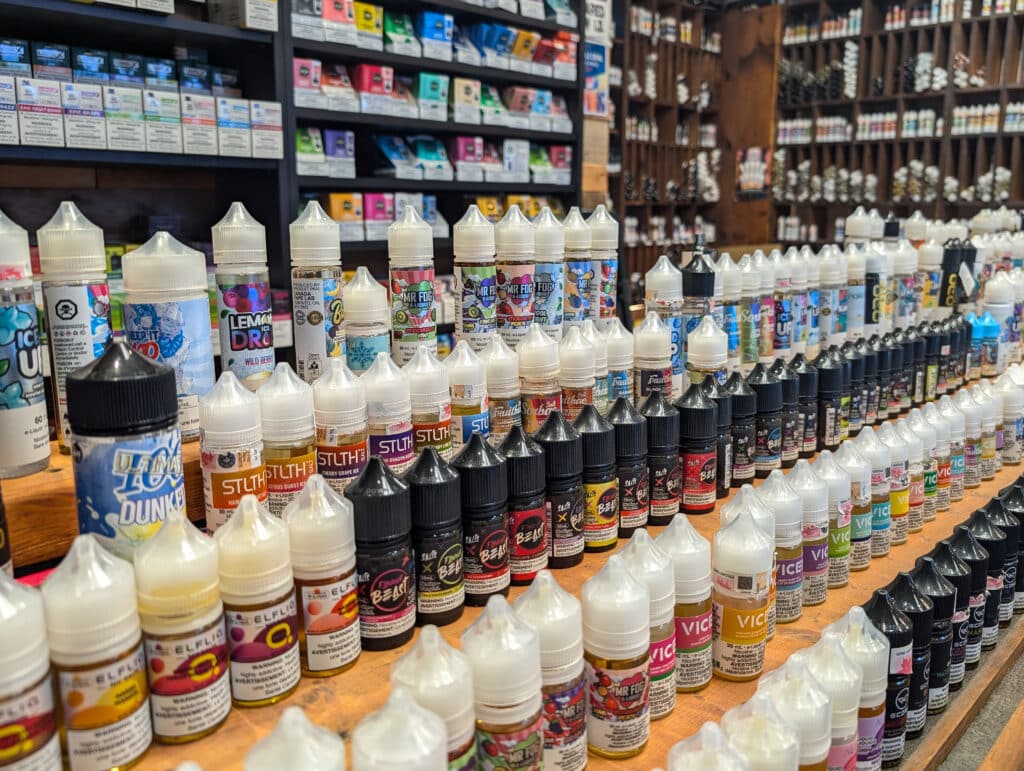
Canadian associations call for ban on e-cigarette flavours
12 May 2021
Par: National Committee Against Smoking
Dernière mise à jour: 12 May 2021
Temps de lecture: 5 minutes

A study of young Canadians indicates their preference for flavored and high-nicotine e-liquids, but also their difficulty in quitting vaping.
The results of a Canadian study of 3,009 young vapers aged 16 to 24 reinforce the conviction of public health associations to demand a ban on flavours, particularly menthol, in e-liquids. This online study reveals that respondents started vaping on average at the age of 16; 64% are former tobacco smokers and 12% consume it jointly. 51% of respondents report having already experienced negative effects of vaping on their health and 53% have tried at least once to quit vaping. These young people, almost all (92%), started vaping with flavoured e-liquids and most of them (90%) continue to use them. The preferred flavours are berry, mango and menthol. Finally, 65% of respondents reported using e-liquids with high nicotine concentrations (50-60 mg/ml) and 71% reported having been exposed to advertisements for vaping products on social media.
Flavors make it easier to get started with vaping and smoking
Public health associations have called on the federal government and eight provincial governments to follow the lead of Nova Scotia and Prince Edward Island, two provinces that have already banned flavours in vaping products. These associations emphasize how flavours can be “gateways” to both vaping and smoking. Flavours reduce the irritation caused by nicotine and promote the initiation of smoking and vaping. The role played by menthol in nicotine addiction is known and well documented; a neurology study has shown how the chemical components used in the manufacture of menthol intensify the diffusion of nicotine in the brain and facilitate dependence [2].
The fact that 27% of respondents started vaping before smoking tobacco confirms the initiation role that vaping can play, which was also shown in another European study [3]. "These products do not help smokers quit smoking," confirms the director of Physicians for a Smoke-Free Canada, "rather, they have the effect of making young people addicted."
Finally, the associations warn about the high nicotine content of vaping products, which attract the preferences of young people. They thus support the federal government's proposal to limit the nicotine content of e-liquids to 20 mg/ml, as is currently the case in the European Union. This reduction in nicotine content would make it less difficult to wean yourself off electronic cigarettes.
Tobacco industry clings to menthol
The recent ban on menthol cigarettes in the United States is a reminder of how flavors in general and this one in particular have long been identified as factors in the entry and establishment of smoking [4]. This observation is also observed today for electronic cigarettes, while waiting to be demonstrated for heated tobacco products. The significant lobbying by manufacturers to prevent or limit and delay the ban on flavors in cigarettes is now extending to e-cigarettes [5]. In the United States, menthol narrowly escaped the ban on other flavors in 2009, following a campaign orchestrated by the tobacco industry. A reprieve that lasted twelve years and was greatly taken advantage of by the industry: the market share of menthol cigarettes thus increased significantly in North America during this period.
The use of e-cigarettes by young people had remained low, if not marginal, in Canada, following the introduction of these products in 2012. The acquisition of e-cigarette manufacturers by the tobacco industry a few years later resulted in intense marketing efforts targeting young people. In two years, between 2017 and 2019, e-cigarette use simply doubled among young Canadians [6]. Advertising for vaping products broadcast on social networks therefore appears to be finding its target, in defiance of the regulations prohibiting all advertising for these types of products.
Keywords: youth, vaping, flavors, menthol, e-liquid, Canada Photo credit: ©Nicolas Kovarik/IP3 PRESS/MAXPPP ©Generation Without Tobacco[1] Quebec Coalition for Tobacco Control, Canadian study of 3,000 youth supports global ban on vaping flavours. Published May 7, 2021, accessed May 11, 2021. [2] Wickham RJ. The Biological Impact of Menthol on Tobacco Dependence. Nicotine Tob Res. 2020 Oct 8;22(10):1676-1684. doi: 10.1093/ntr/ntz239. PMID: 31867627. [3] Scientific Committee on Health, Environmental and Emerging Risks (SCHEER), Opinion on electronic cigarettes. Published on April 16, 2021, consulted on May 11, 2021. [4] Génération Sans Tabac, US Bans Menthol Cigarettes. Published on April 29, 2021, consulted on May 11, 2021. [5] Génération Sans Tabac, California: Flavor Ban Postponed Following Tobacco Industry Appeal. Published on January 28, 2021, consulted on May 11, 2021. [6] Génération Sans Tabac, Canada: Young vapers have more than doubled in two years. Published May 5, 2020, accessed May 11, 2021. National Committee Against Smoking |