Heated nicotine delivery devices without tobacco: emissions exceeding health limits, according to a Dutch public agency
August 1, 2026
Par: National Committee Against Smoking
Dernière mise à jour: July 29, 2026
Temps de lecture: 9 minutes
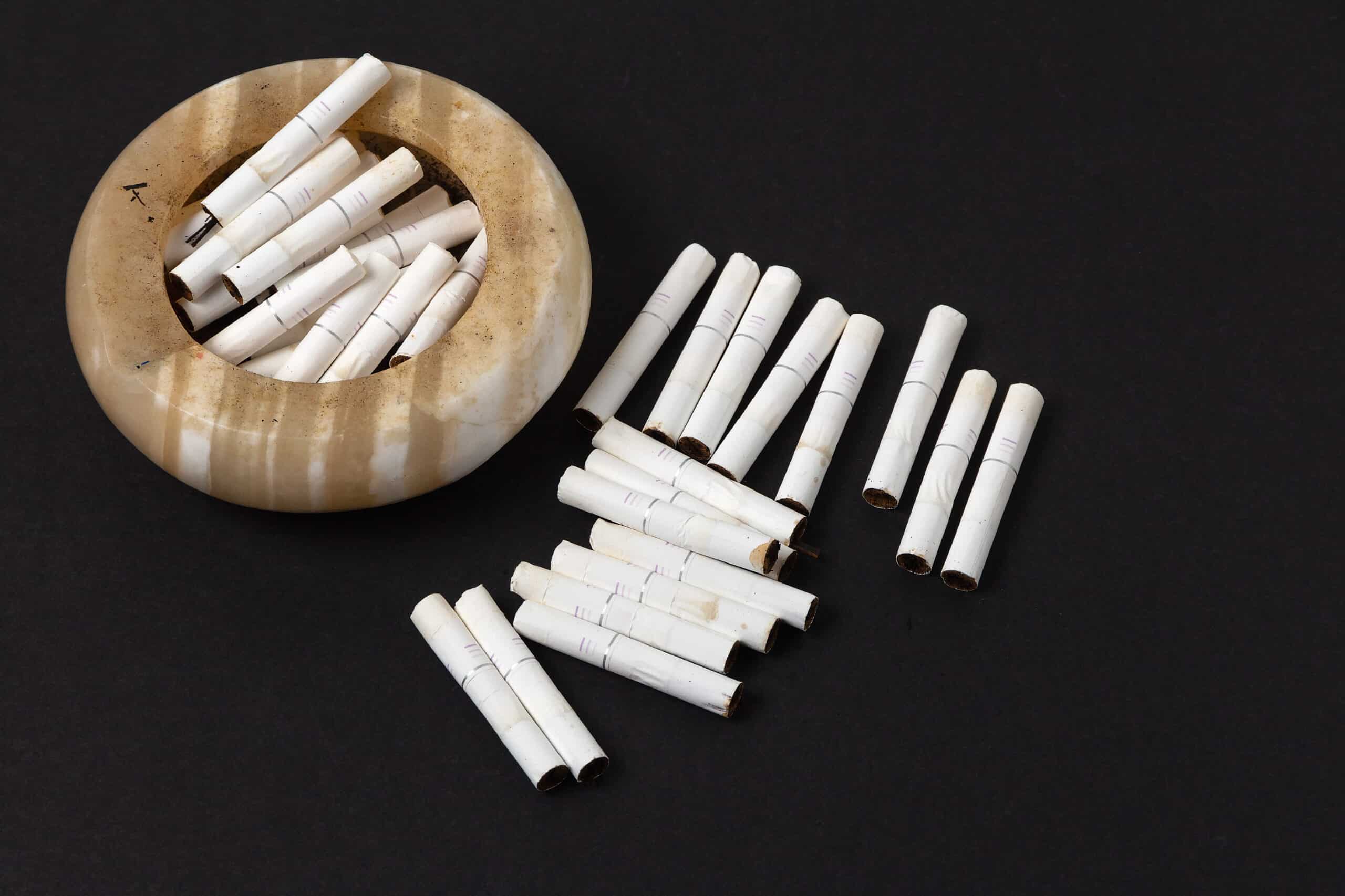
While the market for tobacco-free nicotine sticks (where tobacco is replaced by cellulose or rooibos tea, for example), used in heated tobacco devices, is experiencing growth driven by marketing claims of harm reduction and a wide range of flavors, a study[1] A chemical-analytical study by the RIVM (Netherlands National Institute for Public Health and the Environment) has released the first measured data on the nicotine content and emissions of these products. Conducted on four variants marketed in the Netherlands by Philip Morris International (PMI) and British American Tobacco (BAT), the study concludes that these products deliver nicotine doses similar to those of conventional heated tobacco products, and that their emissions exceed recently established health reference values by 18 to 25 times. These findings come at a time when these non-tobacco products are not explicitly covered by the current European Tobacco Products Directive.
Conducted in March 2025 by researchers Charlotte Pauwels, Caroline Versluis, Reinskje Talhout, and Anne Havermans, the study focused on PMI's Levia sticks, designed for the IQOS ILUMA device (induction heating), and BAT's Veo sticks, designed for the Glo device (conduction heating). For each variant, the researchers first separated the mouthpiece and the stick body, then extracted the chemical components using a solvent. This extraction was then analyzed by gas chromatography-mass spectrometry (GC-MS), a laboratory technique that allows for the precise identification and quantification of the different substances present in a sample. The entire procedure followed the standardized protocols established by the World Health Organization (WHO TobLabNet SOP 15 and SOP 16), thus ensuring the reliability and reproducibility of the measurements.
The emissions were generated using a smoking machine according to the WHO Intense regime (one 55 mL puff every 30 seconds, 10 puffs per stick), then collected on a filter and analyzed according to the ISO 10315 method. The researchers also looked for the presence of 6-methylnicotine (6-MN), a structural analogue of nicotine already used as a substitute in some oral products and potentially usable in the future to circumvent nicotine legislation.
Tobacco-free, but not nicotine-free: alarming levels of exposure
These tobacco-free sticks are part of a broader strategy by the tobacco industry, already documented on several occasions. As early as 2023, Philip Morris and British American Tobacco launched similar sticks, explicitly presented by their executives as a way to circumvent the European ban on flavorings in heated tobacco and certain tax categories.[2]. This trend has since spread to other manufacturers and markets: Japan Tobacco International, for example, launched its own range of tobacco-free sticks in Romania in July 2026.[3], a country where this type of product is already experiencing rapid adoption. Faced with this expansion, several European countries had begun, as early as 2024, to consider specific regulations for these sticks, in the absence of a common framework at the European Union level.
It is in this context that the RIVM study is situated, providing the first quantified data on the actual nicotine content and emissions of these products. All the tested sticks contain nicotine, at levels of 3.2 to 3.8 mg per stick, with no trace of 6-MN detected. Levia sticks (PMI) have an average nicotine content of 3.8 mg per stick, compared to 3.3 mg for Veo sticks (BAT). Regarding emissions generated by machine combustion, Levia sticks release an average of 0.7 mg of nicotine per stick, and Veo sticks 1 mg. For comparison, data submitted by manufacturers to the European EU-CEG system indicates that a conventional cigarette contains approximately 9.5 to 11.3 mg of nicotine, and previous machine measurements place the average emission of a cigarette at around 1.75 mg according to the WHO Intense method, compared to approximately 1.2 mg for a heated tobacco stick.
Regarding health thresholds, the RIVM (French National Institute for Public Health Surveillance) recently published reference values for nicotine exposure from tobacco-free inhalation products: 0.028 mg of nicotine emitted per product for systemic toxicity, and 0.07 mg/L in the aerosol for local toxicity. However, the lowest emission measured in this study (0.7 mg for Levia sticks) exceeds the systemic reference value by 25 times, while the maximum nicotine concentration in the emission (1.27 mg/L) exceeds the reference value for local toxicity by 18 times.
Systemic toxicity, local toxicity: understanding the thresholds set by the RIVM
These reference values stem from a simple observation: unlike e-cigarettes, which are regulated by the TPD (Tobacco Products Directive) with a nicotine limit of 20 mg/mL, tobacco-free nicotine sticks are not subject to any regulatory limits on their content or emissions. Faced with this lack of regulation and the rise of this type of product, the RIVM (French National Institute for Public Health and the Environment) has undertaken to determine, on a toxicological basis, the levels of nicotine exposure below which no adverse health effects are expected in users. These values are designed to inform future national regulations that could lead to a ban, regardless of whether these products are labeled "tobacco-free.".
The RIVM distinguishes between two types of effects, and therefore two distinct reference values. Systemic toxicity refers to the effects of nicotine once it has been absorbed into the body and distributed through the bloodstream to all organs: this is what causes the best-known effects of nicotine, such as increased heart rate, elevated blood pressure, central nervous system stimulation, and the development of addiction. The reference value of 0.028 mg of nicotine delivered per product thus corresponds to the dose below which this type of effect is not expected, regardless of the route of absorption.
Local toxicity, on the other hand, concerns the direct effects of nicotine at the point of contact with the body, primarily the respiratory tract and mucous membranes (mouth, throat, and lungs) exposed to the inhaled aerosol. An excessively high concentration of nicotine in the aerosol can irritate or damage these tissues, regardless of the total dose absorbed by the body. This is why the RIVM (French National Institute for Public Health Surveillance) expresses this second value not as a total dose, but as a concentration in the aerosol, set at 0.07 mg/L. This distinction between overall effect and effect at the point of exposure allows for a more comprehensive assessment of the health risks associated with nicotine inhalation than a single ceiling, taking into account both what happens throughout the body and what happens directly upon contact with the respiratory tract.
A legal vacuum conducive to circumvention strategies
These results show that, despite differences in design, heating device, and operating temperature between the two brands, users are exposed to similar nicotine levels, close to those of traditional heated tobacco sticks and slightly lower than those of conventional cigarettes. The authors emphasize that these products, although presented as tobacco-free and sometimes marketed as harm reduction solutions, expose their users to significant doses of nicotine, with potentially comparable risks of addiction to those of traditional tobacco products.
From a regulatory standpoint, the authors point out that the Dutch Senate (First Chamber) recently adopted a legislative amendment integrating tobacco-free nicotine products, excluding electronic cigarettes, into the scope of the Tobacco and Related Products Act (Tabaks- en rookwarenwet, TSPA)[4]. If the RIVM reference values were to be incorporated into ministerial regulations setting content or emission limits, the products analyzed in this study would not comply with the proposed requirements, which could lead to their withdrawal from the Dutch market as it stands.
The study also highlights a broader issue: by not containing tobacco, these sticks circumvent the restrictions imposed by the TPD on heated tobacco products, particularly the ban on characteristic flavorings. The authors also note that the tests for 6-methylnicotine were negative in the samples tested, but they emphasize the importance of maintaining analytical vigilance regarding this type of analogue, which could potentially be used in the future to evade existing legislation.
The researchers also point out some limitations of their study: the analysis focused on only four variants from two brands, without taking into account batch variability, product aging, or emissions from repeated use. In the absence of a protocol specifically validated for nicotine sticks, an adapted WHO Intense regimen had to be used for the Glo device. Finally, machine measurements do not necessarily reflect actual user exposure, which varies according to consumption patterns.
AE
[1] Pauwels, CG, Versluis, C., Talhout, R. & Havermans, A. (2026). Nicotine levels in emissions from heat sticks without tobacco exceed health-based advisory values: A chemical-analytical study. Tobacco Induced Diseases, 24(July), 122. https://doi.org/10.18332/tid/219209
[2] New "tobacco-free alternatives" in the sights of certain European countries, Tobacco-Free Generation, published April 3, 2024, accessed July 28, 2026
[3] Japan Tobacco launches new tobacco-free nicotine sticks in Romania., Tobacco-Free Generation, published on July 10, 2026, accessed on July 28, 2026
[4] Last Chamber of the State-General. Published on October 2, 2024, tobacco products are stored in nicotine products; 2024.
National Committee Against Smoking |