Tobacco industry overestimates the weight of illicit trade
June 9, 2021
Par: National Committee Against Smoking
Dernière mise à jour: June 9, 2021
Temps de lecture: 4 minutes

In Pakistan, a study combining data collected from tobacco users and data from analysis of recycled waste indicates results much lower than those put forward by the industry in terms of illicit trade.
To assess the financial cost of illicit tobacco trade, which is difficult to study in principle, governments often rely on studies provided by tobacco companies, in the absence of other sources. This type of data, like many others relating to health issues, is particularly lacking in emerging and developing countries.
As he considered raising tobacco taxes in 2020, Pakistan's Health Minister commissioned an independent study to assess the true scale of the illicit tobacco trade in the country [1].
Results diverge from those provided by the tobacco industry
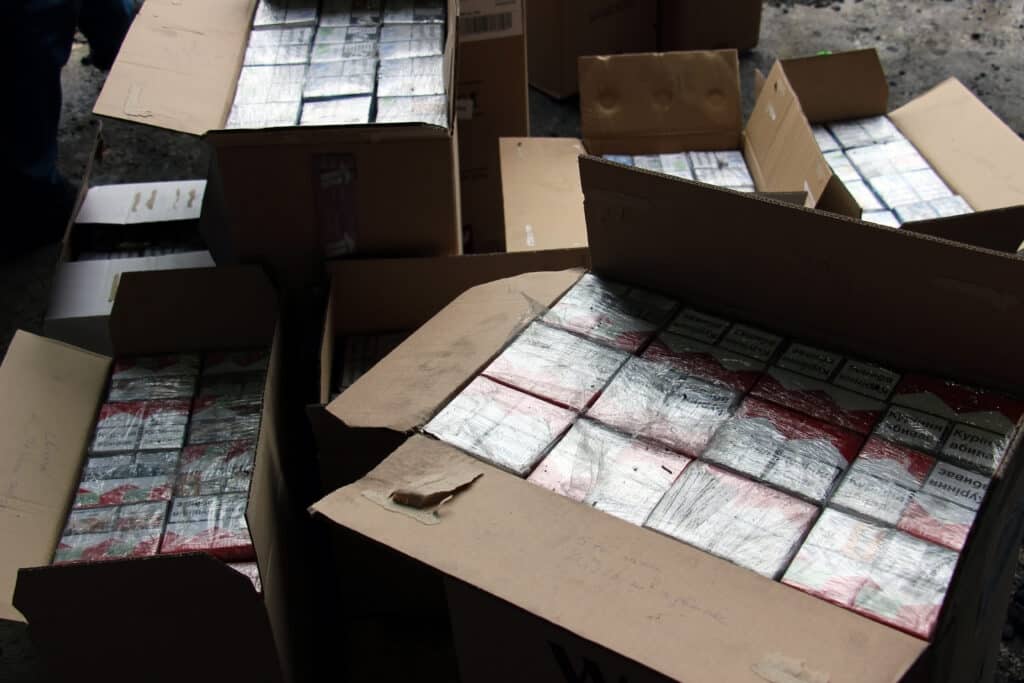
The study was based on two separate parts. The first focused on the statements of 6,014 consumers, by collecting photos of their cigarette packets during the questionnaire. The second part analyzed the information contained in these photos of packets (2,416) and those present on packets from recycling centers (6,213), i.e. a set of 8,629 packets studied according to five criteria (text and image of health warnings, mention relating to sale prohibited to under-18s, country of production, sale price). A group of experts helped determine the criteria for identifying packets sold in illicit trade.
The results of the survey conducted among smokers indicate a proportion of 17.8% of cigarettes coming from illicit trade, while the study of the criteria on the packets counts 16.8%, the difference between the two being considered insignificant. Significant variations were nevertheless noted in the most border towns. The study also showed that 13.8% of cigarettes were purchased at a price lower than the minimum sale price.
These results are consistent with other studies of the same type conducted by teams independent of the tobacco industry, which establish the share of illicit trade at 16.8% in low-income countries and at 9.8% in high-income countries [2]. Another study from 2018 estimated this proportion at 9% in Pakistan. Figures well below the 25% to 42% of illicit trade displayed in several reports provided to the government by different institutes linked to the tobacco industry.
The need for independent studies
The differences between the results of studies funded by the tobacco industry and those produced by teams that are independent of it are quite recurrent; this one is particularly striking. It illustrates the tobacco industry's desire to scare governments by raising the spectre of an increase in illicit trade in the event of tax increases. The production of alarmist studies contributes to slowing down anti-smoking policies, even though it has been shown in Poland, Hong Kong and Colombia that the rates put forward by the industry are in reality up to two or three times lower than those put forward by manufacturers.
With over 160,000 deaths per year attributable to smoking, Pakistan pays a heavy price for tobacco while maintaining one of the most affordable cigarette prices in the world. Taxes on tobacco products represent only 53% of the sale price, while the minimum threshold recommended by the WHO is 70% [3]. Attempts to increase this tax are regularly thwarted by the industry, particularly in this country where tobacco production continues to weigh on health decisions.
Keywords: Pakistan, illicit trade, emerging countries, taxation
[1] Khan A, Dobbie F, Siddiqi K, Ansaari S, Abdullah SM, Iqbal R, Khan Z, Sohail S, Kanaan M, Huque R, Islam Z, Boeckmann M, Ross H, Illicit cigarette trade in the cities of Pakistan: comparing findings between the consumer and waste recycle store surveys. Tob Control 2021;0:1–7.
[2] Joossens L, Merriman D, Ross H, Raw M, The impact of eliminating the global illicit cigarette trade on health and income. Addiction 2010;105:1640–9.
[3] Generation Without Tobacco, Pakistan: The economic and financial cost of smoking. Published on April 13, 2021, accessed on June 7, 2021.