Federal Trade Commission warns about flavors and nicotine concentration in vaping products
March 23, 2022
Par: National Committee Against Smoking
Dernière mise à jour: March 23, 2022
Temps de lecture: 6 minutes
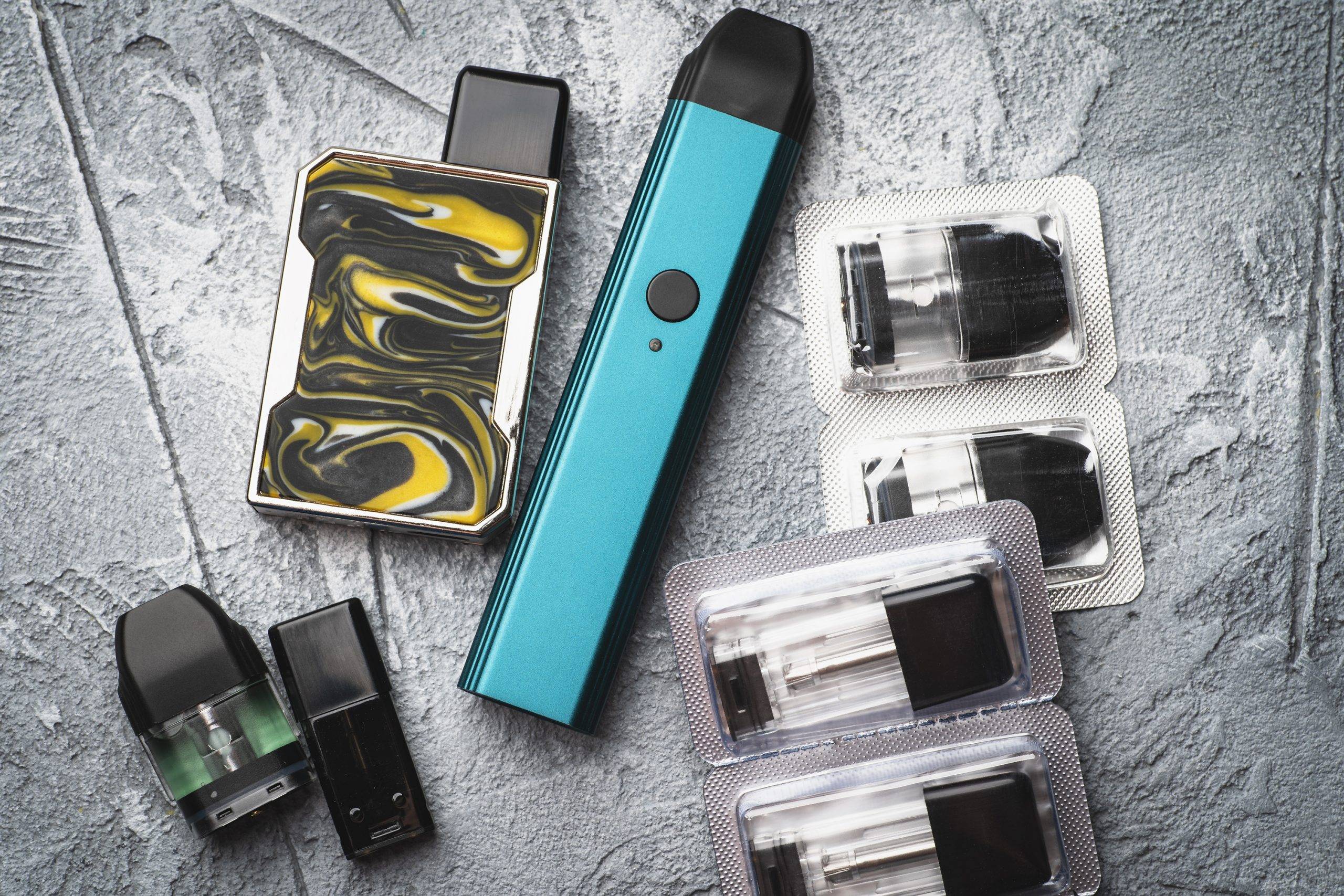
The U.S. Federal Trade Commission (FTC) released a report on March 17, 2022, studying the sales and marketing of the e-cigarette industry.[1]The report concludes that the dramatic increase in flavoured products raises serious concerns that these vaping products may have maintained or increased their use by young people.
The report draws on data from leading vaping product manufacturers in the United States (Fontem US, from manufacturer Imperial Brands, Juul and Nu Mark from Altria, Logic from Japan Tobacco, RJ Reynolds Vapor Company and NJoy -only manufacturer not dependent on the tobacco industryc-), provided for the years 2015 to 2018. It shows that the value of total sales of e-cigarettes, including disposable e-cigarettes and those using interchangeable cartridges, increased more than sixfold. They thus increased from 304.2 million $ to 2.06 billion $ during these three years alone. Sales of flavored products, particularly those with fruit flavors, popular with young people, increased sevenfold during this period. The other notable element concerning these disposable products is their nicotine concentration which has also increased.
Sales of flavored vaping products explode
The FTC reports a shift in consumption between products, with sales of tobacco-flavored e-cigarette products shifting toward sales of fruit, candy, and dessert-flavored products. For example, the share of tobacco-flavored e-cigarette cartridge sales fell from 47.2 billion in 2015 to 21 billion in 2018, while the share of “other” flavored cartridge sales tripled during this period, from 13.8 billion in 2015 to 42.1 billion in 2018.
In this category of “other” flavored cartridge products, fruit-flavored cartridges were the most popular. Their sales increased by 600 %, from 4.7 % of market share in 2015 to 29.7 % in 2018. Similar increases were observed in the sale of candy and dessert flavored cartridges. A similar trend is observed in the sale of disposable e-cigarettes with these flavors.
Flavors promote consumption among young people
The report says the dramatic increase in flavored products may have increased youth use of vaping products and facilitated their continued use and continued nicotine addiction. A 2018 national survey of high school students found that 68.8 percent of e-cigarette users used flavored products. Fruit and candy, dessert, or other sweet flavors also appeared to be the most popular.
Research shows that youth e-cigarette use is strongly associated with flavors. In a 2016 national survey of middle and high school students, 31% of students who had ever used e-cigarettes said the availability of “flavors such as mint, candy, fruit, or chocolate” was the main reason for using e-cigarettes. Among students who had only used e-cigarettes as nicotine-containing products, 41% cited flavors as the main reason for use. 81% of adolescent users of these products used flavored e-cigarettes the first time they tried e-cigarettes.
Increased nicotine concentration in pod and disposable e-cigarettes
The data also revealed a sharp increase in the nicotine concentration of disposable e-cigarettes. In 2015, pod-based products (such as Juul) had a nicotine concentration nearly twice as strong as disposable e-cigarettes (47.5 mg/ml vs. 25 mg/ml). Over the next three years, the nicotine concentration of disposable products increased by nearly 60 %, to 39.5 mg/ml. The most popular pod-based e-cigarettes increased their nicotine concentrations further during the study period. By 2018, this concentration ranged from 51 to 61 mg/ml. The report said that nicotine-free vaping products were marginal. Their market share accounted for just 0.21 % of sales in 2015 and had declined to just 0.02 % by 2018.
Increased investment in vaping product marketing
The Commission found that spending on advertising and promotions more than tripled in three years, from 1TP4Q197.8 million in 2015 to 1TP4Q643.6 million in 2018. Price discounts paid to retailers or wholesalers to reduce the price of vaping products to consumers increased almost 14-fold in three years, from 1TP4Q11.2 million in 2015 to 1TP4Q155.1 million in 2018.
Spending on social media influencers and brand ambassadors has increased nearly 15-fold, from $288,000 in 2015 to $4.3 million in 2018.
The nicotine industry has also invested heavily in the distribution of free and/or deeply discounted vaping products. The share of this type of promotion has more than doubled in three years, from $1.4T23 million in 2015 to $1.4T58.2 million in 2018. In 2016, the FDA banned the distribution of free vaping product samples. Following this ban, manufacturers began offering e-cigarettes at $11T4T or less. According to the report, this FDA action was specifically aimed at limiting youth access to tobacco and vaping products.
According to the FTC, the massive investments by vaping product manufacturers in marketing, the availability of flavors, the accessibility of the products and the high doses of nicotine contributed in particular to promoting and maintaining the use of these products among young people during the period studied.
Keywords: Federal Trade Commission, United States, vaping, flavors, nicotine, disposable e-cigarette
AE
[1] Report, The Federal Trade Commission's First Report on E-Cigarette Sales and Advertising Reveals Disturbing Trends Affecting the Health of Young Americans, March 17, 2022, accessed March 22, 2022 National Committee Against Smoking |