Hundreds of organizations are calling on Formula 1 to enforce the ban on tobacco industry sponsorship.
March 8, 2026
Par: National Committee Against Smoking
Dernière mise à jour: March 5, 2026
Temps de lecture: 5 minutes
As the Formula One season approaches, 162 anti-tobacco and public health organizations – including the National Committee Against Smoking (CNCT) and Contre-Feu for France – have sent a letter to the championship's management requesting the enforcement of the ban on tobacco industry sponsorship. While Formula 1 ended partnerships with traditional cigarettes in 2006, these organizations point out that the regulations cover all sponsorships involving the tobacco industry and therefore extend to new products promoted by these manufacturers to the public, particularly young people.[1].
Partnerships with the tobacco industry regarding nicotine sachets
The signatories of the letter They point out that some companies in the tobacco sector now use the sponsorship of racing stables to promote their brands of nicotine sachets.
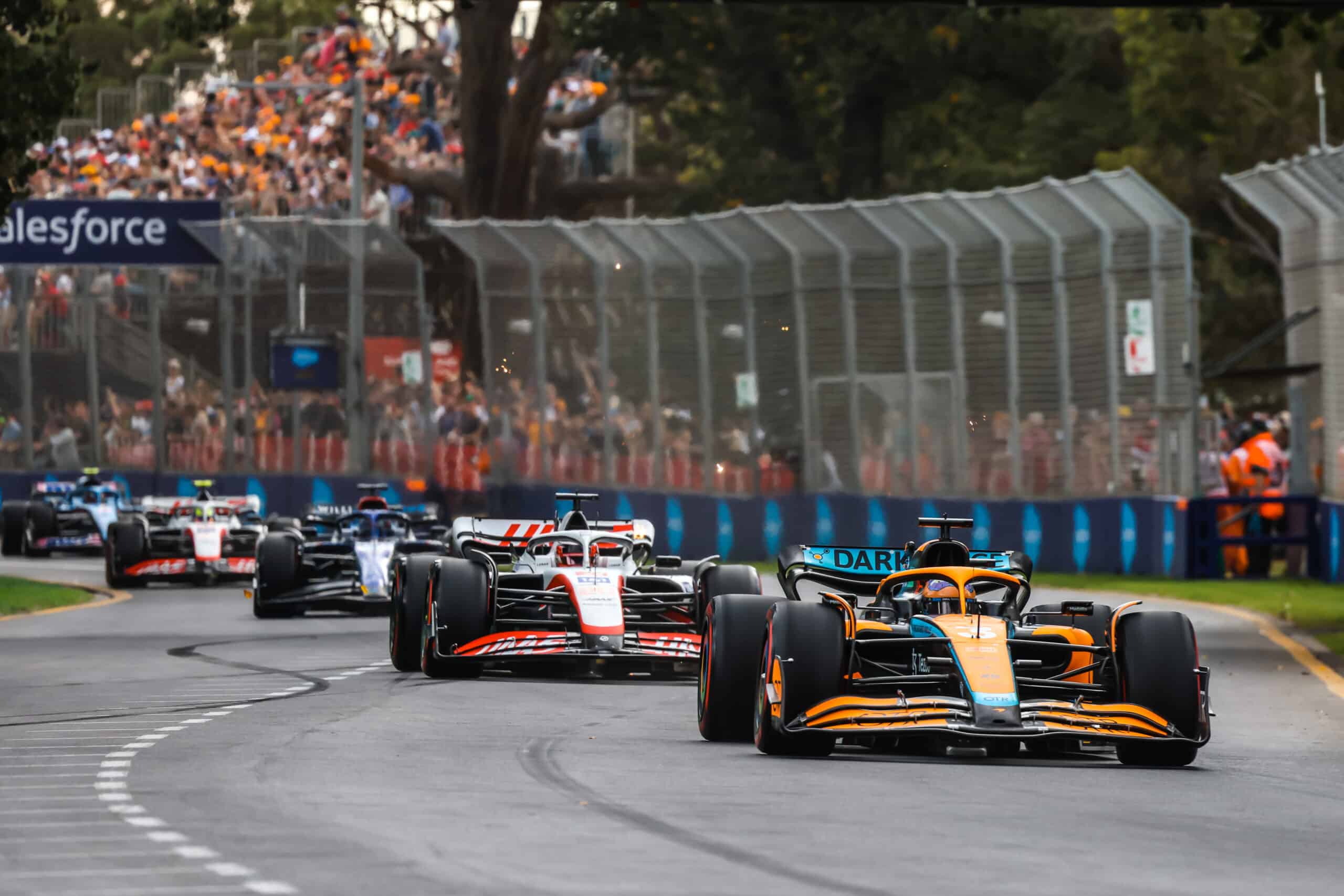
Philip Morris International (PMI) sponsors the Scuderia Ferrari team to promote the Zyn brand, while British American Tobacco (BAT) supports the McLaren team with its Velo brand. The product logos are prominently displayed on the cars and the racing suits of these teams' star drivers, including Lando Norris, the 2025 F1 World Champion, and Lewis Hamilton, seven-time World Champion, who sports a special livery for the 2025 Abu Dhabi Grand Prix.
These partnerships are also promoted on social media, reaching an audience of several hundred million subscribers.
Recently, BAT also leveraged the Formula 1 fan experience to promote its Velo nicotine sachets, using the prestige of this sport to minimize their addictive and potentially toxic effect.
A young, rapidly growing audience that is vulnerable and targeted by industry
The signatory organizations emphasize that these partnerships come as Formula 1 seeks to broaden its audience among young people. The championship has recently developed collaborations with companies such as The Walt Disney Company, LEGO, and Hot Wheels from toy manufacturer Mattel, with products and activations aimed at children. Similarly, partnerships have been developed with social media platforms and streaming series like Netflix's "Drive to Survive."[2].
According to data cited by the organizations, more than 4 million children aged 8 to 12 follow Formula 1 in the European Union and the United States.
Furthermore, 54% of the championship's subscribers on TikTok and 40% on Instagram are under 25 years old.
Organizations are highlighting the health risks associated with nicotine pouches. These products expose users to high levels of nicotine, a highly addictive substance that can affect brain development in adolescents, a process that continues until around age 25.
In the United States, these pouches are the only type of nicotine product whose consumption among young people has increased in recent years.
Karl Erik Lund, senior researcher at the Norwegian Institute of Public Health, said that while nicotine sachets are less harmful than cigarettes, they are not risk-free and should be intended only for former smokers who are unable to quit smoking with validated treatments.
" These companies know that motor racing attracts a lot of teenagers, and I think they're showing their true colors. »" reacted Ken Warner, professor emeritus at the University of Michigan School of Public Health.
A call to F1 leaders to reject any partnership with this industry
They are therefore calling on Formula 1 and its CEO, Stefano Domenicali, to enforce the ban on sponsorship concerning the tobacco industry and to include all tobacco and nicotine products in order to prevent these partnerships from contributing to the promotion of addictive and potentially harmful products to a young audience.
" By sponsoring Formula 1 teams, tobacco manufacturers seek to appeal to the same young audience that Formula 1 strives to attract. Formula 1 must not be complicit in these actions. In order to protect the health of its young fans, it is imperative that Formula 1 act quickly to extend its current ban on cigarette sponsorship to other types of tobacco products, including new products such as nicotine pouches. »" wrote the associations in their letter to Formula 1 CEO Stefano Domenicali.
Separate letters have been sent to the CEOs of Disney, Lego and Mattel urging them to join the call launched in Formula 1 to ban all sponsorship by the tobacco industry.
Motorsports have historically been a promotional tool used by the tobacco industry to target young people.. With the ratification by over 180 countries worldwide of the WHO Framework Convention on Tobacco Control, which prohibits all sponsorship by the tobacco industry, sponsorship by traditional cigarette brands had disappeared. However, as part of their new strategy to disseminate new products on the market, tobacco manufacturers are trying to regain a foothold in motorsports. To counter this strategy, legal action has been initiated.
This was particularly the case in France, where the National Committee Against Smoking (CNCT) successfully sued the manufacturer Philip Morris and blocked its deployment strategy involving the use of Mission Winnow during the 2019 Le Mans motorcycle Grand Prix.
AD
[1]Over 160 Organizations Call on Formula 1 to End All Tobacco Sponsorships and Stop Promoting Addiction to Kids, Campaign for Tobacco-Free Kids, published March 4, 2026, accessed March 5, 2026
[2]Emma Rumney, Campaigners say Big Tobacco targets kids via F1, call for sponsorship ban, Reuters, published March 4, 2026, accessed March 5, 2026