United States: A Look Back at 40 Years of Tobacco Industry Promotional Strategies
February 7, 2022
Par: National Committee Against Smoking
Dernière mise à jour: February 7, 2022
Temps de lecture: 8 minutes
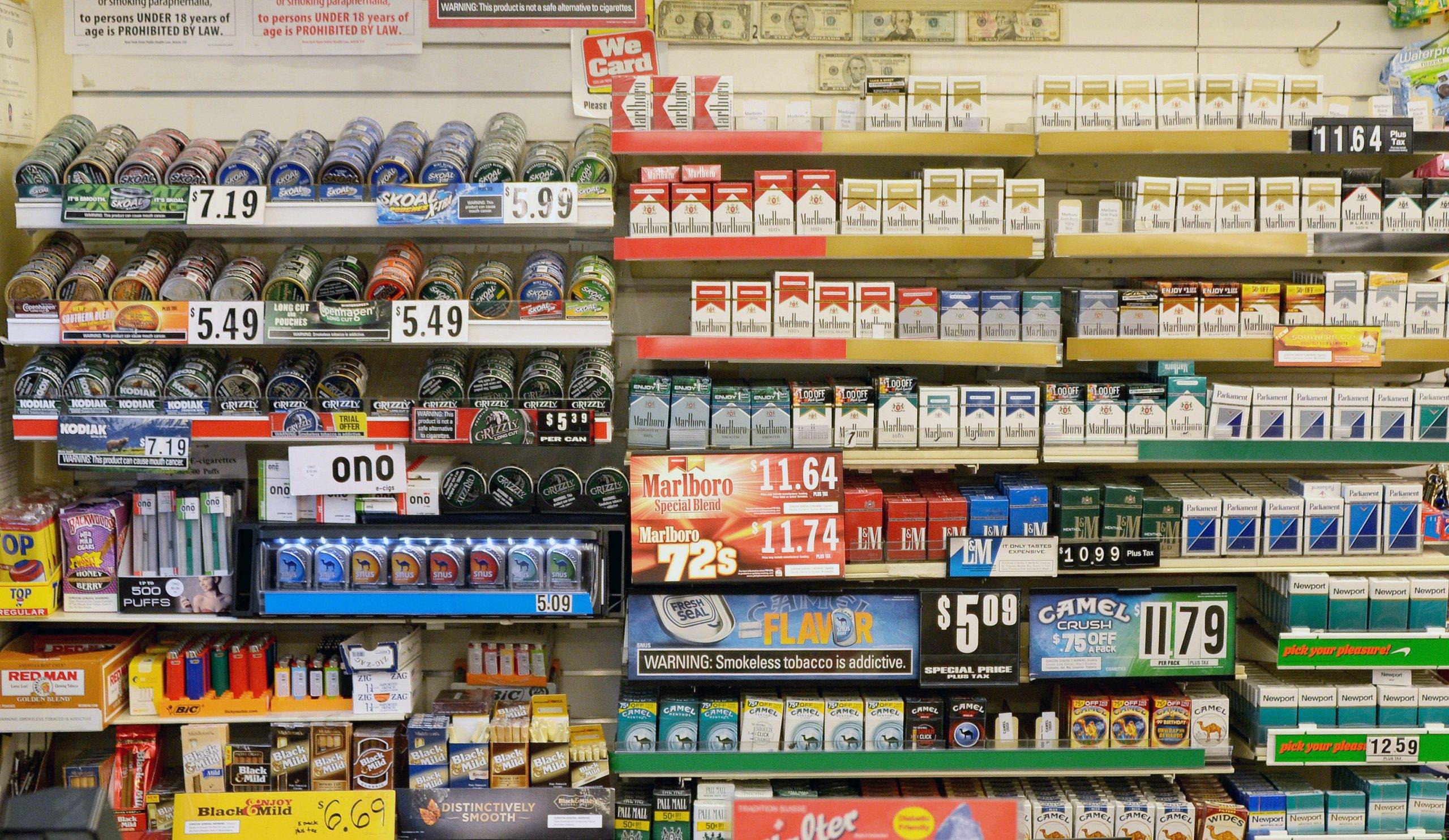
Looking at the period 1975-2019, a study shows that tobacco companies' marketing spending in the United States has shifted massively towards discounts and promotional incentives to counter the effect of tax increases and sustain the market.
Marketing strategies to promote tobacco products take a variety of forms. American researchers have been studying the evolution of practices over the past twenty years. It appears that rebates and promotional incentives are the focus of most of manufacturers' efforts.[1].
A meteoric rise in discounts
Five different types of promotions and discounts have been identified by other studies and according to tobacco industry documents. These may include coupons offering direct discounts on the price of products, free samples, quantity discounts (reduced price or free packs for so many packs purchased), discounts on certain brands favored by the most price-sensitive people, or local discounts aimed at the least mobile audiences. The last three points include rebates intended for retailers or wholesalers to allow them to offer cigarettes at a reduced price. In parallel, promotional incentives were also identified, granted to retailers or wholesalers in the form of bonuses or quantity discounts, which allow them to offer a reduced retail price or offers of free packs, but also to promote certain products compared to those of competitors.[2].
By studying the marketing expenditures of the major tobacco companies, which are required to report them annually to the Federal Trade Commission, the researchers highlighted that the period 1975-2019 presented several key moments, most often linked to changes in the regulatory environment. While rebate and incentive budgets began to gain momentum in the mid-1980s with the rapid increase in promotional incentives granted to retailers, it was especially after 1997 that the phenomenon accelerated. It peaked in 2003, before gradually decreasing, with rebates largely outweighing promotional incentives from 2002 and constituting the vast majority of promotional offers to this day. The proportion of these discounts thus increased from 4% in 1981 to 75% in 2003, then to 89% in 2019. Budgets allocated to direct advertising increased until 1991 before decreasing, first gradually, then rapidly after 1998, from 78% of marketing expenditure in 1975 to 3% in 2019. Promotional incentives, for their part, experienced strong growth from 1975 (16%) to 1998 (70%), before falling drastically after 2002 to reach 7% in 2019. In value, the total amount of these three expenditure items reached 21 billion constant US dollars in 2003, to reach 7.6 billion dollars in 2019 for the United States alone, the decline in this expenditure following fairly mechanically that of cigarette sales.
A turning point in 1998, under judicial pressure
The year 1998 was a pivotal one for the tobacco industry, which was subject to the Master Settlement Agreement (MSA). Following the high-profile lawsuits filed against the industry, this agreement between 46 states and the four major tobacco companies imposed compensation payments that resulted in higher tobacco prices. The MSA also banned various forms of advertising, sponsorships, and product placement. The industry anticipated these restrictions as early as 1997 by expanding discounts and promotional incentives.
Federal and local tax increases then took place in 2000 and 2002, and more substantially in 2009, with the Family Smoking Prevention and Tobacco Control Act, and in 2013. Each of these steps increased the price of tobacco and was accompanied by an increase in discounts granted by the industry. The various promotional offers here aimed to mitigate the impact of these increases on cigarette sales. As a result, the Food and Drug Administration (FDA) and some states banned free samples and set a minimum price for cigarettes in 2017. More recently, other states such as New Jersey and New York have banned all forms of couponing.[3].
Highly targeted marketing to the most vulnerable smokers
According to available industry records, the proposed discounts primarily targeted young smokers and those from the least advantaged social categories, but also heavier smokers, all of whom are more sensitive to the price argument. The brands favored by these smokers were thus able to receive more discounts than others in order to keep this market captive, maintaining the high consumption of these smokers and delaying the intention to quit smoking. By prolonging the tobacco addiction of these populations, the discounts and promotions actually contribute to perpetuating and exacerbating social inequalities in health. The revenue losses incurred by manufacturers from these promotions were generally offset by maintaining high prices for other brands aimed at wealthier smokers.
A similar development for smokeless tobacco products
Smokeless tobacco products were also included in the study and treated separately over the period 1986-2019. It appears that these products experienced a similar evolution of marketing expenditures, with the share of discounts quickly taking over from traditional advertising. Marketing expenditures related to these products increased significantly after 1998. Following the acquisition of a smokeless tobacco manufacturer in 2006, the arrival of major players in this market resulted in a new peak in expenditures in 2007. Discounts and promotional incentives resumed their growth from 2011, reaching 87% of promotional expenditures in 2019, compared to 13% for declared direct advertising. In value, the total amount of marketing expenditure for these products, including advertising, peaked in 2016 at US$684 million, before settling in 2019 at US$576 million.
Here again, we find a strong correlation between the evolution of indirect promotion investments and the timing of public health measures adopted to curb the tobacco epidemic. The tobacco industry has particularly sought to preserve its market share by closely monitoring smokers' shifts in consumption to other products, whether cigarillos, cigars, or e-cigarettes.
Necessary vigilance with regard to industry activities
According to the authors, this study highlights the importance of public policies focused on tax increases and minimum prices to reduce the consumption of smoked and smokeless tobacco, with industry efforts focusing specifically on different ways to mitigate the cost of these increases for smokers. This high-price policy can, according to the study's authors, be complemented by regulatory measures prohibiting certain commercial practices such as retailer rebates or other incentive discounts.
Keywords: United States, discount, promotion, advertising, marketing, price, Master Settlement Agreement
Photo credit: ©JUSTIN LANE/EPA/Newscom/MaxPPPMF
[1] Levy D, Liber A, Cadham C, Sanchez-Romero LM, Hyland A, Cummings M, Douglas C, Meza R, Henrikse L, Follow the money: a closer look at US tobacco industry marketing expenditures. Tob Control, Epub ahead of print: [02/02/22]. doi:10.1136/tobaccocontrol-2021-056971. [2] Tobacco manufacturers give incentives to retailers to promote their products. products, Generation Without Tobacco, published January 27, 2022, accessed February 2, 2022. [3] New York State Ends Tobacco Coupons and Promotions, Generation Without Tobacco, published July 13, 2020, accessed February 2, 2022. National Committee Against Smoking |